Your garage floor isn't failing because of the paint; it's failing because the slab wasn't ready to receive it. If you've watched a DIY epoxy kit peel away after just 180 days, you know the frustration of a wasted weekend. It's a common headache for homeowners in Tampa and St. Petersburg who rely on "acid etching" instead of mechanical grinding concrete. You want a floor that looks like a professional showroom, but the fear of a dust-filled house or choosing the wrong diamond blades often leads to expensive mistakes. We treat every project as our livelihood, which means we never settle for "good enough" prep work.
We believe every floor should be a durable masterpiece, and that transformation starts with the right equipment. This definitive guide reveals why mechanical grinding is the single most critical step to ensure your coating never peels. You'll learn how to navigate concrete hardness levels and why our dust-free systems protect your lungs and your property. We're pulling back the curtain on the professional prep secrets we use at Illuminated Coatings to turn heads and provide a massive return on your home improvement investment.
Key Takeaways
- Learn why mechanical preparation is the only way to achieve a professional-grade bond, making outdated chemical etching a major risk to your floor’s transformation.
- Understand the technical ICRI standards and the specific CSP levels required to turn a raw, "ugly" slab into a high-performance showroom.
- Discover the hidden risks of DIY rental equipment and why professional grinding concrete with industrial planetary machines is essential for a durable finish.
- Master the step-by-step roadmap from initial moisture vapor testing to aggregate exposure for a perfectly prepped, "Illuminated" canvas.
- See how elite systems like Vuba Stone rely on precision grinding to create a long-lasting masterpiece that will truly turn heads for years to come.
Understanding Concrete Grinding: More Than Just a Smooth Surface
Concrete grinding is the heartbeat of our craft because we know your floor is your livelihood. It's the mechanical removal of surface contaminants and laitance to expose a fresh, workable surface. When our team steps onto a job site in Tampa or St. Petersburg, we aren't just cleaning a floor. We're resetting a slab to its virgin state. The first 1/16th inch of your concrete dictates the next 20 years of its life. If that top layer is weak, your expensive epoxy or resin-bound stone will peel within months. We transform these dull, dusty slabs into "Illuminated" foundations that are ready to become masterpieces. This process is about more than aesthetics; it's about structural integrity and the pride of owning a space that can turn heads.
The Problem with "Ugly" Concrete
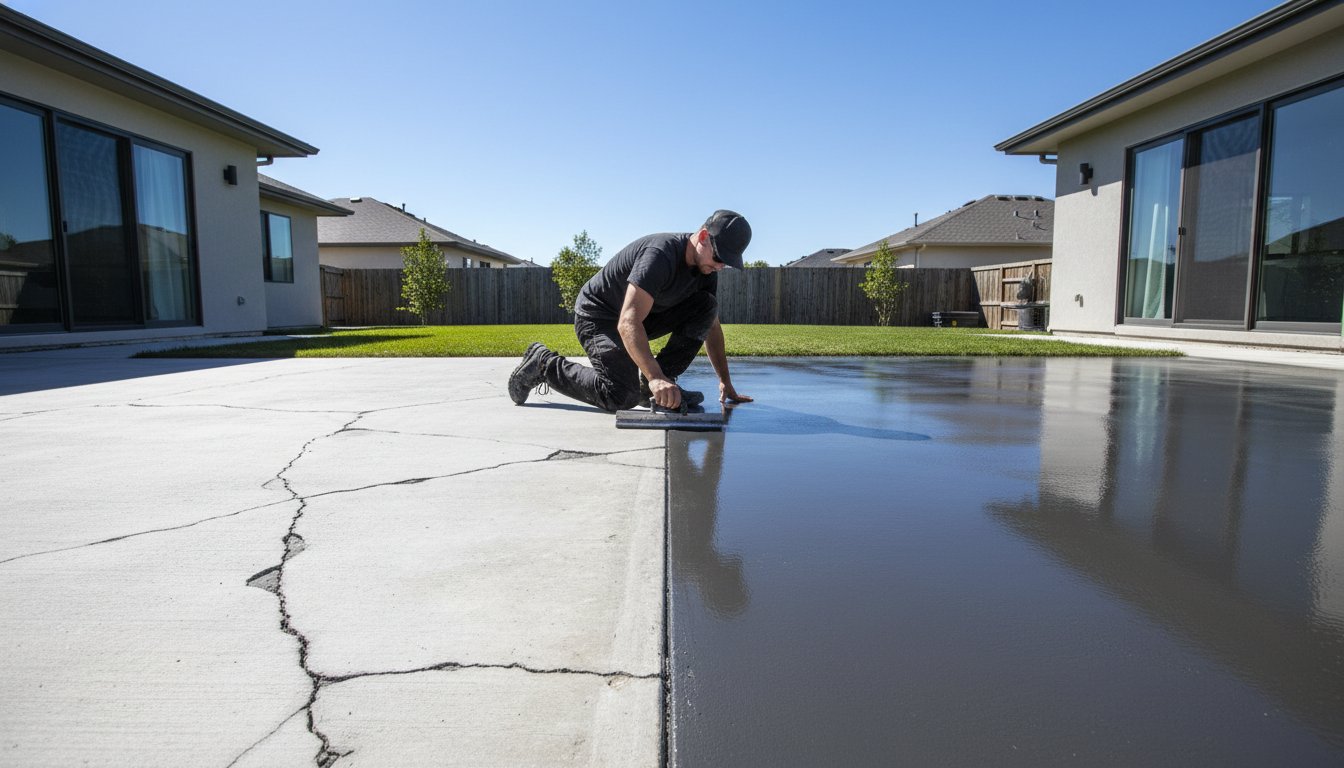
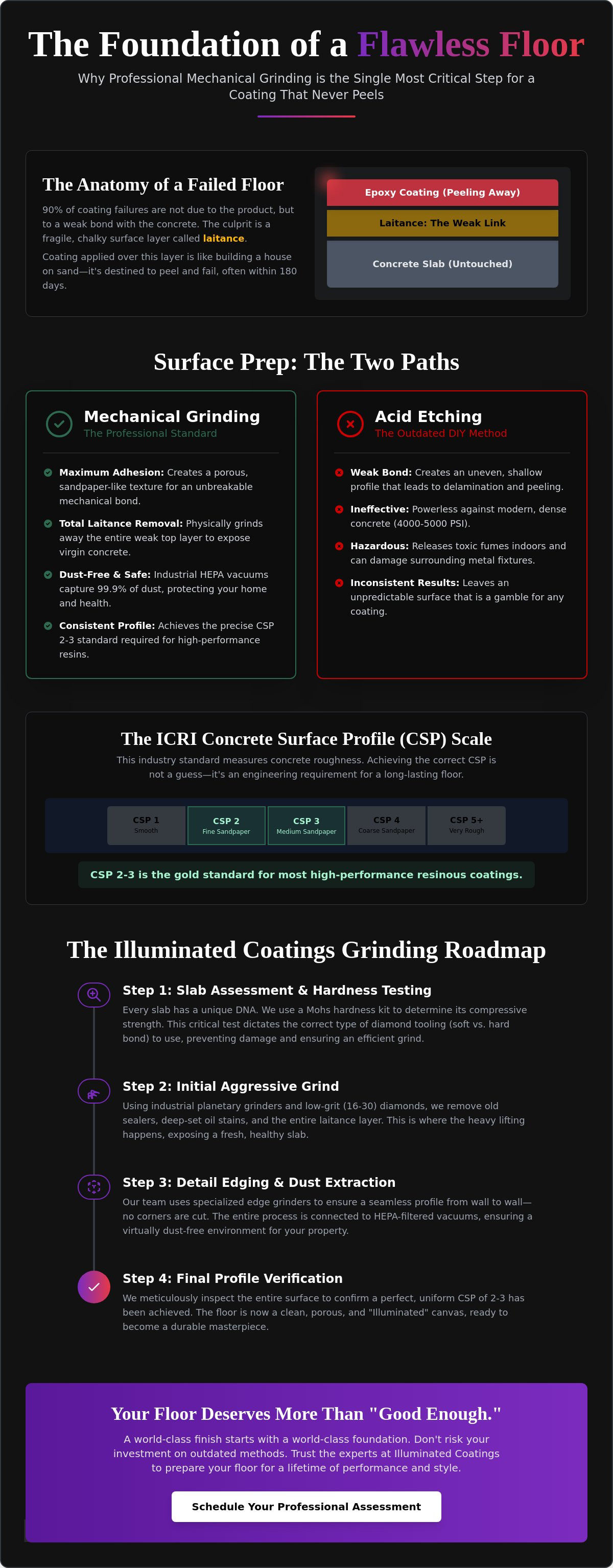
Most homeowners look at their garage or shop floor and see a mess of spalling, scaling, and deep-set oil stains from 10 or 15 years ago. These aren't just aesthetic issues. They are structural roadblocks that prevent new coatings from bonding. Grinding concrete allows us to shave away these failures and reach the healthy aggregate beneath. Laitance is the weak, milky layer of cement and fine particles that settles on top during the curing process, and it is responsible for 90% of all floor coating failures. If you don't remove this fragile layer, your coating is essentially sticking to dust rather than the slab itself.
For readers interested in how specialized restoration techniques can address severe slab damage like spalling or deep stains, you can visit The Solution.
Mechanical vs. Chemical Preparation
Acid etching is a relic of the 1990s that has no place in a professional's toolkit in 2026. Modern concrete often reaches 4,000 to 5,000 PSI, making it far too dense for muriatic acid to penetrate effectively. If the acid can't open the pores, the coating can't "hook" into the slab. Beyond performance, using acid indoors presents massive respiratory risks and can permanently damage nearby metal fixtures or plumbing.
Mechanical grinding is the only reliable way to ensure a consistent Concrete Surface Profile (CSP) of 2 or 3, which is the industry standard for high-performance resins. This rigorous Polished concrete process ensures your floor is more than just a surface; it's a durable masterpiece. By using diamond-segmented abrasives, we create a porous, sandpaper-like texture that acts as a mechanical anchor for your new floor. This creates a bond so strong that the concrete itself would have to break before the coating peels.
- Mechanical Grinding: Creates a deep, consistent profile for maximum adhesion.
- Chemical Etching: Often results in an uneven "surface-only" clean that leads to delamination.
- Environmental Safety: Grinding with HEPA-filtered vacuums keeps your home or business safe from toxic fumes and dust.
The Technical Specs: Grit, Bonds, and Concrete Surface Profiles (CSP)
Professional surface prep isn't a guessing game; it's a calculated engineering process. We rely on the International Concrete Repair Institute (ICRI) to set the benchmarks for every project. These standards define the Concrete Surface Profile (CSP), a scale from 1 to 9 that measures the "roughness" of the slab. If we don't hit the specific CSP required for your system, the coating won't last. We follow the rigorous guidelines established by the Concrete Polishing Council to ensure every floor we touch becomes a durable masterpiece. This technical precision is what allows us to transform a dusty garage into a high-end showroom.
The relationship between diamond grit and surface texture is absolute. Lower grit numbers, like 16 or 30, represent aggressive, chunky diamonds that rip through old sealers and heavy contaminants. Higher grits, such as 400 or 800, begin to close the concrete pores and create a reflective sheen. For most homeowners in Tampa or St. Petersburg, grinding concrete to a specific grit is what separates a DIY disaster from a professional finish. It's our livelihood on the line, so we never skip these technical requirements.
The Mohs Hardness Test: Why Your Slab is Unique
Every concrete slab has a unique DNA. Before the first pass, we use a Mohs hardness kit to scratch the surface and determine the compressive strength of the concrete. Hard concrete requires a "soft bond" diamond segment. The soft metal matrix wears away at a controlled rate to expose new, sharp diamonds. If you use a "hard bond" on hard concrete, the tool will glaze over, get hot, and stop cutting entirely. Conversely, using soft bonds on soft concrete will melt your tooling budget in under 45 minutes. We match the tool to the slab's specific rating on the 1-10 Mohs scale to ensure a perfect profile every time.
Understanding CSP Levels for Epoxy and Vuba Stone
For a standard residential garage epoxy, we aim for a CSP 2 or 3. This profile feels similar to 60-grit sandpaper and provides the "mechanical tooth" the resin needs to bite into the pores. If you're looking for a heavy-duty commercial stone system, we often push toward a CSP 4 or 5 using more aggressive grinding concrete techniques. Remember: if the floor feels smooth to the touch, your coating is destined for failure. We focus on creating a surface that actually bonds, ensuring your new floor will turn heads for years to come.
DIY vs. Professional Concrete Grinding: The Hidden Risks of Rental Equipment
Many homeowners in Tampa and St. Petersburg see a potential $1,000 savings and think DIY is the smart play. If you choose the rental route, you're often gambling with the longevity of your entire floor. We treat every slab as our livelihood because a failed coating isn't just a chore; it's an expensive disaster. Professional grinding concrete requires more than a weekend rental. It requires the heavy-duty precision of an artisan who understands the chemistry of the stone.
The Rental Trap: Weight and Downward Pressure
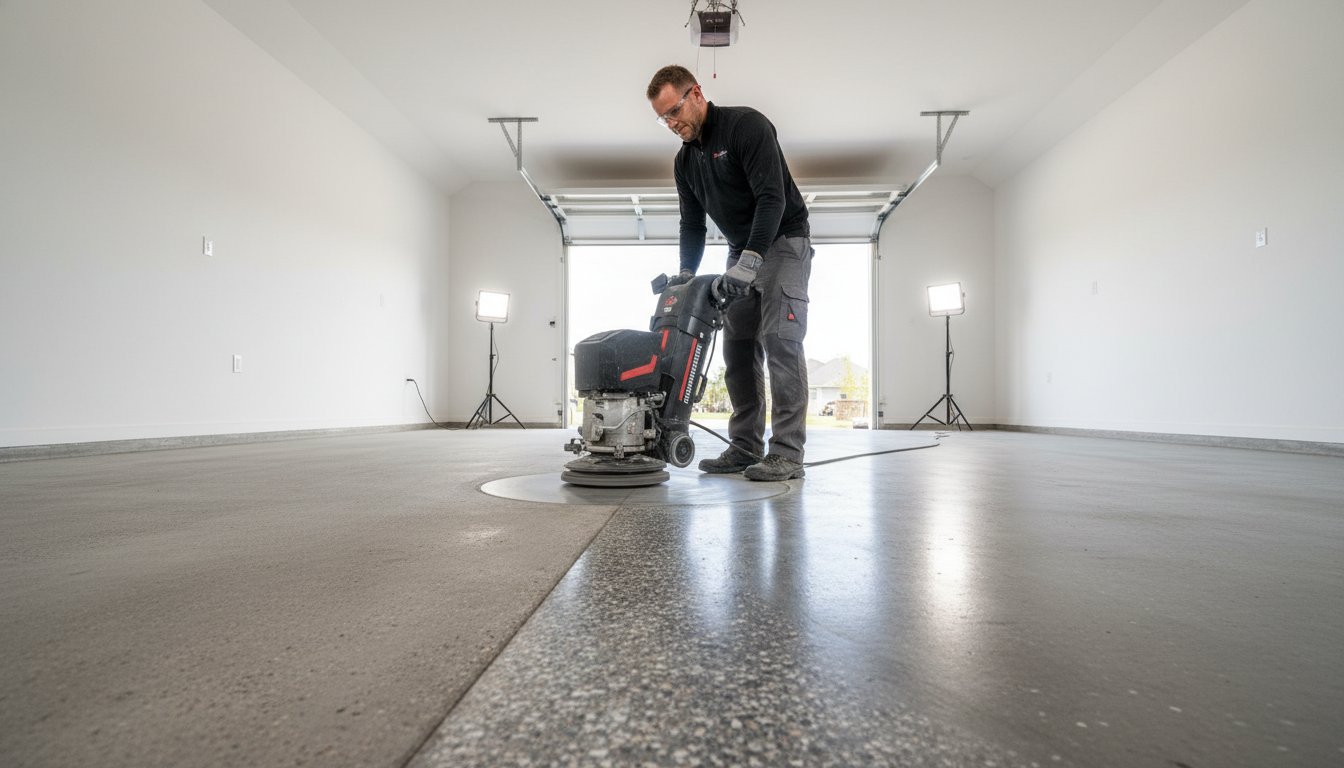
Most rental shops offer 110V "swing machines" or light buffers that lack the muscle for real transformation. These units typically weigh roughly 150 pounds. That sounds heavy until you compare them to an 800-pound industrial planetary grinder. Without sufficient downward pressure, the diamond segments just skate over the surface. This friction creates heat that "glazes" or polishes the concrete instead of opening the pores. If those pores aren't open, your epoxy or resin-bound coating won't bond. You'll end up with a floor that peels in 12 months. Our 220V and 480V gear delivers the massive torque needed to profile high-strength 4,000 PSI concrete uniformly across every square inch. We don't just scratch the surface; we prepare a canvas for a masterpiece.
Dust Containment and Respiratory Safety
Cutting corners on dust containment is a genuine health risk. OSHA Standard 1926.1153 mandates strict controls for crystalline silica because these microscopic particles cause irreversible lung damage. A standard home shop-vac lacks the specialized filtration to trap these 0.3-micron particles. DIY projects often leave a fine white powder that settles into HVAC vents and recirculates for 90 days or longer. This creates an "ugly" environment that lingers long after the tools are returned.
We eliminate this risk by using industrial HEPA-filtered dust extractors. These systems provide the following benefits:
- Clean-Room Performance: Our vacuums pull 300 to 600 CFM (cubic feet per minute) of air directly from the grinder shroud.
- HVAC Protection: We prevent silica from entering your ductwork, keeping your air quality pristine.
- Superior Adhesion: A dust-free environment ensures the coating bites deep into the slab.
Choosing a professional team means you aren't just hiring labor. You're investing in a result that will turn heads. When grinding concrete is done right, the result is a durable masterpiece that reflects the pride you have in your property. Don't settle for a rental trap when you can have an Illuminated finish.
The Step-by-Step Professional Grinding Process
Before our team touches the floor, we analyze the canvas. We perform Calcium Chloride tests to measure Moisture Vapor Transmission (MVT) according to ASTM F1869 standards. If your slab emits more than 3 pounds of moisture per 1,000 square feet over 24 hours, then we pivot to a specialized moisture vapor barrier. This isn't just a construction job for us; it's our livelihood. We refuse to let a preventable bond failure ruin your investment. From Spring Hill to Tampa, we've seen how Florida humidity affects slabs, making this initial inspection the most critical step in the journey.
The First Pass and Surface Flattening
The transformation begins with 16-30 grit metal-bond diamonds. This aggressive phase removes the "laitance," which is the weak, dusty top cap of the concrete, to reveal the stronger aggregate beneath. If we encounter "hard" concrete, usually testing over 5,000 PSI on the Mohs scale, then we deploy weighted plates to ensure the diamonds bite into the surface rather than glazing over. We always utilize a cross-hatch pattern. This ensures the floor is perfectly flat and prevents "corn rowing" or uneven ridges. Professional grinding concrete requires this level of obsession to create a showroom-quality finish that lasts for decades.
Detailing and Edge Grinding
Industry data shows that 90% of coating failures happen within 6 inches of the wall. Large planetary grinders can't reach these tight spaces, so we switch to hand-held variable speed grinders to address these critical zones. We treat every corner like a piece of fine furniture. We ensure the transition from the floor to the "cove base" is seamless; this creates a professional look that turns heads. This meticulous detail is what separates a durable masterpiece from a rushed contractor job. We don't cut corners; we grind them to perfection.
Once the profile is set, we use industrial HEPA vacuums to capture 99.97% of dust particles. We then denature the surface with a solvent wipe or specialized cleaner. This removes every microscopic particle of dust that could interfere with chemical bonding. If the surface isn't surgically clean, then the resin won't bond properly. Grinding concrete is an art form that demands a clean finish to ensure the final product is both beautiful and indestructible.
Beyond the Grind: Preparing Your Floor for a Lifetime Masterpiece
Grinding concrete is more than a preliminary step; it is the moment a dull slab begins its journey toward becoming a masterpiece. At Illuminated Coatings, we treat every driveway and patio as our livelihood. If the foundation isn't prepared to the highest 2026 industry standards, the final finish won't stand the test of time. A perfectly ground floor ensures that your high-performance systems don't just sit on top of the surface but become part of it. This transformation is where manual labor meets true craftsmanship.
The Synergy of Grinding and Resin-Bound Stone
When we apply Vuba Stone, the success of the installation depends entirely on the mechanical bond created during the prep phase. Grinding concrete opens the pores of the slab, allowing the resin to penetrate at a molecular level. This creates a grip that prevents delamination even under the intense Florida sun in areas like Tampa and Spring Hill. For outdoor applications, this porosity is vital for several reasons:
- Superior Drainage: A professionally ground surface allows the system to handle up to 850 liters of water per square meter per minute.
- Structural Integrity: Proper prep prevents standing water from undermining the bond between the stone and the substrate.
- Visual Depth: A level, ground surface ensures the stone aggregate lays flat, creating that "turn heads" aesthetic for your driveway.
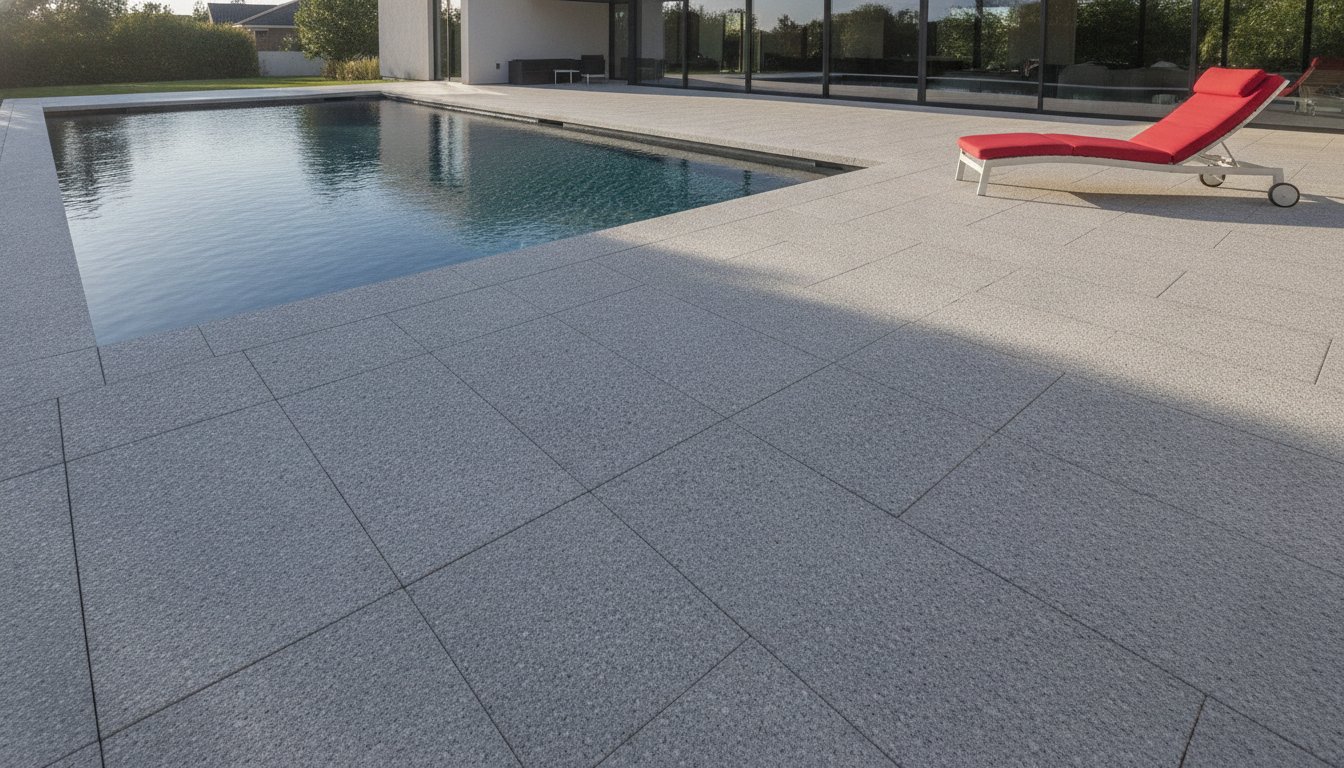
This preparation also enhances the functional benefits of specialized coatings. On pool decks, grinding concrete removes the dense, heat-trapping cream layer. When combined with our "cool touch" resin systems, the result is a surface that stays 15 to 20 degrees cooler than traditional broom-finished concrete. Your bare feet will feel the difference on a 95-degree afternoon in St. Petersburg.
Final Inspection: The "White Cloth" Test
Before the first drop of resin hits the floor, we perform a final verification. We use the "white cloth" test to ensure the slab is surgically clean. We wipe a clean, white microfiber cloth across multiple sections of the floor. If any grey dust appears, the industrial vacuuming process repeats. Zero dust interference is the only way to achieve a crystal-clear finish that highlights the natural beauty of the stone. If you're looking for more details on the next steps of your renovation journey, you can explore our Garage Floor Epoxy Installation Guide for a deeper dive into high-durability coating technology.
Don't let "ugly" concrete devalue your property any longer. Your home deserves a point of pride, not a project you feel the need to hide. We're ready to transform your space into a durable, stunning showroom that lasts a lifetime. Contact us today to start your transformation and see why quality is our only focus.
Transform Your Floor Into a Lasting Asset
Your floor's future depends on the foundation you build today. Achieving a professional finish requires more than just a rental machine. It demands a precise understanding of the Concrete Surface Profile (CSP) scale, which ranges from 1 to 9 based on the final coating's requirements. Expert grinding concrete ensures your surface reaches the exact mechanical bond needed for long-term adhesion. We've seen how DIY attempts often lead to uneven profiles and structural damage. That's why we utilize industrial-grade dust extraction systems equipped with HEPA filters that capture 99.97% of airborne particles. As a family-owned business, we treat every square foot as our own livelihood, and for those who need expert asphalt or structural concrete work, you can learn more about Zahn Paving and their 75-year legacy of excellence. We're specialists in high-performance epoxy and Vuba Stone applications that turn heads. Don't settle for an ugly floor when you can have a showroom-quality masterpiece. It's time to bring life and brilliance back to your property with a surface that's built to last.
We look forward to helping you create a space you'll be proud of for years to come.
Frequently Asked Questions
Is grinding concrete better than acid etching for epoxy floors?
Mechanical grinding is significantly better because it creates a Concrete Surface Profile (CSP) of 2 or 3, which is the industry standard for 95% of high-performance coatings. Acid etching often leaves 30% of the surface unprepared if the concrete is too dense. If you want a durable masterpiece that won't peel, grinding concrete ensures the epoxy anchors deep into the slab for a permanent bond.
How much dust does concrete grinding create inside a home?
Modern professional systems utilize HEPA-filtered vacuums that capture 99.97% of airborne particles directly at the source. This industrial-grade dust extraction means your home remains clean while we transform your ugly garage into a showroom. Our team prioritizes your environment's safety, ensuring that silica dust is contained and removed during the entire process so your family stays protected.
Can I grind concrete that is wet or has standing water?
You shouldn't grind concrete with standing water because it creates a hazardous slurry that clogs diamond segments and obscures your progress. While wet grinding exists for specific polishing stages, we perform dry grinding for surface prep to ensure a clean, dry substrate. If the slab is damp, we wait for it to dry to guarantee the coating adheres perfectly to the surface.
How long does it take to grind a standard two-car garage?
A professional crew typically completes the initial grind for a 400-square-foot two-car garage in 4 to 6 hours. This timeline depends on the concrete's hardness and whether we're removing old, failing sealers or thick glues. We work with an energetic rhythm to get your project moving, turning your floor into a head-turning asset in a single day of focused labor.
Will grinding concrete fix a floor that is unlevel or has low spots?
Grinding effectively removes high spots and ridges, but it won't fill deep depressions or birdbaths on its own. We use planetary grinders to shave down high areas by up to 1/4 inch to create a flatter profile. If your floor has low spots, we apply specialized polyurea fillers after the grind to level the surface before the final coating is applied.
What is the difference between concrete grinding and concrete polishing?
Grinding is the aggressive process of removing surface imperfections and opening pores, usually stopping at a 30 or 60 grit. Polishing is the refinement of that surface using progressively finer diamond pads, often reaching 3,000 grit for a mirror-like finish. While grinding concrete is essential for prep, polishing is the aesthetic choice for those seeking a high-gloss look without a top coating.
Do I need to grind new concrete before applying a sealer or coating?
Yes, you must grind new concrete once it completes its 28-day cure cycle to remove the laitance, which is the weak top layer of cement paste. This dusty surface layer prevents sealers from penetrating, which leads to 80% of premature coating failures. We treat every new slab as a blank canvas, grinding it to ensure your investment becomes a durable masterpiece that lasts for decades.
How deep does a professional concrete grinder actually go?
A professional grinder typically removes between 1/16 and 1/8 of an inch of the surface during a standard prep pass. This depth is sufficient to reach the salt and pepper aggregate or expose larger stones if a deeper look is desired. We carefully calibrate our equipment to remove the ugly top layer without compromising the structural integrity of your home's foundation or livelihood.