A DIY epoxy kit from a big-box retail store has a 50% chance of failing within the first twelve months because it lacks the industrial-grade adhesion required for heavy vehicle traffic. You likely want a showroom-quality finish, but the fear of hot tire pickup or a delaminating surface often leads to "analysis paralysis" when looking for garage floor epoxy contractors. It's common to feel overwhelmed by technical jargon or the risk of hiring a fly-by-night operation that disappears the moment a bubble appears in the resin. We understand that your home is your greatest investment, and a botched floor is more than just an eyesore; it's a waste of your hard-earned time.
If you are ready to stop settling for "good enough," you need a clear path to finding a true blue-collar artisan. This article provides the exact blueprint to vet local professionals, decode technical specifications, and ensure your project results in a resilient, resin-bound masterpiece. We will walk you through the critical differences between water-based coatings and high-solids systems so you can make an informed decision. You will learn how to choose a craftsman who treats your garage floor with the same pride and dedication they bring to their own livelihood.
Key Takeaways
- Discover the massive performance gap between retail-grade kits and the industrial-grade solids used by professional garage floor epoxy contractors.
- Learn why mechanical surface preparation and specific CSP levels are the non-negotiable secrets to achieving a permanent, lifetime bond.
- Uncover the truth behind the "one-day" installation trend and why rushing chemical reactions can compromise your floor's long-term durability.
- Master the vetting process with a professional checklist designed to help you spot red flags and prioritize craftsmanship over the bottom-line price.
- See how choosing an artisan who treats every project as their livelihood ensures your garage becomes a durable, head-turning masterpiece.
Understanding the Value of Professional Garage Floor Epoxy Contractors
Your garage floor is not just a slab of concrete; it's the foundation of your home's utility and a potential showroom for your vehicles. Hiring expert garage floor epoxy contractors means you're investing in more than a bucket of paint. We approach every project as a blue-collar artisan, blending heavy-duty industrial machinery with an eye for aesthetic perfection. This isn't a weekend hobby for us. It's our livelihood. If you want a floor that stands the test of time, then you need a professional who treats your property like a masterpiece.
Most homeowners see a kit at a big-box store and assume it's the same product the pros use. It isn't. Retail kits are often water-based with low solids content, meaning they shrink significantly as they dry. We utilize industrial-grade 100% solids epoxy. These Epoxy resins create a thick, resilient barrier that doesn't just sit on top of the concrete. It becomes part of it. This chemical transformation is what separates a "painted" floor from a professional-grade environment that can withstand 5,000-pound vehicles and chemical spills without flinching.
The Difference Between Coating and Painting
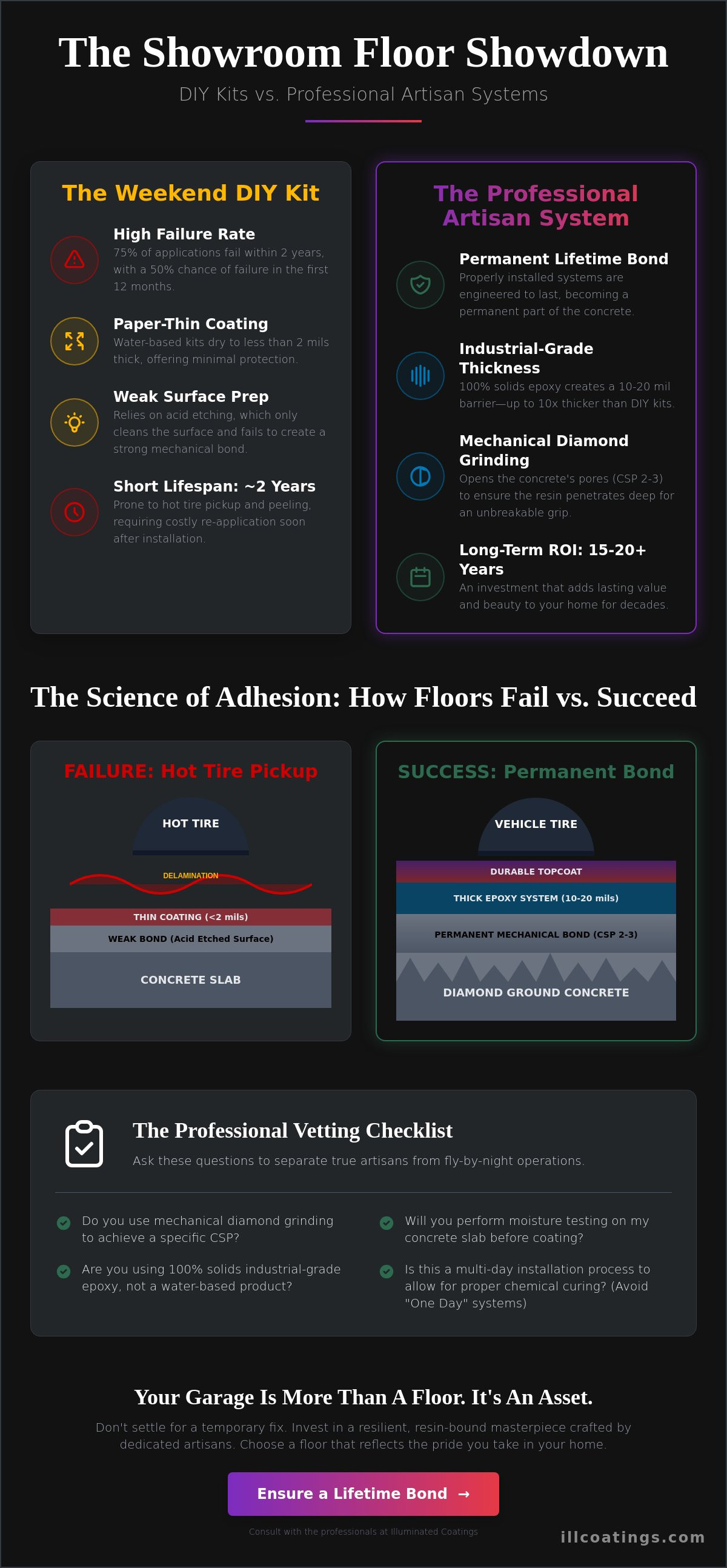
Many people use the term "garage floor paint" to describe what we do, but that's a dangerous misnomer. Paint is a thin layer designed for aesthetics, while a professional coating is an engineered system. Our process results in a dry film thickness of 10 to 20 mils, whereas store-bought paint often dries to less than 2 mils. A high-performance coating is a chemical bond that fuses with the substrate rather than a surface layer prone to peeling.
Why DIY Kits Often Fail within 24 Months
Industry data suggests that 75% of DIY epoxy applications fail within the first two years. The most common culprit is "hot tire pickup," where heat from your tires softens the low-quality resin and pulls it right off the concrete. DIYers rely on acid etching, which only cleans the surface. We use diamond-tipped mechanical grinders to open the pores of the concrete. This prevents delamination, the #1 cause of floor failure, which is almost always rooted in improper moisture testing and surface preparation.
If you choose the DIY route, you'll likely be stripping and reapplying that "cheap" kit by 2026. A professional installation from experienced garage floor epoxy contractors lasts 15 to 20 years with minimal maintenance. This long-term ROI transforms an ugly, oil-stained floor into a durable masterpiece that will turn heads for decades. We don't just cover up your concrete. We transform it into an asset that adds real value to your home.
For homeowners who want to extend this level of quality to the rest of their property, NovoTech provides premier painting and renovation services that ensure every space reflects a standard of excellence.
The Technical Process: How Experts Achieve a Lifetime Bond
Professional garage floor epoxy contractors approach every project with the mindset of a chemist and the eye of an artist. It's not about rolling on a coat of paint; it's about engineering a surface. A professional installation creates a permanent, mechanical bond that survives 4,000-pound vehicles and harsh chemical spills. If your preparation is flawed, your floor will fail. It's that simple. Experts focus on the science of adhesion to ensure the result is a durable masterpiece rather than a temporary fix.Diamond Grinding vs. Acid Etching
DIY kits usually include a small bag of citric acid for "etching." This is an outdated shortcut that often leads to catastrophic peeling within 12 months. Professional garage floor epoxy contractors invest $15,000 or more in heavy-duty planetary diamond grinders to achieve a Concrete Surface Profile (CSP) of 2 or 3. This mechanical process removes the "laitance," which is the weak, dusty top layer of the concrete. By grinding away this barrier, we expose the open pores of the slab. This allows the resin to dive deep into the concrete, creating a root system that no car tire can pull up.The Multi-Layer System Breakdown
A showroom-quality finish requires a strategic, multi-stage application. We don't cut corners because this work is our livelihood. Every layer serves a specific functional purpose:- The Primer: This is the most critical stage. It creates a chemical marriage between the concrete and the coating. Because industrial-grade resins can involve hazardous air pollutants if handled without professional training, expert installation ensures both safety and environmental compliance.
- The Base Coat: We utilize 100% solids epoxy. Unlike water-based DIY products that lose 40% of their thickness through evaporation as they dry, our base coat maintains its full volume for a thick, seamless foundation.
- Decorative Flakes: A full broadcast of vinyl flakes does more than just turn heads. These flakes provide essential slip resistance and add a layer of impact protection to the floor.
- The Topcoat: We finish with a polyaspartic topcoat. This is the industry gold standard. It's 4 times more durable than standard epoxy and remains UV-stable, meaning it won't yellow under the intense Florida sun in cities like Tampa or St. Petersburg.
The One-Day Coating Myth: Why Rushed Installations Can Be Risky
The "one-day garage floor" is a marketing trend that has taken the industry by storm. It promises homeowners a total transformation between breakfast and dinner. While the appeal of instant gratification is strong, these rushed timelines often ignore the complex chemistry required for a lifelong bond. If you prioritize speed over science, you risk a floor that looks great for six months but begins to delaminate shortly after. We believe your floor is a masterpiece, not a race. Rushing the installation process compromises our livelihood and your investment.
Concrete is a porous, breathing material. It requires time for outgassing, a process where air trapped in the slab escapes. If a contractor applies layers too quickly, that air becomes trapped, creating tiny bubbles or "pinholes" in the finish. Professional garage floor epoxy contractors understand that a multi-day approach isn't a sign of slow work; it's a sign of artisan dedication. Taking the time to let each layer stabilize ensures the final result will turn heads for decades, not just weeks.
Fast-Cure Resins vs. Deep-Bonding Epoxies
Many one-day systems utilize polyaspartic coatings for every layer because they dry in roughly two hours. While polyaspartics make excellent topcoats due to their UV resistance, they often lack the "wetting" ability of high-quality industrial epoxies. A deep-bonding epoxy primer needs time to seep into the concrete pores to create a mechanical lock. Professional installers rely on the American Concrete Institute guide on surface preparation to ensure the slab is mechanically profiled before any resin touches the ground. In high-moisture environments like Tampa or St. Petersburg, speed is the enemy of the bond in high-humidity environments. If the resin cures before it can penetrate the concrete, the floor remains "floating" on the surface, ready to peel under the weight of a vehicle.
The Importance of Cure Times for Longevity
At the molecular level, epoxy undergoes a complex process called cross-linking. During a standard 48-hour cure period, the resin and hardener molecules form a dense, interconnected web that provides its legendary strength. Rushing this process with chemical accelerators often leads to brittleness. A floor that cures too fast becomes glass-like and prone to cracking under impact.
- Walking vs. Driving: Just because you can walk on a floor in 4 hours doesn't mean it's ready for a car. Full chemical resistance often takes 72 hours to achieve.
- Hot Tire Pickup: Parking a vehicle on a floor that hasn't fully cured leads to "hot tire pickup," where the heat from your tires bonds to the coating and pulls it off the slab.
- Chemical Integrity: A slow-cured floor can withstand oil, gas, and road salt spills without staining or softening.
When you hire experienced garage floor epoxy contractors, you're paying for a controlled chemical reaction. We don't just paint your floor; we transform it into a showroom-quality environment. This level of durability requires a schedule that respects the materials. If a contractor promises a "miracle" finish in eight hours, they're likely sacrificing the long-term health of your garage for a quick paycheck.
Vetting Your Installer: A Homeowner’s Professional Checklist
Choosing between different garage floor epoxy contractors requires a strategy that looks past the initial price tag. A low bid often signals that a company is cutting corners on prep work or using inferior materials that won't stand up to daily traffic. If a quote is 25% to 40% lower than the local average in Tampa or St. Petersburg, the contractor is likely sacrificing the mechanical bond that makes a floor last. You aren't just buying a service; you're investing in a transformation that should turn heads for a decade, not just a weekend. High-quality craftsmanship is our livelihood, and we know that a "cheap" floor usually becomes the most expensive one you'll ever buy when it needs to be ground off and replaced in 18 months.
Listen for red flag phrases during your consultation. If a contractor says "acid washing is just as good as grinding," they're prioritizing their convenience over your floor's integrity. Acid washing often fails to open the pores of modern, power-troweled concrete. Another warning sign is the "one-day miracle" pitch for standard epoxy. While some polyaspartic systems allow for fast returns to service, traditional high-build epoxy requires specific cure times to reach its full industrial strength. If the logic doesn't lean toward durability, the result won't be a masterpiece.
Questions Every Homeowner Should Ask
- "What is your mechanical prep process?" You want to hear "diamond grinding." This process removes the laitance and creates a CSP (Concrete Surface Profile) of 2 or 3, which is essential for the resin to bite into the slab.
- "Are you using 100% solids epoxy or a hybrid?" Water-based or hybrid DIY kits are often only 40% to 50% solids. As they dry, the liquids evaporate, leaving a thin, brittle film. 100% solids epoxy stays the same thickness from application to cure.
- "Do you perform a moisture test before starting?" Florida's high water table makes this mandatory. We use ASTM F2170 standards to check internal relative humidity. If moisture vapor transmission (MVT) levels are above 3 pounds per 1,000 square feet, a specialized moisture vapor barrier is required to prevent delamination.
Reading the Fine Print in an Epoxy Contract
A "lifetime warranty" is only as reliable as the company's local reputation and the fine print in their agreement. Many generic warranties exclude "hot tire pick-up" or "hydrostatic pressure," which are the two most common causes of floor failure. Ensure your contract explicitly lists the product brands and the number of layers being applied. A professional system should include a primer or moisture barrier, a thick base coat, a full broadcast of decorative flakes, and a UV-stable topcoat. Verify that the garage floor epoxy contractors you hire carry specific liability insurance for heavy grinding equipment. This protects your property and ensures the team treats your home with the respect a family-owned business provides.
If you want a floor that combines industrial-grade strength with a showroom finish, schedule a professional consultation today.
The Illuminated Coatings Standard: Craftsmanship for Your Space
Illuminated Coatings represents the specialist choice for homeowners who demand high-stakes transformations. We don't view your floor as just another entry on a work calendar. For our family-owned team, every project is a direct reflection of our livelihood. This personal connection ensures that we never settle for "good enough" because our reputation is built into every square foot we coat. If your concrete is currently stained, cracked, or simply ugly, we have the professional grade tools to make it a point of pride. Our goal is to create a surface that genuinely turns heads every time you open the garage door. As premier garage floor epoxy contractors, we bring a level of dedication that DIY kits cannot match. We also offer specialized services in Vuba stone and concrete polishing to ensure every inch of your property reflects your high standards.
The Artisan Approach to Industrial Strength
We balance the creation of an aesthetic masterpiece with the necessity of heavy-duty durability. The "Illuminated" promise is about bringing brilliance to dull, forgotten spaces through meticulous labor and high-end materials. Our team refuses to cut corners on preparation. We utilize industrial diamond grinding to open the concrete pores, a critical step that roughly 70 percent of DIY failures skip. We also strictly adhere to manufacturer-recommended cure times rather than rushing to the next job site. This patience results in a floor that handles heavy vehicle traffic and chemical spills without peeling or hot-tire pickup. We transform your garage into a high-performance environment that looks and feels like a professional showroom.
Beyond the Garage: A Complete Concrete Solution
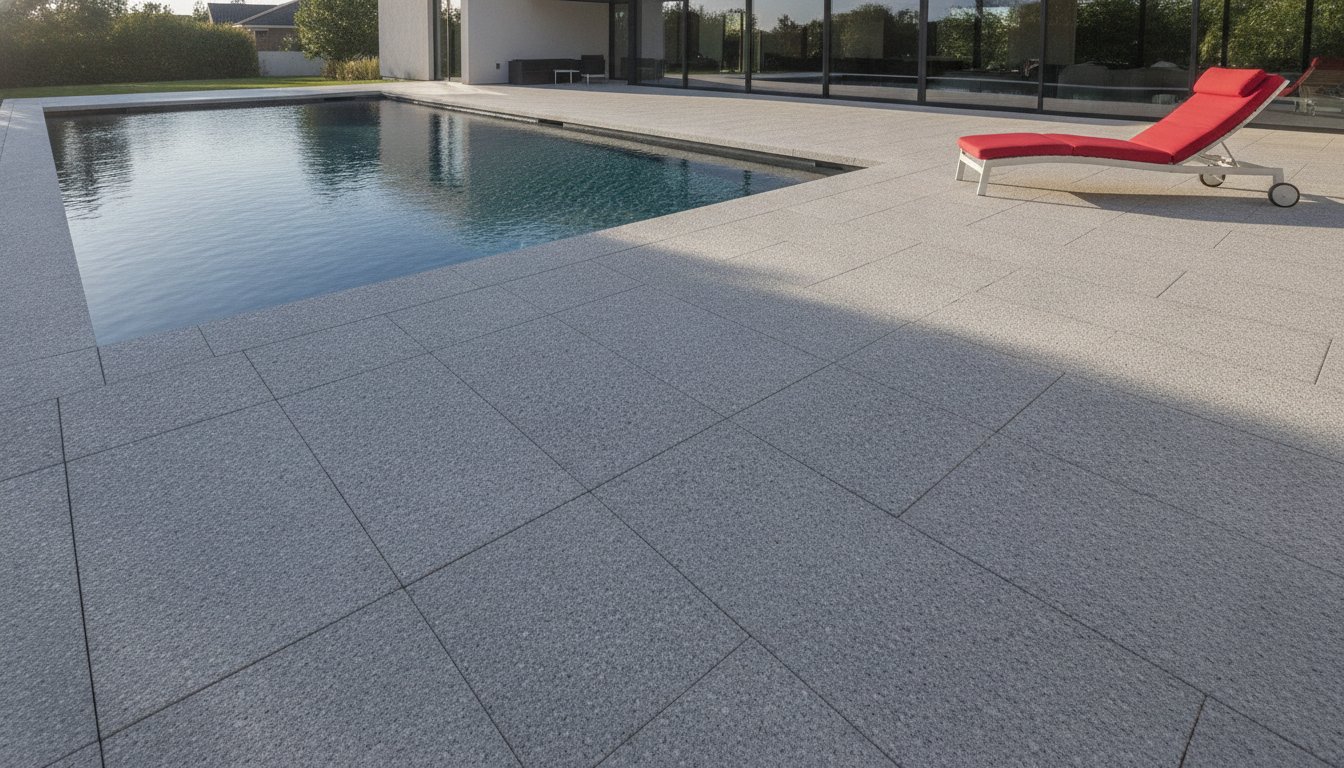
Our expertise extends past residential garages to serve the wider Florida community. We provide high-performance commercial floor coatings for local business owners who need surfaces that withstand constant foot traffic and heavy machinery. If you want to upgrade your driveway, walkway, or pool deck, we invite you to explore our resin-bound stone for outdoor surfaces. This porous, slip-resistant solution offers a prestige look that enhances curb appeal instantly. Whether it's a warehouse in Tampa or a custom patio in Spring Hill, we deliver the same artisan quality and focus. Stop settling for a floor that brings down your home's value. Request a professional quote from Illuminated Coatings today and see the difference that true craftsmanship makes for your property.
Claim Your Showroom Quality Transformation
If you're ready to stop looking at a cracked, stained floor and start seeing a showroom, the choice is clear. Professional garage floor epoxy contractors bring the specialized grinding equipment and technical expertise required to achieve a Concrete Surface Profile (CSP) of 2 or 3. This mechanical preparation is the only way to ensure your coating doesn't peel when tires reach temperatures over 130 degrees. We've spent years perfecting our artisan craftsmanship as a family-owned and operated team. We specialize in high-performance resin-bound stone and industrial coatings that turn a standard garage into a durable masterpiece. Our livelihood depends on your satisfaction; we care about making your floor a point of pride. Don't settle for a thin, one-day coating that risks failing or delaminating within the first year. You deserve a space that reflects your standards and stands up to heavy daily wear. It's time to invest in a surface that truly transforms your home and makes you proud to open your garage door every single day.
To complement your new high-performance flooring with a fresh look for your walls, check out Higher Impact Painting for professional residential painting services.
Transform your garage into a durable masterpiece with Illuminated Coatings
Frequently Asked Questions
How much do professional garage floor epoxy contractors charge?
Professional garage floor epoxy contractors typically charge between $3 and $12 per square foot according to 2024 industry data from HomeAdvisor. This investment covers industrial-grade materials and the intensive diamond grinding required for a permanent bond. If you choose a professional, you're paying for a durable masterpiece that won't peel under hot tires. Our family-owned team treats every project as our livelihood; we ensure your floor turns heads for years.
Is professional epoxy actually better than a DIY kit from a big-box store?
Professional-grade epoxy is 100% solids, while big-box DIY kits often consist of 50% water or solvents that evaporate during curing. This leaves a thin, brittle film that frequently fails within 12 to 24 months of application. Our industrial resins create a thick, resin-bound surface that's up to 10 times thicker than retail alternatives. You get a showroom finish that resists chemicals and impacts instead of a temporary coating that flakes off.
How long does a professionally installed garage floor last?
A professionally installed epoxy floor lasts 15 to 20 years in a residential setting when maintained properly. This longevity stems from the mechanical bond created during the concrete preparation phase. Unlike DIY applications that often bubble after a single season, our masterwork stands up to daily traffic in the Florida heat. We transform your space into a permanent asset that maintains its brilliance long after the "new" wears off.
What is the difference between epoxy and polyaspartic coatings?
Epoxy provides a superior base bond to concrete, while polyaspartic coatings offer 4 times the flexibility and 100% UV resistance. We often use a hybrid system to give you the best results from both materials. The epoxy primer grips the slab, and the polyaspartic topcoat ensures your floor doesn't yellow from sun exposure. This combination creates a slip-resistant surface that handles the 100-degree temperatures common in Spring Hill and Tampa.
Do I really need to have my garage floor ground before applying epoxy?
You must diamond grind your concrete to an International Concrete Repair Institute Concrete Surface Profile of 2 or 3 to ensure adhesion. Acid washing only cleans the surface, but grinding opens the pores of the slab so the resin can root into the concrete. If you skip this step, your coating will likely peel within 6 months. We use heavy-duty planetary grinders to prep every floor into a perfect canvas for your masterpiece.
How long do I have to wait to park my car on a newly epoxied floor?
You can typically walk on the floor after 24 hours, but you should wait 72 to 96 hours before parking a vehicle on the surface. This timeframe allows the chemical cross-linking process to reach full Shore D hardness. Parking too early can cause hot tire pick-up, where the heat from your tires pulls the coating off the concrete. Following this 4-day rule ensures your floor remains a durable centerpiece for your home.
Can epoxy be applied over old paint or existing coatings?
No, we must remove 100% of existing paint or failing sealers before applying a new professional system. New epoxy only bonds as well as the layer beneath it; old paint is notorious for delaminating under pressure. Our team uses aggressive grinding equipment to strip away old, ugly coatings and reveal fresh concrete. This process guarantees our garage floor epoxy contractors are building your new floor on a rock-solid foundation.
What is the best way to maintain a professional epoxy floor?
Maintenance requires only a soft-bristle broom and a pH-neutral cleaner mixed with water every 2 to 3 months. Avoid using acidic cleaners or stiff wire brushes that can dull the high-gloss showroom finish. If you spill oil or chemicals, wipe them up within 24 hours to prevent any potential staining. This simple routine keeps your floor looking Illuminated and ensures the surface continues to turn heads for decades.