A concrete coating is not a cosmetic mask; it is a mechanical transformation that either fuses with your slab or fails before the first year is up. If you've spent any time looking at cracked, bubbling garage floors or peeling patios, then you already know that the difference between a disaster and a masterpiece is the person holding the grinder. It's frustrating to feel stuck between confusing technical terms like polyaspartic or resin-bound stone while worrying if a contractor is just rushing to the next job. You deserve a surface that serves as a point of pride for your home, not a recurring maintenance headache.
Knowing the right questions to ask a concrete resurfacing company is your only insurance policy against a failed investment. We've built this guide to transform you from a hopeful homeowner into a savvy project manager. You'll learn how to grill specialists on ICRI prep standards and material durability to ensure your new floor delivers a lifetime of slip-resistant, gallery-quality beauty. From identifying blue-collar artisans to spotting red flags in a quote, here is how you secure a finish that actually increases your property value in 2026.
Key Takeaways
- Identify true craftsmanship by vetting for on-site leadership and verifying project durability through references that have stood the test of time.
- Secure a permanent bond by knowing the specific technical questions to ask a concrete resurfacing company about mechanical grinding versus inferior preparation methods.
- Navigate the complex world of material science to choose between high-performance epoxy, polished finishes, or the gallery-quality elegance of resin-bound stone.
- Protect your investment and your property by clarifying return-to-service timelines and the specific measures used to safeguard your surrounding landscape.
- Decode warranty fine print to ensure you are covered for actual performance issues like delamination rather than just basic material defects.
Vetting for Mastery: Questions About Credentials and Reputation
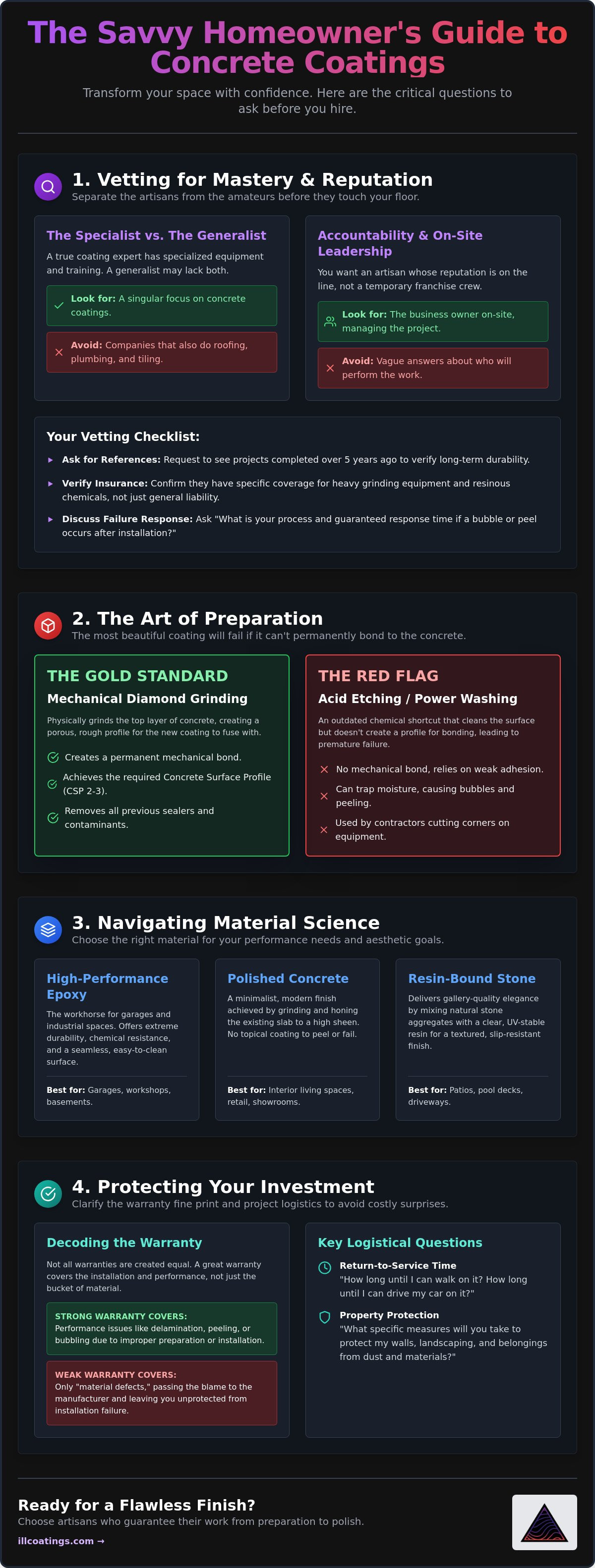
Hiring a contractor to transform your property is a high-stakes decision. If you choose a generalist who treats your garage floor like a side project, then you risk a coating that peels before the seasons change. True craftsmanship requires more than just a bucket and a roller; it demands a specialist mindset. When compiling your list of questions to ask a concrete resurfacing company, start with the fundamentals of their business structure and their long-term track record.
The Specialist vs. The Generalist
A general handyman might be excellent at fixing a leaky faucet or hanging drywall, but high-performance resins are unforgiving. These materials require precise chemical ratios and specific environmental conditions to bond correctly. If a company claims to do everything from roofing to tile installation, they likely lack the specialized equipment needed for industrial-grade grinding. You want a team with a singular professional focus on coatings. Ask if they have mastered decorative concrete techniques like resin-bound stone or if they're simply applying a retail-grade paint. A specialist invests in the heavy machinery and technical training required to deliver a gallery-quality finish that lasts decades.
Accountability and Professional Survival
There is a massive gap between a local, family-owned business and a revolving-door franchise crew. In a franchise model, the technician on your driveway might've only started their training two weeks ago. When you speak with a potential contractor, ask if the owner will be on-site or if the job is being handed off to a sub-contracted crew. Local artisans operate with a sense of dedication because their reputation in the community is tied to their professional survival. If a project fails, they can't simply close the branch and move on; their livelihood depends on your satisfaction.
Use these specific vetting points to separate the experts from the amateurs:
- Verify Longevity: Ask for three references for projects completed over five years ago. Anyone can make a floor look good for a week. Only a master can make it last five years.
- Insurance Specifics: Check if they're insured specifically for the volatile chemicals and heavy grinding equipment they use. Standard general liability often fails to cover the unique risks of resin applications.
- Failure Response: Ask how they handle "failure calls." If a bubble appears or a seam lifts, what's their guaranteed response time? A reliable partner stands by their work long after the final check clears.
A contractor's commitment to excellence is the bridge between a dull, dusty slab and a stunning, durable environment that serves as a point of pride for your home. Don't settle for a generalist when your property value is on the line.
The Art of Preparation: Why Mechanical Grinding Is Non-Negotiable
A beautiful finish on a poorly prepared slab is just a ticking time bomb. If you prioritize the final color over the initial prep, then you're essentially painting over a problem that will eventually peel, bubble, or flake away. True craftsmanship begins long before the first drop of resin touches the ground. One of the most vital questions to ask a concrete resurfacing company is how they intend to achieve a mechanical bond with your existing slab. Without "teeth" for the coating to grab, even the most expensive materials will fail within a few seasons.
Diamond Grinding vs. Acid Etching
In 2026, any contractor suggesting acid etching or power washing as a primary prep method is offering an outdated shortcut. Acid etching uses a chemical reaction to eat away the surface, but it often fails to reach the necessary depth and leaves behind moisture that traps under the new coating. Professional artisans use industrial diamond grinding machinery to physically shave the top layer of the concrete. This process exposes the open pores of the slab and creates a specific Concrete Surface Profile (CSP) usually between a CSP 2 or 3. This mechanical profile is what allows high-performance resins to fuse with the concrete at a molecular level. You can see how these standards compare in a professional step-by-step resurfacing guide to understand why mechanical force beats chemical shortcuts every time. Always ask if their equipment includes HEPA-filtered dust containment systems to keep your home and lungs clear of silica dust.
Repairing the Foundation Before the Finish
A coating is only as stable as the concrete underneath it. If your slab has existing cracks, oil stains, or spalling, these issues must be surgically addressed before resurfacing. Professionals don't just "fill" cracks with a generic caulk; they use high-tensile "stitching" techniques or carbon fiber staples to prevent future movement. Oil and grease are deep-seated contaminants that require specialized degreasers and mechanical removal to ensure the bond isn't compromised. Masking a crack is a recipe for early failure. If you want a floor that stands up to heavy traffic and temperature swings, then you need a team that treats the prep phase as the most important part of the job. If you're ready to see what a properly prepared surface looks like, it's time to explore how professional grinding concrete services can revitalize your property with a permanent, gallery-quality bond.
Material Science: Choosing Between Epoxy, Polishing, and Resin-Bound Stone
If you've mastered the prep, the next hurdle is selecting a material that won't betray you. One of the critical questions to ask a concrete resurfacing company is whether they use a 100% solids system or a watered-down, solvent-based alternative. Watered-down products evaporate during curing, leaving behind a thin, brittle film that lacks industrial-grade durability. You want a high-build material that stays on the floor, providing a thick, resilient shield against the elements. For outdoor projects, the sun is your primary enemy. Inferior resins lack UV stability and will begin yellowing or "ambering" within months. True artisans prioritize UV-stable polyaspartics or specialized stone resins to ensure your property's brilliance remains vibrant for decades.
The Vuba Stone Advantage for Outdoor Spaces
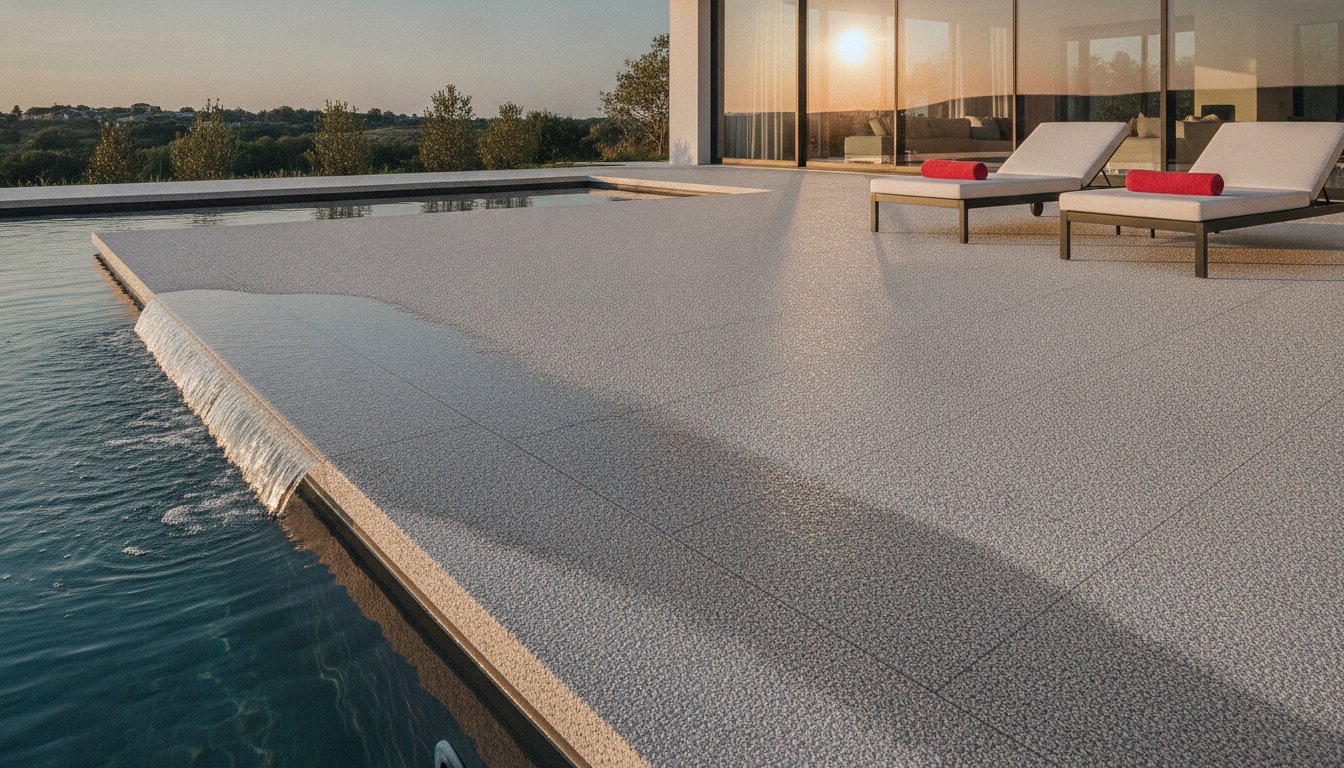
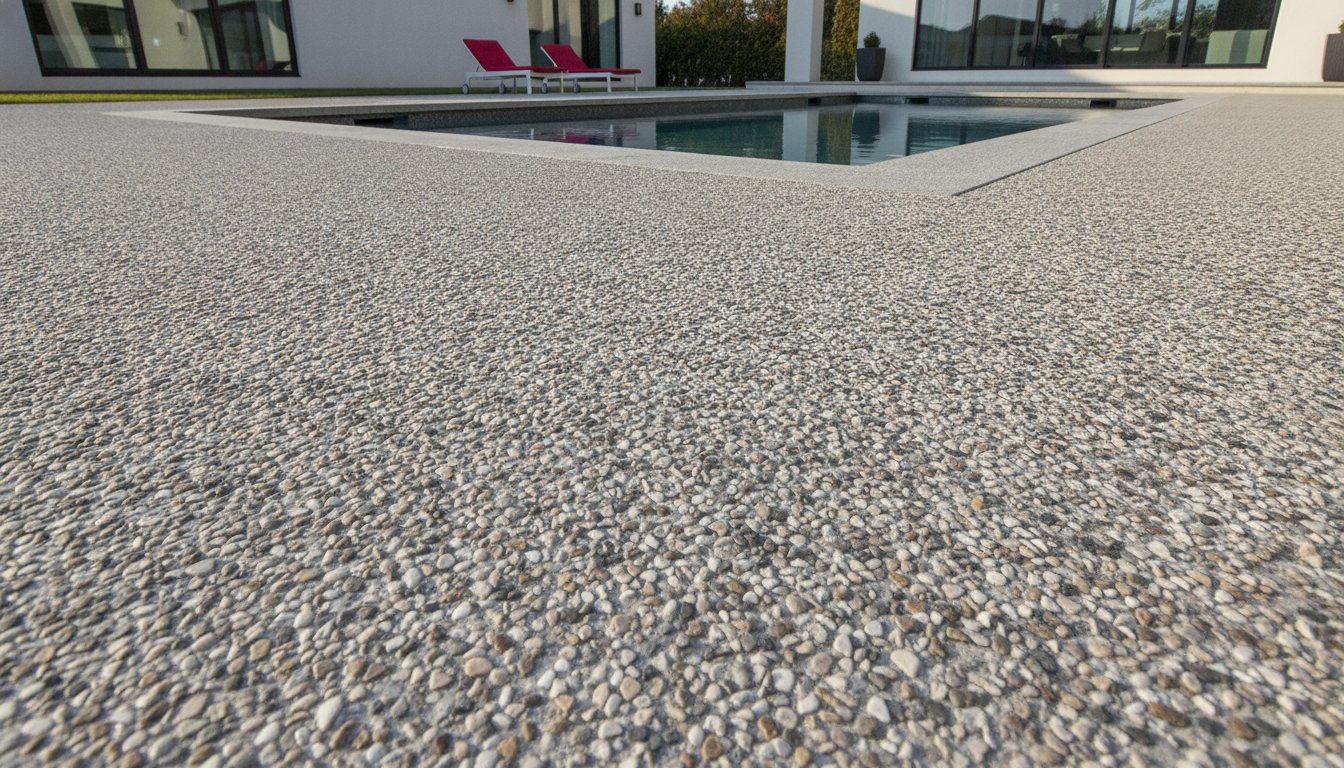
Resin-bound stone, often referred to as Vuba stone, is a game-changer for 2026 pool decks and patios. Unlike solid coatings, this system is naturally porous. It allows water to drain directly through the surface, eliminating puddles and drastically reducing slip hazards. Ask your contractor how the resin handles high-heat environments. High-quality resin-bound stone remains cooler underfoot than traditional concrete or standard epoxy, making it the superior choice for barefoot summer days. It combines the raw beauty of natural stone with the safety of a slip-resistant, gallery-quality finish that standard overlays simply can't match. If your goal is a high-end transformation that handles heavy rain and high heat, then Vuba stone is the artisan's choice.
High-Performance Garage Coatings
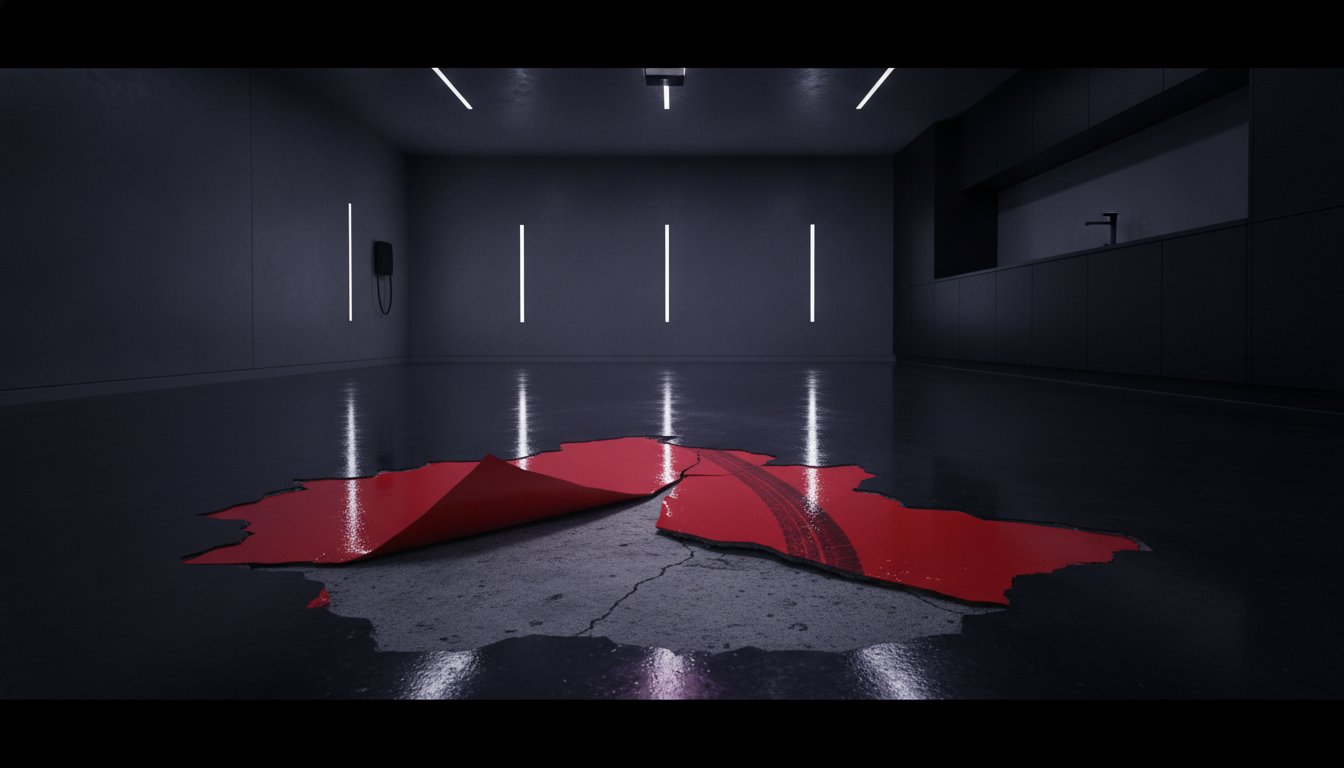
Your garage floor faces unique stressors like "hot tire pick-up" and chemical spills. If a contractor suggests a basic DIY-style epoxy, then they don't understand the physics of a garage. Professional-grade garage floor epoxy is engineered to resist the heat of tires coming off the asphalt. For homeowners who need a fast return-to-service, ask about polyaspartic topcoats. These cure rapidly, often allowing you to park your vehicle back in the garage within 24 hours. Additionally, verify if they install a moisture vapor barrier. Without this, hydrostatic pressure from the soil can push moisture through the concrete, causing your beautiful new coating to bubble and delaminate from the bottom up. Knowing the right questions to ask a concrete resurfacing company regarding their material chemistry is the only way to guarantee a finish that survives the daily grind.
For interior spaces where you want a minimalist, industrial aesthetic, concrete polishing is a fantastic alternative. It offers a low-maintenance, high-gloss finish without the need for a thick coating. However, if you're dealing with a slab that has heavy staining or multiple repairs, a high-build epoxy or resin-bound stone system will provide the uniform, "gallery-quality" look you desire.
Timeline and Logistics: Managing the Transformation
A transformation of this magnitude requires a surgical approach to scheduling. Rushing the physical application is the fastest way to ruin high-end materials and waste your investment. When you are compiling questions to ask a concrete resurfacing company, you must demand a realistic roadmap that accounts for more than just the hours spent on-site. Industrial-strength results require patience during the cross-linking phase; if you ignore the chemistry of the cure, you're inviting premature delamination. A true artisan knows that the clock starts long before the resin is poured and continues long after the crew departs.
Protecting Your Investment During Installation
The grinding and application phases are messy, intense processes that require strict containment protocols. Ask your contractor about their specific masking procedures for walls, siding, and landscaping. Professional teams use industrial-grade vacuums and tape-and-drape systems to ensure that silica dust and resin splatter don't migrate to your living spaces. Environmental factors are equally critical. If the humidity exceeds 85% or the slab temperature drops below 50 degrees, then the chemical bond is fundamentally compromised. A dedicated specialist will monitor these conditions with professional-grade sensors and will postpone the installation rather than risk a failed bond. Maintaining a clean, debris-free environment during the "tack" phase is essential to achieving a gallery-quality finish without trapped dust or insects.
The Reality of the Curing Process
Don't fall for the "24-hour cure myth" when it involves heavy vehicle traffic or chemical exposure. There is a massive difference between a surface being "dry to the touch" and being "fully chemically cured." While modern polyaspartic topcoats allow for faster return-to-service than traditional epoxies, the underlying layers still need time to stabilize. If you park a heavy SUV on a fresh floor too early, then the heat from the tires can cause "hot tire pick-up," pulling the coating right off the concrete. Use this general timeline to manage your expectations:
- Day 1: Installation and initial drying. The area is strictly off-limits to everyone.
- Day 2: Light foot traffic is typically permitted. Keep pets and heavy boots away.
- Day 7: Full chemical cure achieved. This is the green light for vehicles, heavy machinery, and aggressive cleaning.
Managing these logistics is a shared responsibility between the homeowner and the artisan. If you are ready to partner with a team that respects your property and the science of the slab, it is time to schedule your professional concrete resurfacing today. We prioritize the integrity of the process to ensure your transformation lasts a lifetime.
The Bottom Line: Value, Warranty, and the Artisan Choice
Choosing the lowest bid is often the most expensive mistake a homeowner can make. If a quote seems significantly lower than the competition, then the contractor is likely cutting corners on mechanical prep or using watered-down resins that lack industrial-grade solids. In the world of high-performance coatings, you aren't just paying for a material; you're investing in the technical expertise of a specialist who ensures that material never leaves your slab. Finalizing your list of questions to ask a concrete resurfacing company should focus on the long-term security of your investment and the accountability of the team standing behind the work. You deserve a partner who views your driveway or garage as a point of professional pride, not just another job site.
Understanding the Warranty Fine Print
A warranty is only as strong as the company that writes it. You must distinguish between a "material warranty" and a "labor warranty" before signing any contract. A material warranty only covers the resin itself, meaning if the floor peels because of poor prep, the manufacturer won't help you. Ask specifically if the coverage includes delamination. If the coating separates from the concrete, you need to know the contractor will return to fix it without charging you for labor. Be wary of "lifetime" promises from businesses that haven't even been in the community for five years. A true artisan offers a warranty backed by their own local reputation and professional survival. Transform your concrete with the specialists at Illuminated Coatings to ensure your protection is as durable as your new floor.
Why Quality Resurfacing is an Asset, Not an Expense
Professional resurfacing is a strategic upgrade that directly impacts your property's marketability. With the residential sector accounting for 42% of the total concrete resurfacing market revenue in 2026, homeowners are increasingly viewing these finishes as essential curb appeal. A "gallery-quality" garage or pool deck isn't just a surface; it's a statement of care that increases property value. At Illuminated Coatings, we don't just apply a product; we Illuminated Coatings your environment by bringing life and brilliance to dull, cracked spaces. We treat every slab as a canvas for our craftsmanship, ensuring your home stands out in the neighborhood. If you're ready to move beyond the frustration of bad past experiences and generic contractors, then it's time to choose a specialist mindset. Contact us today for a professional consultation and quote and experience the difference that accountability and local pride make.
Secure Your Property's Future with an Artisan Finish
A high-performance floor is a marriage of industrial science and meticulous craftsmanship. If you prioritize the integrity of the mechanical grind and the quality of the resin, then you secure a surface that remains a point of pride for decades. Armed with these technical questions to ask a concrete resurfacing company, you're no longer at the mercy of contractors who cut corners or use watered-down materials. You now have the insights needed to identify a specialist who treats your slab with the respect it deserves.
At Illuminated Coatings, we bring family-owned integrity and a "blue-collar artisan" focus to every project. We specialize in Vuba stone and high-performance resins, ensuring that every transformation is rooted in durability and aesthetic brilliance. We don't just apply a coating; we transform your environment into a gallery-quality space that stands up to the daily grind. Don't settle for a temporary fix when a lifetime of durability is within reach.
Request Your Professional Concrete Transformation Quote today and let's bring life back to your dull concrete.
Frequently Asked Questions
Is concrete resurfacing better than replacing the whole slab?
Resurfacing is a superior alternative to replacement unless your slab has suffered major structural failure or deep settlement. It typically saves homeowners between 50% and 70% compared to the cost of a full tear-out and pour. If your concrete is structurally sound but visually dull, then resurfacing provides a gallery-quality transformation without the environmental waste or logistical nightmare of heavy demolition.
Can you resurface concrete that is already badly cracked or spalling?
You can absolutely resurface damaged slabs, provided the contractor uses advanced "stitching" and high-tensile repair resins. While deep structural cracks require professional assessment, surface spalling and minor fissures are routinely restored through industrial grinding and fiber-reinforced products. If the underlying foundation is stable, then our artisan-level prep techniques will bridge those imperfections to create a seamless, durable finish.
How long does a professional concrete coating actually last?
A professionally installed industrial coating can last 15 to 25 years or more, depending on traffic and maintenance. The longevity is entirely dependent on the initial mechanical bond achieved during the grinding phase. When you have the right questions to ask a concrete resurfacing company, you're ensuring the use of 100% solids systems that won't flake or amber over time.
What is the difference between Vuba stone and traditional epoxy?
Vuba stone is a porous, resin-bound system designed for superior drainage, whereas traditional epoxy creates a solid, impermeable barrier. While epoxy is the standard for high-traffic garage interiors, resin-bound stone is the premier choice for outdoor pool decks and driveways. Its permeable nature prevents puddling and offers a natural, slip-resistant texture that feels cooler underfoot during peak summer heat.
Can I stay in my home while the garage floor is being coated?
You don't need to vacate your home during the installation process, especially when we utilize low-VOC and solvent-free materials. Our high-performance resins are engineered for residential safety, and our HEPA-filtered dust containment systems keep silica out of your living air. While you'll need to keep the garage door closed to prevent debris from entering the wet resin, your daily routine inside the house remains undisturbed.
How much maintenance does a resin-bound stone driveway require?
Resin-bound stone driveways are remarkably low-maintenance, requiring only an occasional power wash to remove surface debris. Because the system is UV-stable and weed-resistant, you won't deal with the constant cracking or vegetation growth common with pavers. A simple re-seal every few years will maintain the original brilliance and ensure the stone remains tightly bound against heavy vehicle traffic.
What happens if the concrete resurfacing fails or starts to peel?
If a coating begins to peel or delaminate, it is almost always a sign of a failed mechanical bond or moisture vapor pressure. This is why we emphasize the importance of a labor warranty that specifically covers delamination rather than just material defects. An artisan team will return to mechanically grind the failed area and re-apply the system to ensure the transformation is permanent.
Is polished concrete too slippery for a residential home?
Polished concrete is not inherently more slippery than tile or hardwood, and it can be customized with slip-resistant additives to meet safety standards. For high-moisture areas like kitchens or entryways, we can adjust the grit level or incorporate specialized sealers to increase traction. This ensures you get the high-gloss, gallery-quality look without compromising the safety of your family or guests.