
A concrete coating is only as good as the mechanical bond created during surface preparation; if a contractor prioritizes speed over a proper surface profile, they're handing you a ticking time bomb. It's a frustrating reality for homeowners who just want a durable, aesthetic space that adds real property value. You shouldn't have to worry about hot-tire pickup or peeling resin after only one season of use. Knowing the red flags when hiring a concrete coating contractor is the difference between a gallery-quality finish and a costly mistake that requires a full grind-off.
We know you want a transformation that lasts for decades, not just a few months. You're likely tired of hearing conflicting technical jargon about solids and polyaspartics while trying to avoid hidden costs or unreliable warranties. This guide promises to pull back the curtain on the industry, teaching you how to identify high-quality technical processes before you sign a contract. We will walk through exactly what to look for in 2026, from the necessity of mechanical diamond grinding to the truth about 100% solids materials, so you can invest with total confidence.
Key Takeaways
- Verify that your chosen professional carries specialized insurance for chemical handling rather than just a standard general contractor license.
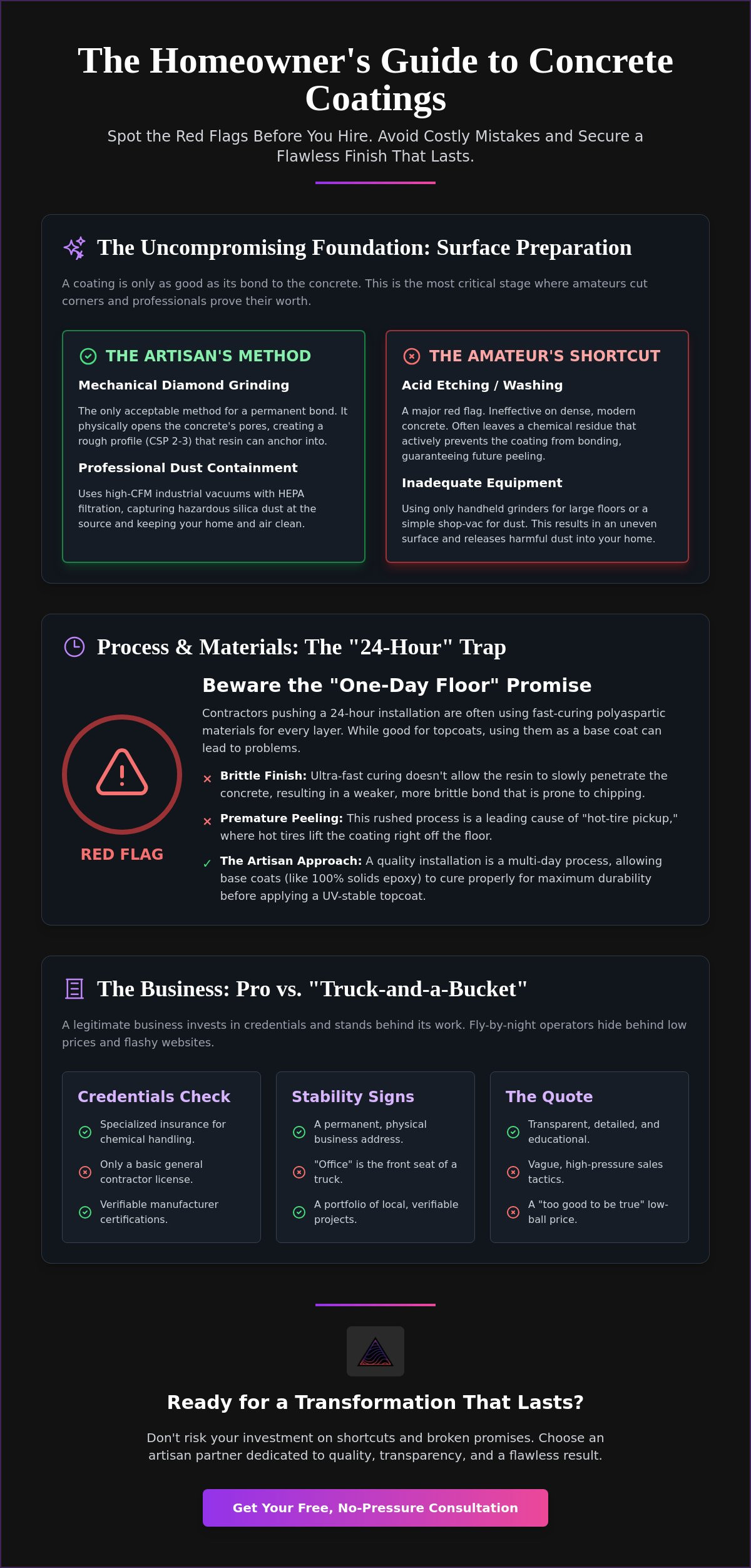
- Identify why mechanical diamond grinding is non-negotiable for a permanent bond and why acid etching is a major red flag when hiring a concrete coating contractor.
- Recognize the "24-hour trap" where rushed installation speeds often lead to brittle finishes and premature peeling.
- Learn the technical indicators of quality for premium resin-bound stone, specifically regarding UV resistance and critical stone-to-resin ratios.
- Distinguish between deceptive high-pressure sales tactics and the transparent, detail-oriented approach of a true flooring artisan.
The "Truck and a Bucket" Trap: Licensing and Insurance Red Flags
The concrete coating industry is currently experiencing a surge in demand, but that popularity has invited an influx of "truck and a bucket" operators who lack the technical backbone to deliver a lasting result. If a contractor lacks specialized credentials, then your investment is at risk from day one. One of the biggest red flags when hiring a concrete coating contractor is a business that relies solely on a basic general contractor license for specialized chemical applications. While many states require contractors to be licensed and regulated, a standard residential license often doesn't account for the high-VOC (volatile organic compound) materials or the complex mechanical prep required for industrial-grade resins.
Hiring an uninsured or under-insured crew is a gamble with your property's safety. If an accident occurs involving hazardous chemical handling, a standard general liability policy might not cover the specialized cleanup costs. Always demand a Certificate of Insurance (COI) sent directly from the insurance agent. If a contractor offers you a blurry photocopy or refuses to involve their agent, walk away immediately. There is a massive gap between a manufacturer-certified specialist and a handyman with a retail-grade epoxy kit. True professionals view their work as a form of craftsmanship, and they protect that craft with comprehensive coverage.
Verifying Professional Credentials
True craftsmanship requires more than just a flashy website. You should verify active state licensing specifically for flooring or specialty finishes. As of June 2026, Georgia requires a license for projects over $2,500; meanwhile, California contractors must maintain a $25,000 bond. Don't take the phrase "factory trained" at face value. Ask for physical documentation from the manufacturer. A permanent business address is another sign of stability. If their only office is the front seat of a pickup truck, they might not be around when a warranty claim arises in six months.
The Problem with "Low Barrier to Entry" Contractors
Amateurs flood this field because the initial investment for a basic kit is low, but the cost of their mistakes is incredibly high. You can spot "fly-by-night" operations by checking their digital footprint and local reputation. Look for a history of local projects and regional geographic markers that prove they are rooted in your community. A low-ball quote is usually the first indicator of an under-insured operation. If the price seems too good to be true, it's because they are cutting corners on insurance, high-end materials, or professional-grade equipment. We treat every floor like a canvas, and that level of dedication requires a legitimate business structure to support it.
Surface Prep Shortcuts: Red Flags in the Grinding Process
A beautiful finish is worthless if it detaches from the slab within six months. The secret to a "forever floor" isn't the topcoat; it's the mechanical bond created during the preparation phase. If a contractor suggests "acid washing" or "etching" as a primary prep method, you've spotted one of the most critical red flags when hiring a concrete coating contractor. Modern concrete is frequently poured at high-density PSI levels that acids simply cannot penetrate. Instead of opening the pores, acid often sits on the surface, creating a chemical film that actually prevents adhesion. Professional results require the raw power of diamond tooling to expose the aggregate and create the perfect anchor pattern for the resin.
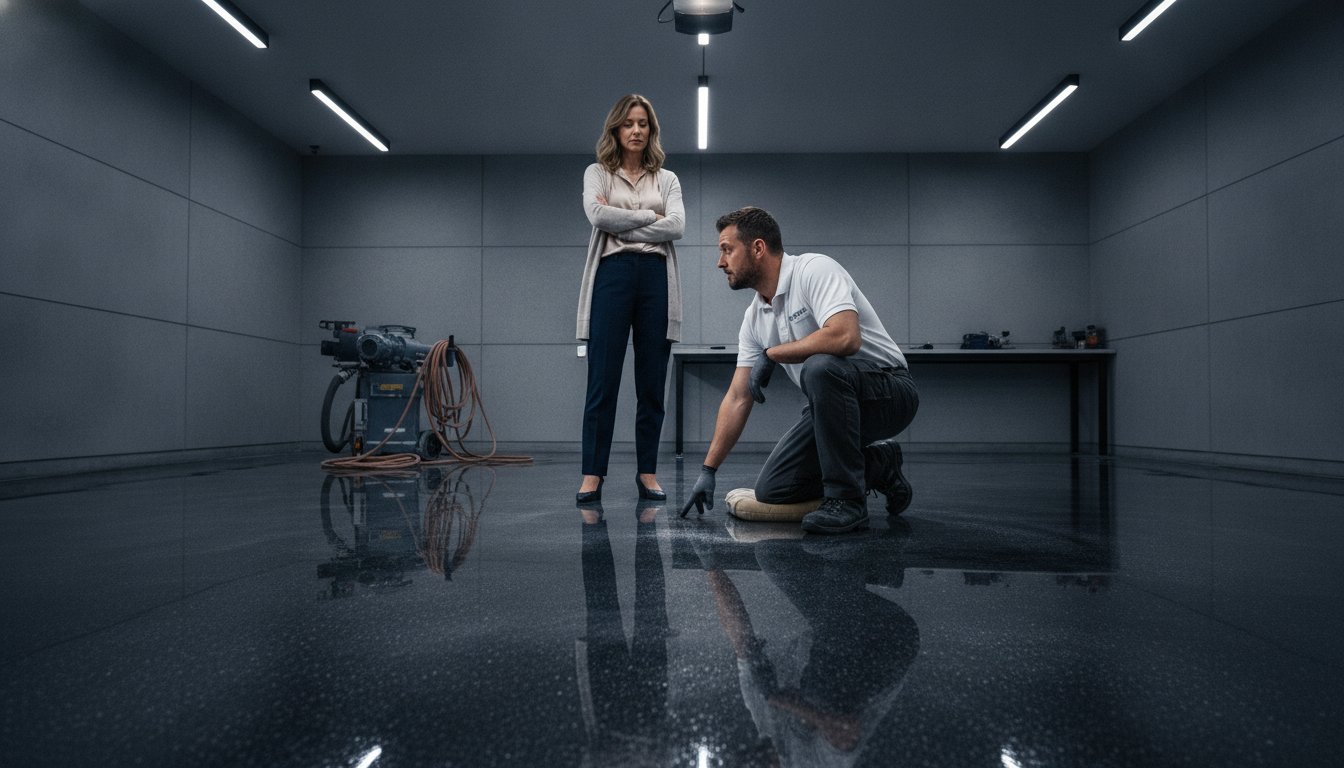
Concrete Surface Profile (CSP) is a standardized measure of surface roughness, where CSP 2-3 represents a texture similar to medium-grit sandpaper, which is the industry gold standard for ensuring a permanent mechanical bond. Achieving this profile requires heavy, planetary diamond grinders. If you see a crew trying to prep a two-car garage with only handheld grinders or floor buffers, they're taking a massive shortcut. Handheld tools are meant for tight corners and edges; they lack the weight and consistency needed to level a large slab. Without the right equipment, you're left with uneven spots and weak points where the coating will eventually fail.
Many amateurs promise a "dustless" experience but show up with a shop-vac and a prayer. Professional dust containment involves high-CFM (cubic feet per minute) industrial vacuums with multi-stage HEPA filtration connected directly to the grinding shroud. This setup ensures that the silica dust, which is a significant health hazard, stays out of your lungs and your home's HVAC system. If you want a transformation that adds genuine value, starting with professional grinding concrete is the only way to guarantee the resin bites deep into the slab.
Mechanical Grinding vs. Acid Etching
Beyond the structural failure, acid etching presents significant environmental risks. The chemical runoff can destroy your landscaping, stain your driveway, and seep into local groundwater. It's a messy, outdated process that provides zero consistency. Mechanical grinding is a dry, controlled process that provides a uniform surface every single time. If a contractor tells you acid is "just as good," they're prioritizing their own convenience over your floor's longevity.
Moisture Testing: The Step Most Contractors Skip
Even a perfectly ground floor can fail if the contractor ignores what's happening beneath the surface. Trapped moisture is the silent killer of epoxy and polyaspartic floors. A major red flag is a contractor who moves straight to mixing chemicals without testing for Moisture Vapor Transmission (MVT). When moisture rises through the slab and hits an impermeable coating, it creates "osmotic blistering." This pressure eventually forces the coating to bubble and pop. Pros use specialized moisture meters or calcium chloride tests to verify the slab is dry enough for the specific resin system being installed. If they don't test, they don't know, and you're the one who pays for the repair.
Material Myths: The "24-Hour" Trap and Solids Content
Marketing hype often overshadows technical reality in the flooring industry. One of the most deceptive red flags when hiring a concrete coating contractor is the promise of a "1-day garage floor" that allows full vehicle use within 24 hours. While modern chemistry is fast, rushing the return-to-service often leads to a brittle finish that fails to achieve a deep chemical cross-link with the slab. Industrial-grade 100% solids epoxy contains zero solvents that evaporate during curing, meaning the thickness you apply is exactly the thickness that remains; conversely, diluted DIY products often lose half their volume to evaporation, leaving a thin, vulnerable film. If a contractor suggests using "water-based" epoxies for high-traffic garage floors, they're prioritizing their profit margin over your floor's survival.
UV stability is a non-negotiable requirement for any outdoor pool deck or patio resurfacing project. Without UV-stable resins, your beautiful transformation will turn a sickly yellow within a single summer. A true artisan treats your property like a gallery, ensuring every material selected is engineered for the specific environmental stresses of your region. If you don't see technical data sheets (TDS) for the products being used, it's a sign the contractor might be using inferior, private-label buckets to cut costs. Quality is a choice, and it starts with the chemicals being mixed on your driveway.
The 24-Hour Cure Myth
There's a massive difference between a floor that's "dry to the touch" and one that's fully "cured." Walking on a floor too early is one thing, but driving a heavy vehicle onto it can cause "hot-tire pickup," where the heat from your tires literally pulls the coating off the concrete. In the United States, varying levels of humidity and temperature significantly impact how chemicals cross-link. A professional understands these variables. They won't gamble with your floor's integrity just to meet an arbitrary 24-hour marketing deadline. If the conditions aren't right, a dedicated specialist will wait for the perfect window to ensure a flawless bond.
Understanding Solids Content and Polyaspartics
Durability is measured in "mils," which refers to the thickness of the dried film. High-solids materials provide the heavy-duty protection needed to withstand dropped tools and chemical spills. While traditional epoxy is a fantastic base coat for its adhesive properties, polyaspartic topcoats are often superior for their scratch resistance and UV stability. However, using the wrong material in the wrong layer is a recipe for delamination. A red flag to watch for is a contractor who can't explain the specific "mil thickness" of their system or why they've chosen a particular resin for your project's unique footprint.
Specialized Red Flags for Premium Resin-Bound Stone (Vuba Stone)
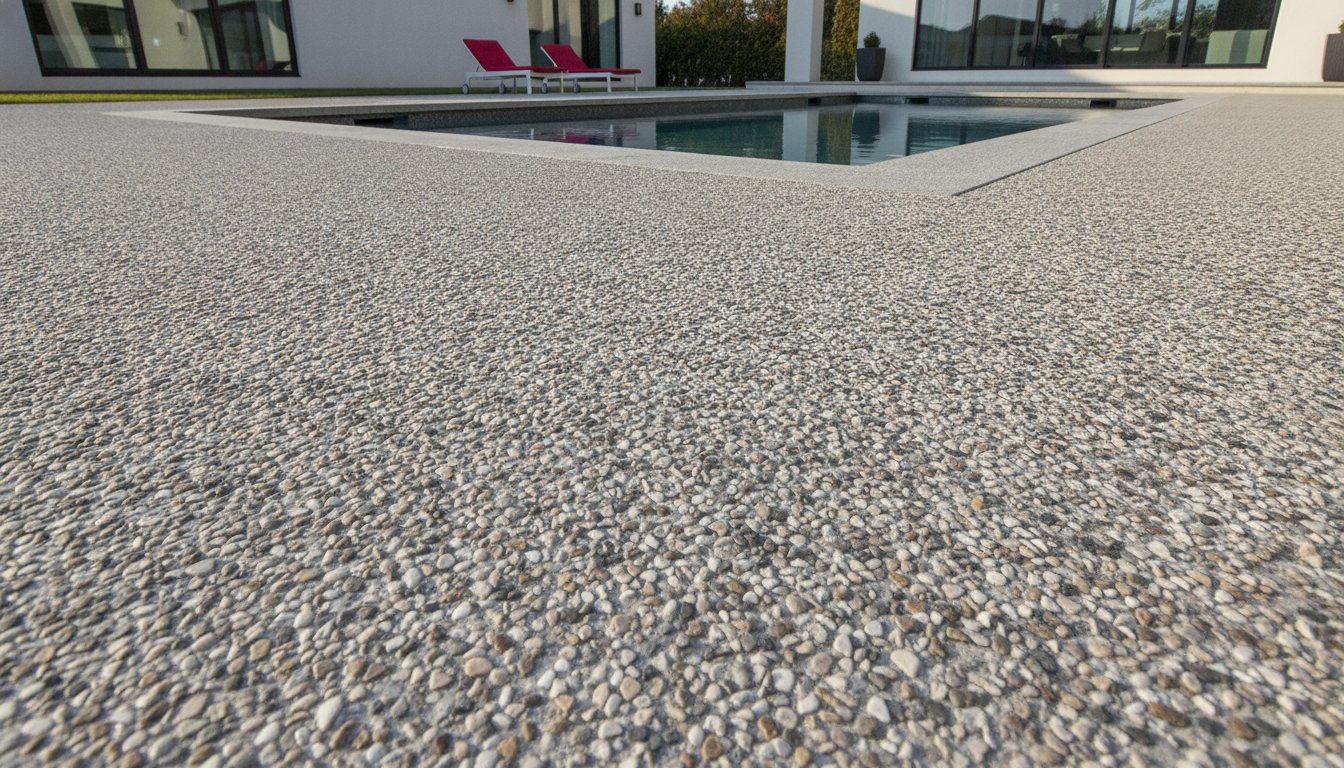
Resin-bound stone, specifically systems like Vuba Stone, represents the pinnacle of outdoor transformation. However, the specialized nature of these materials makes them a frequent target for inexperienced installers. If a contractor treats resin-bound stone like a standard epoxy job, then you're looking at a catastrophic failure. One of the most glaring red flags when hiring a concrete coating contractor for stone-bound systems is the use of non-UV resistant resins. While epoxy works well indoors, it will amber and turn brittle under direct sunlight. Professional-grade Vuba Stone utilizes a high-performance, UV-stable polyurethane resin that maintains its clarity and flexibility for years, even in high-heat environments.
The ratio of stone to resin is where many amateurs cut corners to save on material costs. If the mix is too "dry," the stones won't bond properly, leading to "stone shedding" where loose aggregate ends up in your pool or lawn. Conversely, a mix that's too resin-heavy loses its permeability. High-quality natural stone, such as crushed marble or flint, must be used instead of low-grade fillers that lack structural integrity. A "thin-set" application is another danger; driveways require a specific depth to support vehicle weight without cracking. If you want a result that stands as a point of pride for your home, you need an artisan who understands these technical nuances.
Permeability and Drainage Standards
A primary benefit of resin-bound stone is its ability to allow water to drain through the surface, preventing hazardous puddles and ice patches. A massive red flag is a contractor who suggests "sealing" the system with a non-porous topcoat. This effectively kills the drainage capability and traps moisture, leading to delamination. Base preparation is equally vital. For heavy-duty driveways, the sub-base must be stable and porous to handle the load. If you're ready to elevate your exterior, our team can resurface your patio with the precision and dedication your property deserves.
Artistry in Stone Application
True craftsmanship is visible in the application method. While some crews try a "pour and spread" approach with rakes, the best results come from hand-troweling. This method ensures a compact, level surface and consistent stone distribution. Watch for poor edge-work or visible "seam lines" where one batch of stone meets the next. These are signs of a rushed job and are common red flags when hiring a concrete coating contractor who lacks specialized training. High-grade binders are essential for preventing stones from breaking loose over time. We view every stone-bound project as a gallery piece. Our mission is to Illuminated Coatings your home by bringing life and brilliance to every square foot we touch, ensuring the final result is a point of pride for decades.
The Artisan Difference: Choosing a Partner for Transformation
A true transformation requires more than just a bucket of resin and a roller. The best contractors view your concrete as a canvas, not just another job site to finish before the sun goes down. This "blue-collar artisan" mindset is rare. It prioritizes structural integrity and aesthetic perfection over sheer installation speed. If a contractor uses high-pressure sales tactics or offers "today only" pricing, you're looking at one of the biggest red flags when hiring a concrete coating contractor. These tactics are designed to stop you from doing your due diligence. Professionalism doesn't need a ticking clock; it stands on the merit of its technical process and past results. At Illuminated Coatings, we bridge the gap between industrial-strength durability and gallery-quality beauty, ensuring your floor is a lasting point of pride.
The Detailed Estimate Checklist
A professional quote should be as detailed as the work itself. If a contractor gives you a "per square foot" price over the phone without a site visit, walk away. They can't possibly know the condition of your slab or the amount of prep required without seeing it. Your estimate must explicitly list:
- The mechanical preparation method, specifically diamond grinding.
- The exact material types, such as 100% solids epoxy or polyaspartic topcoats.
- The target mil thickness for each layer of the system.
Be wary of "lifetime" warranties that are actually marketing gimmicks filled with exclusions. A real structural guarantee covers the bond to the concrete, provided the prep was done correctly. Evaluating these details upfront helps you avoid common red flags when hiring a concrete coating contractor and ensures you're paying for quality, not just a temporary shine.
Final Steps to a Flawless Floor
Once the work is complete, your final walkthrough is your chance to verify the craftsmanship. Look for consistent flake distribution, smooth edges, and a crystal-clear topcoat. A professional coating is easy to maintain with a simple squeegee and mild soap, unlike DIY attempts that trap dirt in a porous surface. We treat every project with the focus and accountability of a specialist because our professional survival depends on your satisfaction. Our mission is to Illuminated Coatings your environment, bringing life and brilliance to every square foot. If you're ready to move past the confusion of technical jargon and invest in a floor that adds real property value, it's time to talk to a team that values integrity as much as you do. Schedule a professional consultation with Illuminated Coatings today to begin your property's transformation.
Secure Your Property’s Gallery-Quality Transformation
Your home deserves a floor that stands as a point of pride for decades. By identifying the red flags when hiring a concrete coating contractor, you've already taken the most important step toward protecting your investment. You now know that professional mechanical grinding is non-negotiable and that "1-day" marketing hype often hides a lack of long-term structural integrity. Whether you're considering industrial-strength garage floor epoxy or the permeable elegance of Vuba Stone, the difference always lies in the artisan's dedication to the technical process.
We are a family-owned and operated business that prioritizes integrity and craftsmanship in every square foot we touch. As specialists in high-performance epoxy and custom-engineered resin-bound stone, we bridge the gap between industrial durability and aesthetic beauty. If you're ready for a solution tailored to your specific residential or commercial needs, then it's time to partner with a team that views your floor as a canvas. Transform your concrete with the artisans at Illuminated Coatings and experience the brilliance of a professional finish. Your property has incredible potential; let's bring it to life together.
Frequently Asked Questions
What is the most common reason concrete coatings fail within the first year?
The most common cause of premature failure is improper surface preparation that prevents a permanent mechanical bond between the resin and the concrete. If the contractor fails to open the pores of the slab through industrial grinding, the coating simply sits on top of the surface rather than becoming part of it. This eventually leads to peeling, especially in high-traffic areas or spots where hot tires frequently rest.
Is it a red flag if a contractor doesn’t use a diamond grinder?
It is a major red flag when hiring a concrete coating contractor if they suggest acid etching or handheld tools as their primary preparation method. Professional-grade results require heavy, planetary diamond grinders to achieve the necessary Concrete Surface Profile (CSP) for long-term adhesion. Without this industrial equipment, the coating is likely to delaminate because it lacks a deep anchor pattern to grip the concrete.
Should I trust a contractor who offers a "lifetime warranty" on epoxy?
You should approach "lifetime" warranties with extreme caution as they are often marketing gimmicks filled with hidden exclusions. A real, valuable warranty should focus on the structural bond and be backed by a transparent technical process rather than vague promises. Always ask to see the written document to ensure it covers common issues like peeling or blistering rather than just manufacturing defects in the bucket.
Can I stay in my house during the concrete coating installation?
Most homeowners can stay in their residence during the installation, but the answer depends on the VOC levels of the materials being used. If a contractor uses high-solvent products without industrial HEPA dust containment, the fumes and silica dust can become a significant nuisance. Choosing a specialist who prioritizes low-odor, 100% solids materials and professional vacuum systems ensures your home remains a safe, comfortable environment throughout the transformation.
What is the difference between a DIY epoxy kit and a professional coating?
The primary difference lies in the solids content of the material and the caliber of the preparation equipment. Retail DIY kits are often water-based and contain high levels of solvents that evaporate, leaving behind a thin, brittle film that wears out quickly. Professional systems utilize 100% solids resins and industrial diamond grinding to create a thick, industrial-strength barrier that adds genuine property value and artistic brilliance.
How much should I expect to pay for a professional garage floor coating?
Pricing for a professional garage floor coating depends on the total square footage, the current condition of your concrete, and the specific resin system you select. Factors such as extensive crack repair or the need to grind off a failing previous coating will also influence the final investment. A true artisan provides a detailed, on-site estimate that accounts for these variables rather than offering a generic price over the phone.
What happens if a contractor skips the moisture test on my concrete slab?
If a contractor skips the moisture test, your floor is at high risk for osmotic blistering, where rising water vapor becomes trapped and forces the coating to bubble. This pressure eventually ruptures the bond, leading to unsightly pops and total coating failure. A professional always verifies the Moisture Vapor Transmission (MVT) levels to ensure the slab is dry enough to support a permanent resin application.
Why do some concrete coatings turn yellow after being exposed to sunlight?
Coatings turn yellow, a process known as "ambering," because the material lacks UV stability. Standard epoxy resins are highly susceptible to damage from ultraviolet rays, making them unsuitable for outdoor patios or areas with large windows. To prevent this, you must ensure your contractor uses UV-stable topcoats, such as polyaspartics or specialized polyurethanes, which are engineered to maintain their crystal-clear finish even under direct sun exposure.