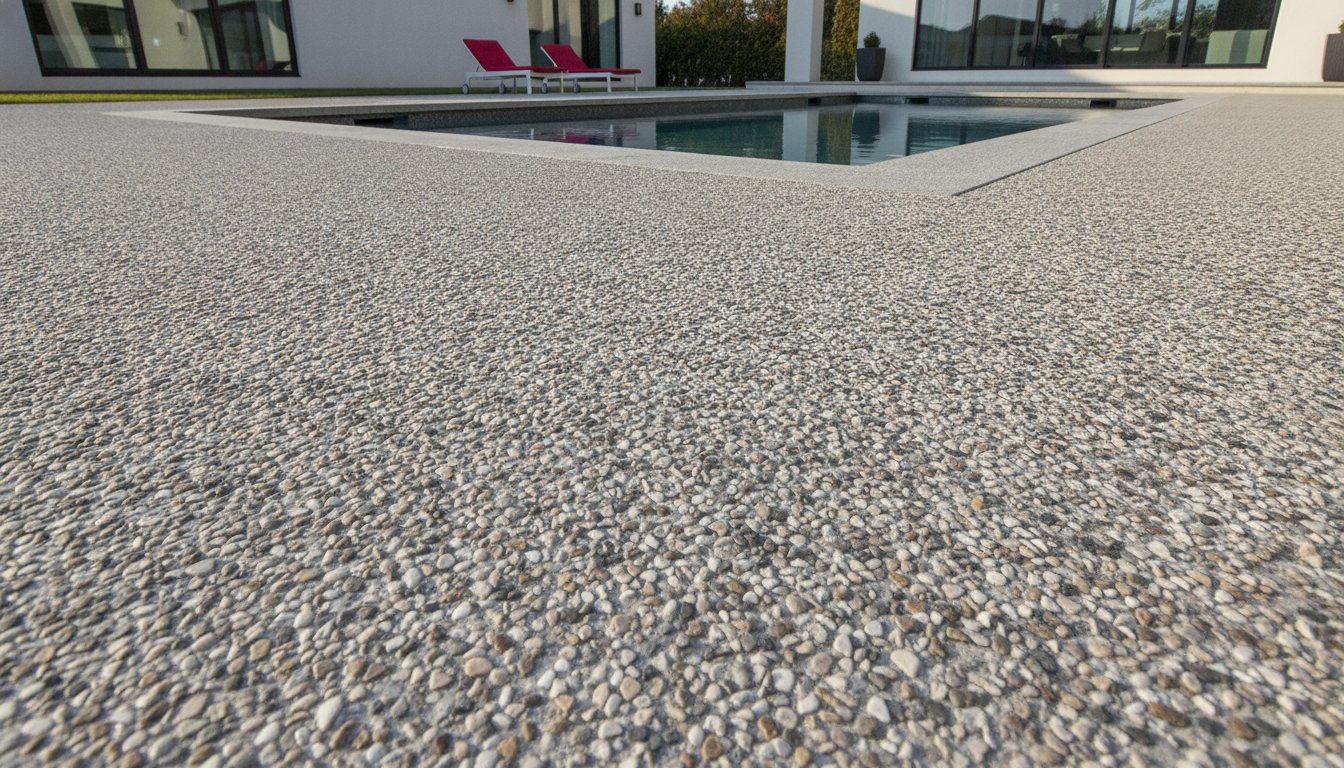
That "budget-friendly" pool deck coating you're considering today might actually be the most expensive mistake you make this decade. If you choose a thin, cheap layer to hide existing damage, then you're simply counting down the days until the first peel or the next recurring crack. We know the frustration of a backyard that's too hot for bare feet or dangerously slippery after a quick summer rain. Calculating the cost to resurface concrete pool deck areas requires looking past the initial quote and focusing on the craftsmanship that prevents future failure.
You deserve a transformation that elevates your property from a standard concrete slab to a gallery-quality masterpiece. We'll master the variables of resurfacing expenses together, focusing on how premium resin-bound stone systems provide superior long-term ROI compared to basic coatings. This guide previews the essential role of professional concrete grinding and why a "cool-touch" surface is worth the investment for your family's comfort. By the end, you'll understand how industrial-strength preparation justifies the price and finally provides the durable, slip-resistant oasis you've been chasing.
Key Takeaways
- Understand why true resurfacing is a multi-step chemical restoration process that fixes structural issues rather than just masking them with a temporary layer of paint.
- Discover how the current condition of your slab, including existing cracks and old coatings, directly impacts the total cost to resurface concrete pool deck projects.
- Compare professional methods like spray textures and premium resin-bound stone to find the balance between heat resistance, slip safety, and long-term durability.
- Learn to identify contractor red flags, such as "24-hour cure" promises that compromise the chemical bond and lead to premature surface peeling.
- Master the 2026 market shift toward weather-resistant Vuba stone systems that provide a superior return on investment through aesthetic excellence and industrial strength.
Understanding Concrete Pool Deck Resurfacing Costs & Value
Resurfacing your pool deck is not a simple weekend project involving a bucket of paint and a roller. If you treat it like a cosmetic cover-up, then you're destined to repeat the process every two years as the sun and water peel away your hard work. True resurfacing is a multi-step chemical restoration. We approach every project with the mindset of a blue-collar artisan, where industrial-strength grinding meets a refined eye for aesthetics. This process involves stripping away failing layers, repairing deep-seated cracks, and establishing a mechanical bond that ensures your new surface becomes a permanent part of the slab. In 2026, the market has shifted decisively away from thin, cheap coatings toward high-durability, weather-resistant stone systems that can handle extreme temperature swings without buckling.
The "repair cycle" is a trap that many homeowners fall into when they prioritize the lowest initial quote. A cheap coating might look decent for a few months, but it lacks the structural integrity to survive the friction of pool furniture or the chemicals found in pool water. When you evaluate the cost to resurface concrete pool deck surfaces, you must look at the total lifecycle of the product. Investing in a professional transformation means you're buying years of performance rather than a temporary mask. We take immense pride in this craftsmanship because our professional survival depends on the quality of the bond we create between our materials and your home.
Why Resurface Instead of Replace?
If your concrete slab is structurally sound but looks weathered, then demolition is an unnecessary drain on your bank account. Full replacement requires heavy machinery, weeks of backyard downtime, and significant labor costs for hauling away old debris. Resurfacing saves your existing foundation and reduces construction waste, making it the more environmentally responsible choice. You can achieve a completely new look in a fraction of the time, often returning to your pool within days rather than weeks. This efficiency is a core part of the value proposition for modern homeowners who want high-end results without the chaos of a total rebuild.
Safety and Aesthetic ROI
A transformed deck serves as a gallery-quality centerpiece for your outdoor living space, but its beauty must be matched by its utility. Modern Decorative concrete techniques have evolved to solve the most common pool-side pains. We prioritize slip-resistance standards that protect your family and reduce liability. Furthermore, our advanced stone systems are designed with heat-reflective properties. This ensures a "cool-touch" surface that stays comfortable for bare feet even during the hottest summer afternoons. When you calculate the cost to resurface concrete pool deck projects, consider the increased property value and the peace of mind that comes from a surface that is as safe as it is stunning.
Key Factors That Drive Your Pool Deck Resurfacing Budget
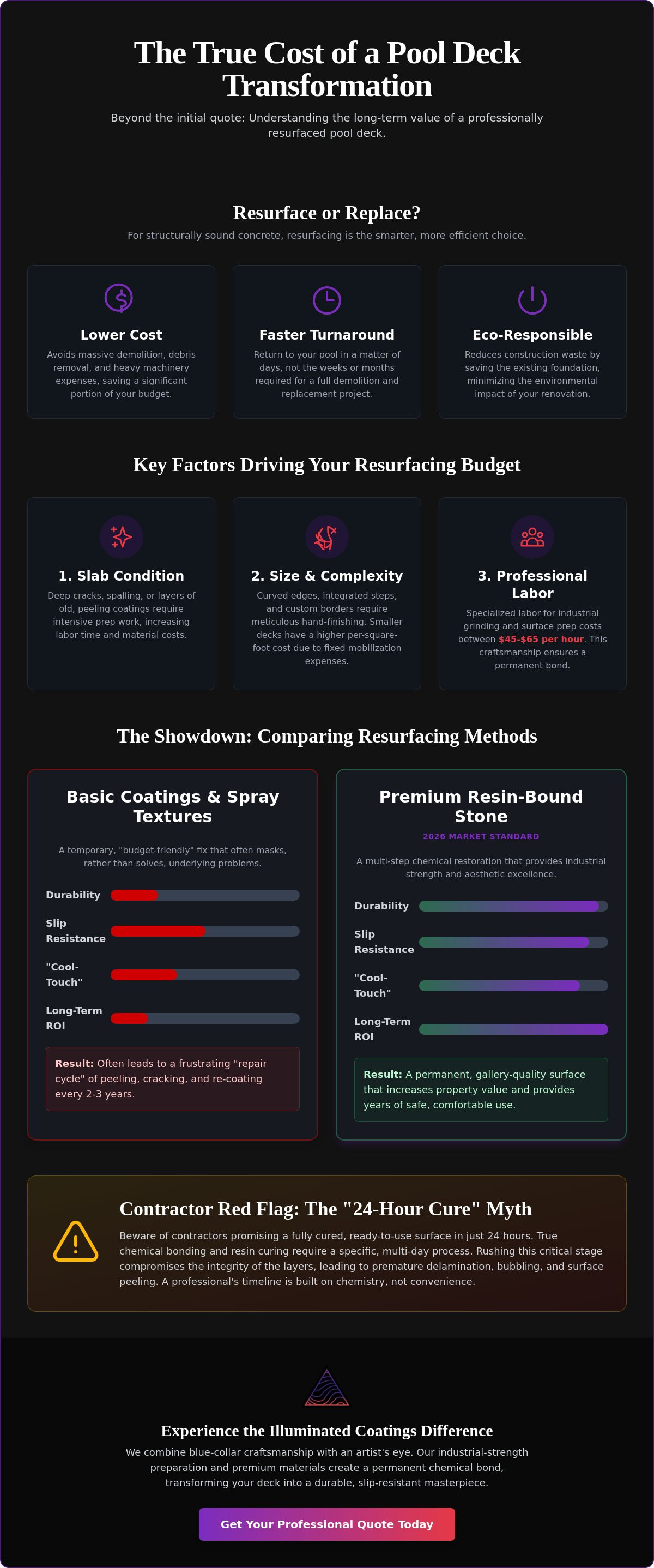
Pricing for your backyard transformation in 2026 isn't a guessing game; it's a calculation of condition, complexity, and craftsmanship. When you estimate the cost to resurface concrete pool deck areas, your first variable is the current state of the slab. If your concrete is a patchwork of deep cracks, spalling, or layers of old, peeling paint, then your budget must prioritize intensive labor. Removing a failed DIY epoxy attempt or a "cheap" coating from a previous season requires significantly more time than prepping a clean, bare slab. Professionals in high-demand markets like Miami currently charge between $45 and $65 per hour for this specialized labor, reflecting the 10% rise in costs we've seen since 2024.
Square footage tiers also play a massive role in how we structure our quotes. Most professional pricing models aren't strictly linear. A smaller 400-square-foot deck often carries a higher price-per-foot because the mobilization of industrial equipment and crew remains constant regardless of the project size. Complexity further dictates the investment. If your deck features intricate borders, integrated steps, or curved geometry that requires hand-finishing, then the timeline expands. We use heavy-duty industrial grinders and dustless vacuum systems to ensure a clean environment and a perfect profile. These variables explain why the cost to resurface concrete pool deck projects varies so widely between a basic spray-on and a custom stone system.
The Critical Role of Surface Preparation
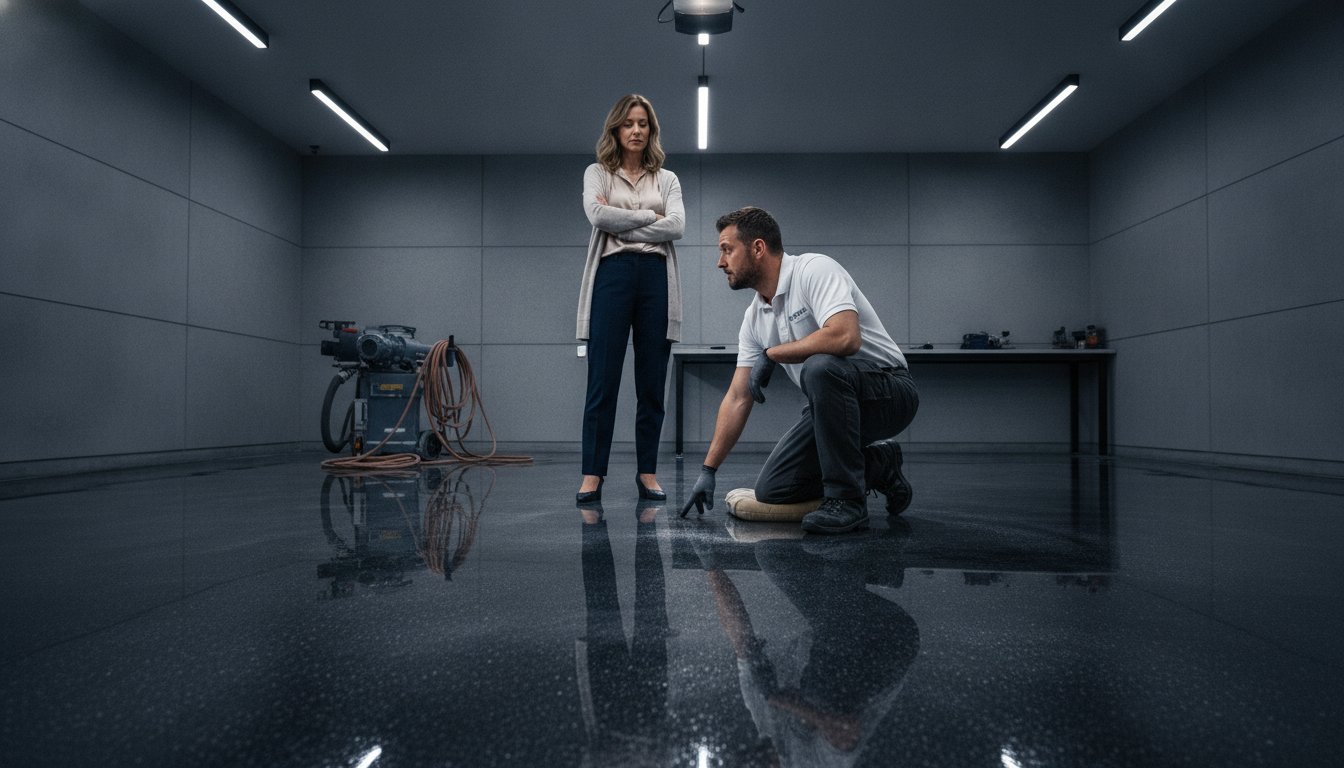
Mechanical grinding is the only way to achieve a "profile" that allows resins to bite into the concrete. Pressure washing is just a bath; it doesn't create the mechanical bond necessary for professional survival. We spend more time on our knees with grinders than we do applying the final finish because that's where the durability is born. Professional moisture vapor transmission testing prevents future delamination by ensuring the slab is dry enough for a permanent bond. If you want a detailed breakdown of how these factors apply to your specific backyard, then our team at Illuminated Coatings can guide you through the selection process.
Material Selection and Grade
The grade of your materials defines your long-term ROI. Standard acrylic overlays are affordable but lack the industrial strength of high-performance resins. In high-sun environments, UV stability is non-negotiable. If your coating isn't chemically engineered to resist yellowing and brittle failure under constant sun exposure, then it will fail within three seasons. There's also a clear cost difference between domestic aggregates and imported natural stones used in resin-bound systems. We choose materials that bridge the gap between industrial durability and artistic excellence, ensuring your deck remains a point of pride for a decade or more.
Comparing Resurfacing Methods: From Overlays to Resin-Bound Stone
Choosing the right method for your backyard requires a balance between your immediate budget and the long-term performance you expect. If you prioritize the lowest initial cost to resurface concrete pool deck areas, then a spray texture or "cool deck" finish is your logical starting point. This entry-level professional option provides a lace-like texture that remains comfortable under the sun, but it acts more like a protective skin than a structural transformation. While it solves the immediate pain of a hot surface, it requires regular maintenance and fresh topcoats every few years to prevent the color from fading or the edges from chipping. For those who want more than just a quick refresh, we move into the territory of decorative overlays and high-performance stone systems.
Calculating the true cost to resurface concrete pool deck projects means looking at the durability of the bond. Stamped concrete overlays offer a high-end look by mimicking the appearance of pavers, slate, or natural stone. These systems are aesthetically versatile, but they come with a higher labor price due to the precision required during the stamping process. They also demand a strict maintenance schedule. If you don't reseal a stamped surface every two to three years, then the UV rays and pool chemicals will eventually penetrate the finish and cause the colors to dull. We focus on providing solutions that break the cycle of constant repairs, leading us to the most advanced option available in 2026.
Resin-Bound Stone (Vuba Stone) Deep Dive
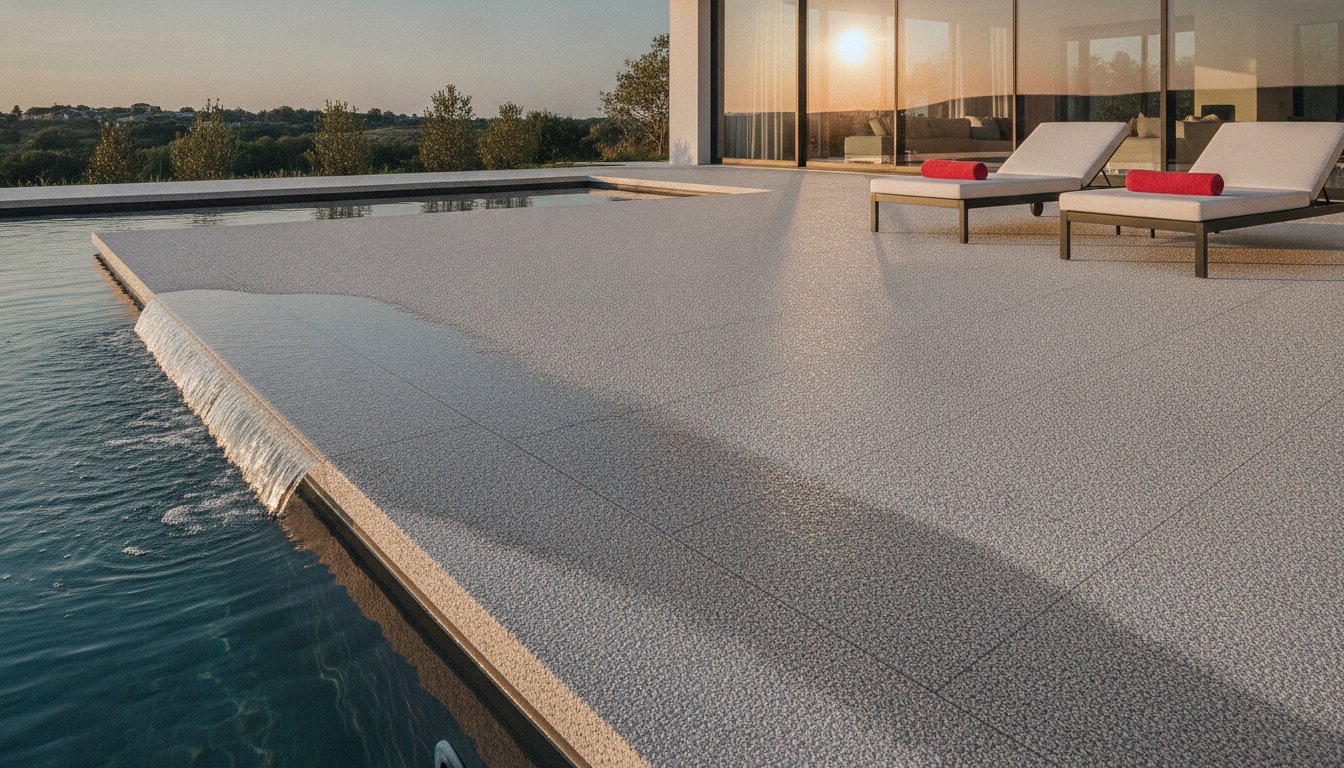
We position resin-bound stone, specifically Vuba stone, as the ultimate choice for a gallery-quality pool deck transformation. This system creates a "porous advantage" that sets it apart from every other coating on the market. Because the natural stones are bound with high-tech, UV-stable resins, water drains directly through the surface rather than pooling on top. This eliminates dangerous puddles and keeps the deck significantly cooler than solid concrete. It's the perfect marriage of industrial-strength durability and artistic excellence, providing a seamless finish that won't crack or peel under pressure. We take immense pride in installing these systems because our professional survival is built on delivering a product that remains a point of pride for our clients for a decade or more.
Stamped Concrete and Decorative Overlays
Stamped systems are excellent for homeowners who love the look of natural masonry but want to avoid the shifting and weed growth associated with individual pavers. These overlays are applied directly over your existing slab, saving you from the high cost of demolition. However, you must consider the texture carefully. The high-gloss sealants often used on stamped concrete create a significantly higher slip risk when wet compared to the natural, multi-dimensional grip provided by a resin-bound stone system. If safety is your singular priority, then the textured grip of a stone-bound surface is the superior investment.
Avoiding Hidden Costs: The 24-Hour Cure Myth & Contractor Red Flags
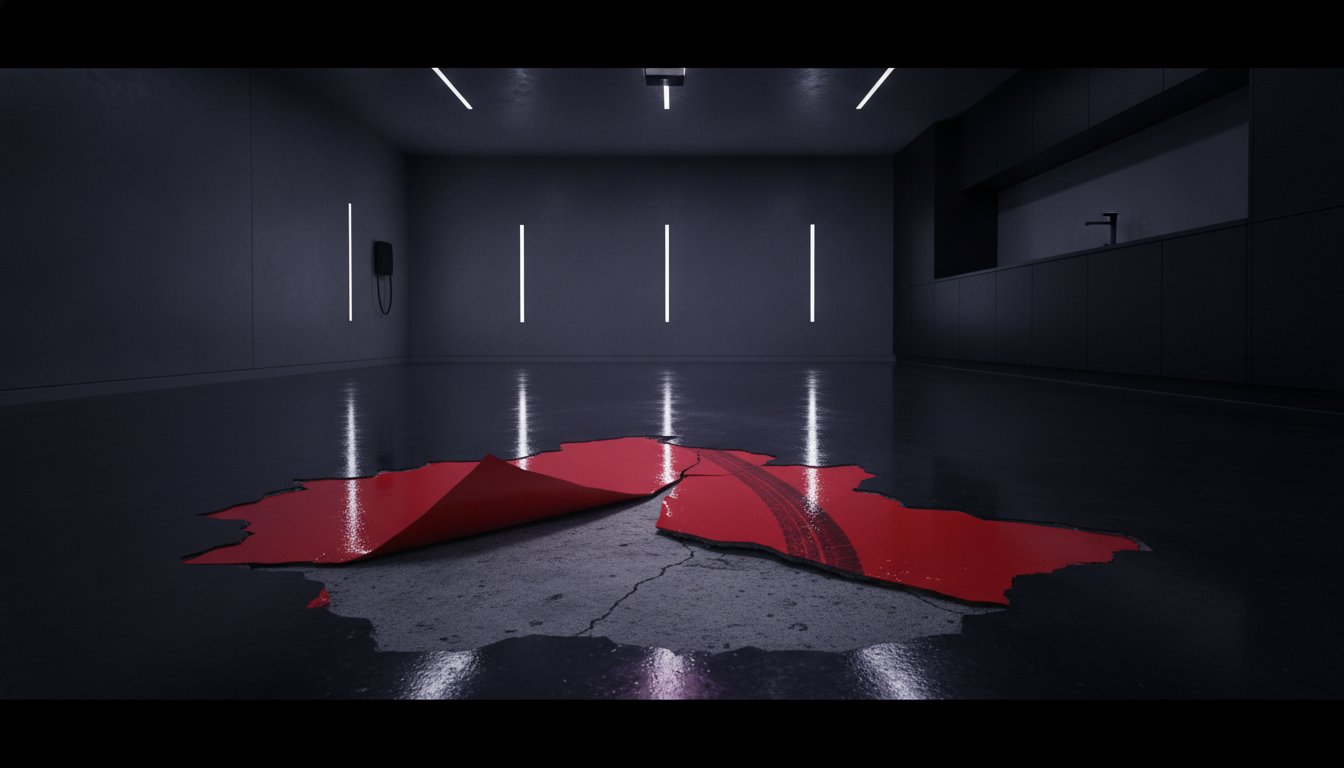
Speed is often the enemy of quality in the world of concrete restoration. If a contractor promises a "one-day install" for your backyard, then they're prioritizing their schedule over your deck's chemical integrity. Rushing the curing process or skipping vital steps leads to a total failure of the bond, resulting in the peeling and bubbling that plagues so many Florida homes. True transformation requires a methodical approach where each layer is allowed to chemically fuse with the slab. When you evaluate the cost to resurface concrete pool deck areas, you must account for the time required to do the job right. A specialist mindset understands that a 24-hour cure is a myth that usually ends in a costly redo within the first year.
The "Cheap Quote Trap" is another significant hurdle for homeowners. A contractor offering a price around $3 per square foot is almost certainly skipping the most critical phases of the project. They usually bypass mechanical grinding in favor of a quick acid wash, and they rarely invest in professional crack injection or structural repair. If you ignore these underlying issues, then the new coating will simply mirror the old cracks within months. We believe in professional accountability; our professional survival is tied directly to the permanence of our work. We don't just cover up problems; we solve them with industrial-strength materials and artisan-level precision.
The Chemistry of a Long-Lasting Bond
Concrete is a porous material that needs to breathe. If moisture is trapped beneath a non-breathable coating, then vapor pressure will eventually force the material to delaminate. We carefully monitor ambient temperature and humidity during every application to ensure the resins bond perfectly. This focus on the science of the slab prevents the unsightly bubbles and "blisters" that define low-end work. If you want a surface that stands the test of time, then you need a team that respects the chemistry of the environment. You can schedule a professional consultation with us to see how we handle these technical challenges for every client.
Questions to Ask Your Contractor
Before you sign a contract, you must vet the provider's methods. Ask them if they perform mechanical grinding with diamond-tipped tooling or if they rely on simple acid washing. Inquire about the UV-resistance rating of their resins; if the material isn't stable, then the sun will turn your beautiful deck yellow and brittle. Finally, ask how they handle existing expansion joints. A true professional integrates these joints into the design rather than simply coating over them, which prevents the surface from cracking as the ground shifts. These details are what separate a gallery-quality finish from a temporary patch job.
The Illuminated Coatings Difference: Transforming Your Pool Deck
If you are ready to Illuminated Coatings your dull, gray slab into a vibrant outdoor oasis, then our team is ready to deliver. We don't just offer a construction service; we provide a dedicated form of craftsmanship that elevates manual labor into an art form. At Illuminated Coatings, we've established ourselves as the national authority on resin-bound stone and Vuba stone systems. We bring a blue-collar artisan mindset to every backyard, where industrial-strength preparation meets high-end aesthetics. Our professional survival is rooted in the brilliance we bring to worn-out spaces. When you calculate the final cost to resurface concrete pool deck areas, remember that we aren't just applying a coating. We are engineering a durable masterpiece that will serve as a point of pride for your family for a decade or more.
We approach every project with extreme focus and accountability. If your current surface is cracking, peeling, or getting too hot for bare feet, then you need a specialist mindset rather than a generalist contractor. We prioritize weather-resistant, durable solutions that handle the unique demands of both residential and commercial environments. Our reputation is built on the security of our long-standing, locally-rooted business structure, which allows us to offer a level of integrity that "fly-by-night" operations simply cannot match. We understand the high stakes of your home investment, and we treat every square foot with the respect it deserves.
Why We Specialize in Resin-Bound Stone
We chose to specialize in Vuba stone because it solves the most aggressive pains of pool ownership. Our systems are specifically engineered for national climates, handling both the freezing expansion of northern winters and the blistering heat of southern summers. The porous nature of the stone prevents dangerous puddling by allowing water to drain through the surface. This creates a safer, slip-resistant environment for your children and guests. Furthermore, our "cool-touch" technology ensures the surface remains comfortable for bare feet even during record-breaking summer afternoons. Our process is exhaustive. It starts with precision diamond grinding to ensure a mechanical bond and ends with a hand-troweled artistic finish that basic spray-on coatings can't replicate.
Start Your Transformation Today
Choosing a professional team means you're prioritizing long-term backyard pride over a cheap, temporary fix. If you're ready to see the hidden potential of your property, then a specialized consultation is your next step. We'll walk you through the material choices and explain exactly how we justify the cost to resurface concrete pool deck surfaces through superior ROI and craftsmanship. Don't settle for a contractor who skips the prep; choose an artisan who stakes their professional survival on your results. Ready to transform your pool deck? Contact Illuminated Coatings for a professional consultation.
Secure Your Gallery-Quality Pool Deck Transformation
If you prioritize industrial-strength preparation and premium materials, then you are building a surface that stands the test of time. We've explored the essential variables of pool deck restoration, from the critical role of mechanical grinding to the porous advantages of resin-bound systems. Understanding the total cost to resurface concrete pool deck areas requires looking past the initial quote and focusing on the long-term ROI provided by a specialist mindset. Our family-owned team takes immense pride in delivering weather-resistant, "cool-touch" surfaces that turn ordinary backyards into masterpieces.
Don't settle for a temporary patch job that will peel by next season. It's time to invest in a surface that remains a point of pride. Our expert concrete grinding and Vuba stone systems provide the industrial durability your family deserves. Elevate Your Outdoor Space with Illuminated Coatings today and reclaim your summer oasis with confidence. Your transformed deck is waiting to become the centerpiece of your home.
Frequently Asked Questions
Is it cheaper to resurface or replace a concrete pool deck?
Resurfacing is significantly more cost-effective than a total replacement. While full demolition and replacement can cost between $15 and $25 per square foot, professional resurfacing typically ranges from $4 to $15 per square foot. If your underlying slab is structurally sound, then choosing to restore the surface saves you thousands in labor and disposal fees. It also prevents the chaos of having heavy machinery in your backyard for weeks.
How long does a professional pool deck resurfacing last?
A professionally installed surface can last between 10 and 15 years with basic maintenance. The exact lifespan depends on the material you choose and your local environment. In coastal regions with high salt exposure, you may need to reseal the surface every 12 to 24 months to maintain its brilliance. Choosing a high-performance stone system often provides a longer performance window than entry-level acrylic coatings.
Can you resurface a pool deck that has major cracks?
You can resurface a deck with cracks, but the prep work must be exhaustive. We use industrial-strength crack injection and mechanical grinding to stabilize the slab before applying any new material. If you simply coat over a moving crack, then the damage will return within months. Professional preparation ensures that the underlying structural issues are addressed so your new surface remains a point of pride.
What is the best "cool-touch" material for hot climates?
Resin-bound stone is the superior choice for homeowners in hot climates who want to walk barefoot. Because the Vuba stone system is porous, it allows heat to dissipate and air to circulate through the surface. This keeps the deck significantly cooler than solid concrete or dark pavers. If you want a "cool-touch" finish that handles the peak of summer, then this stone-bound technology is your best investment.
How long does the resurfacing process take from start to finish?
The physical installation usually takes 3 to 5 days depending on the size and complexity of your project. This includes the essential mechanical grinding, crack repairs, and the final application. While the work happens quickly, you must account for the curing time. Most professional systems require a 28-day curing period before they reach their full industrial strength and chemical resistance.
Does pool deck resurfacing require a permit?
Most municipalities don't require a permit for resurfacing because it's considered a restorative or cosmetic improvement. You aren't changing the footprint of the deck or making structural alterations to the pool itself. However, it's always wise to check with your local building department or HOA. We prioritize professional accountability and can help you determine if any specific regional geographic markers require special documentation.
What is the difference between Vuba stone and traditional epoxy?
The primary difference lies in porosity and UV stability. Traditional epoxy creates a solid, non-breathable layer that can trap moisture and eventually peel. It also tends to yellow under direct sunlight. Vuba stone is a resin-bound aggregate that is fully porous and chemically engineered to resist UV damage. This ensures a slip-resistant surface that won't bubble or fade over time.
Can I resurface my pool deck myself using a kit?
Using a DIY kit is a high-risk gamble that often leads to early failure. These kits lack the high-performance resins and industrial grinding equipment necessary to create a permanent mechanical bond. If you want to avoid the "cheap quote trap" and ensure your investment lasts, then professional installation is required. The cost to resurface concrete pool deck areas is justified by the specialized labor and artisan-level results you can't get from a bucket at a big-box store.