That fine gray dust coating your workbench and tracking into your kitchen isn't just a cleaning nuisance; it's the sound of your concrete floor literally disintegrating beneath a failed surface. If you've noticed peeling flakes, deep cracks, or stubborn stains that refuse to lift, you're likely seeing the primary signs you need to replace your garage floor coating. It's frustrating to watch an investment bubble and crack, especially when you're worried that a quick patch will just be another waste of hard-earned money. We understand that your garage is more than a parking spot. It's a workshop and an extension of your home that deserves better than an embarrassing, deteriorating floor.
If your current floor is failing, then it's time to stop treating the surface symptoms and start addressing the underlying moisture dynamics. In this guide, you'll learn how to identify terminal garage floor failure and discover the high-performance systems, like resin-bound stone and professional garage floor epoxy, that turn a worn workspace into a durable masterpiece. We will preview seven critical red flags that indicate your surface has reached its limit and explore the advanced coating technologies available in 2026 that ensure your next floor is a point of pride for years to come.
Key Takeaways
- Identify terminal red flags like delamination and "hot tire pickup" that signal your current floor coating has reached its end of life.
- Uncover the hidden signs you need to replace your garage floor coating, including hydrostatic pressure issues that a simple surface patch cannot fix.
- Learn how to assess "bond health" and the percentage of damage to determine if your floor is a candidate for repair or requires a full professional upgrade.
- Compare modern solutions like polyaspartic and multi-layer industrial epoxy to find the right balance of application speed and long-term durability.
- See how specialized grinding and craftsmanship can transform a dusty, failing concrete slab into a high-performance workspace that stands the test of time.
Identifying the Red Flags: Visual Signs Your Garage Floor Coating is Failing
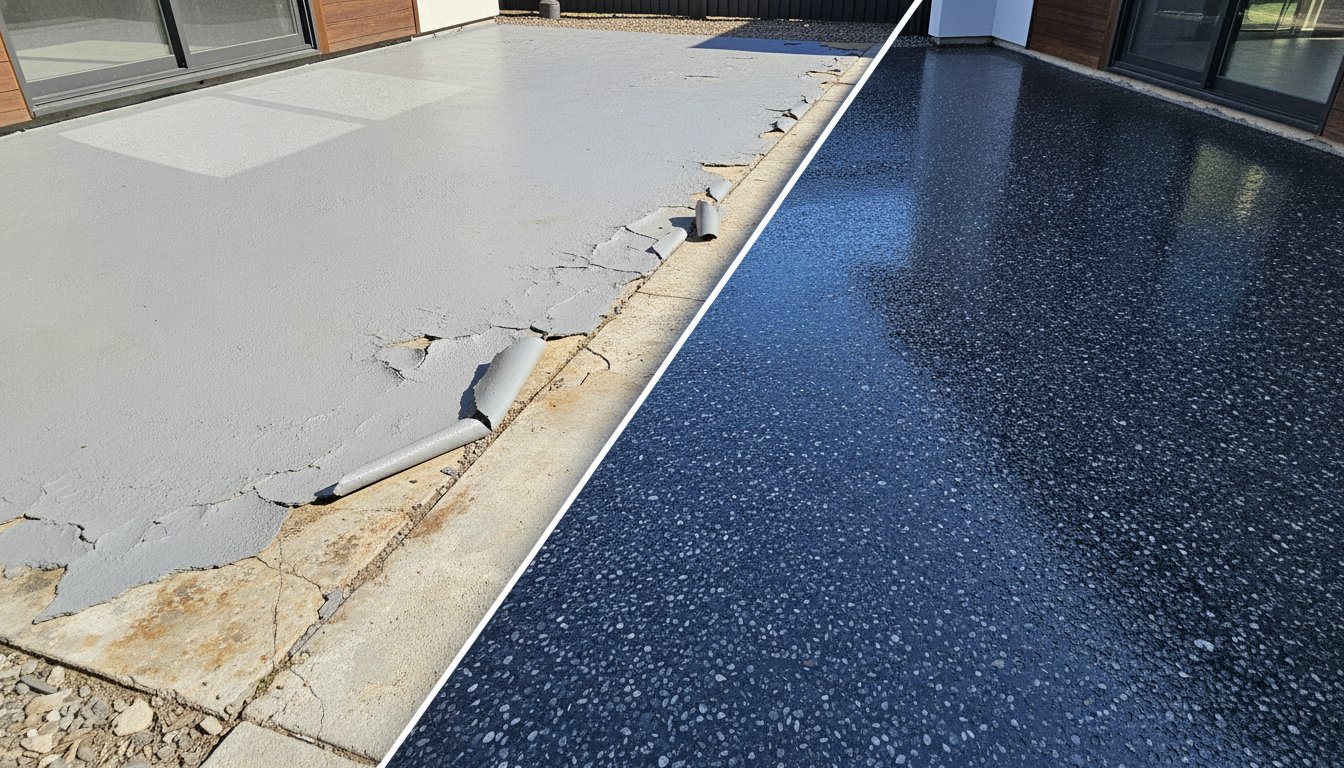
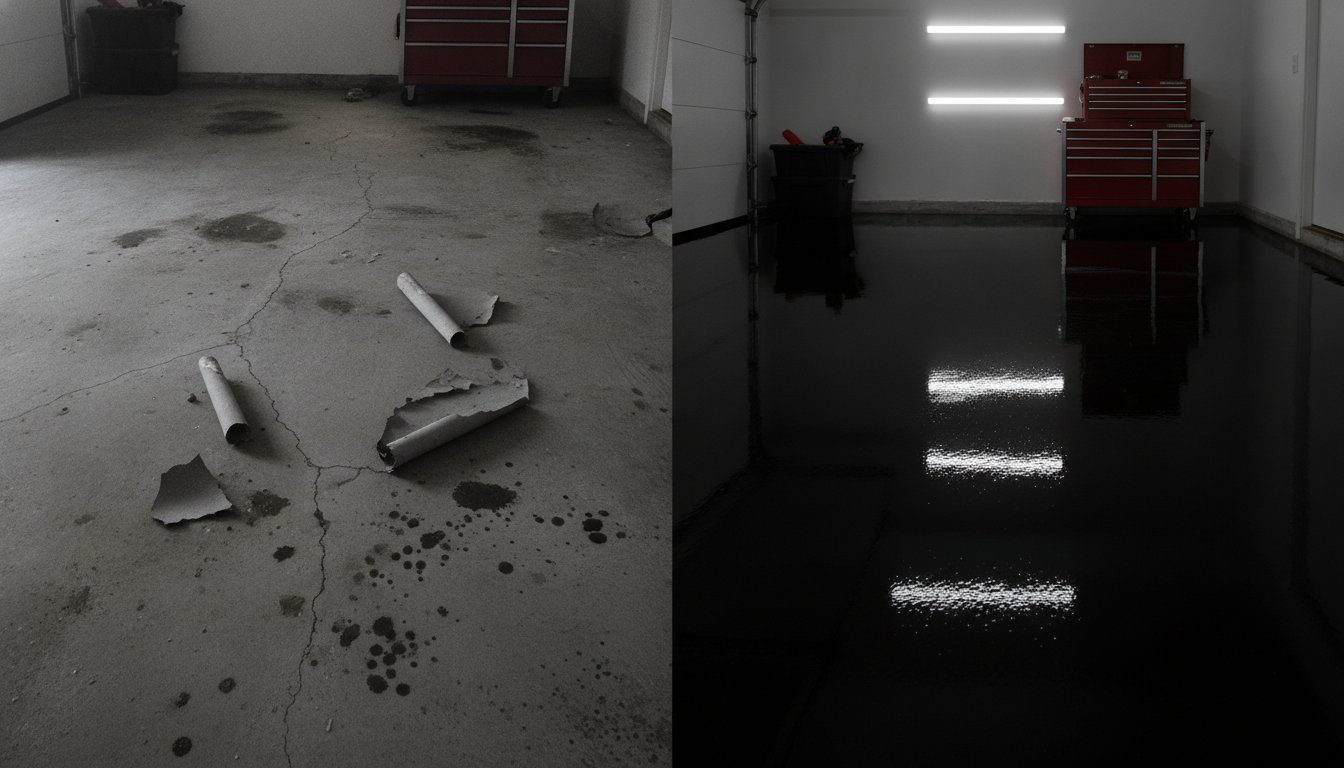
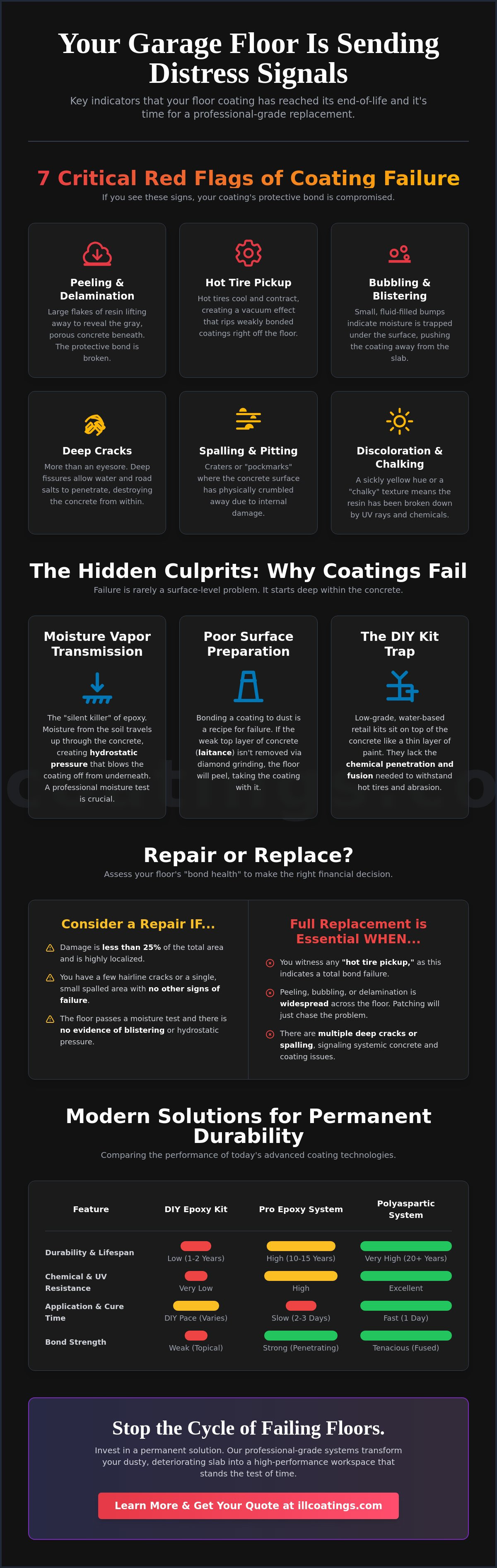
Your garage floor shouldn't look like a shedding snake. If you see large flakes of resin lifting away to reveal the gray, porous concrete beneath, you are witnessing terminal delamination. This is one of the most undeniable signs you need to replace your garage floor coating. When the bond fails, the protection ends. Beyond the obvious peeling, you might notice widespread bubbling or "osmotic blistering." these small, fluid-filled bumps indicate that moisture is trapped under the surface, pushing the coating away from the slab. If your floor has turned a sickly yellow or feels "chalky" to the touch, the resin binder has likely succumbed to UV degradation and chemical breakdown. It is no longer a shield; it's just a mess.
Peeling, Delamination, and Hot Tire Pickup
Most failed floors start with a low-grade DIY kit. These water-based products often fail to penetrate the concrete pores, sitting on the surface like a thin layer of paint rather than becoming part of the slab. This leads to the dreaded "hot tire pickup." When you drive into your garage, your tires are hot and expanded. As they cool, they contract and create a powerful vacuum effect. If your coating isn't chemically fused to the concrete, the tires will literally rip the resin right off the floor as you pull out the next morning. It's a frustrating cycle of patch-and-peel that only ends with professional-grade Seamless polymer flooring. To test your floor's integrity, try the "nickel test." Use a coin to see if you can easily lift the edges of a bare spot. If the coating continues to flake with minimal pressure, the entire bond is compromised.
Cracking and Spalling: When Concrete Integrity is at Risk
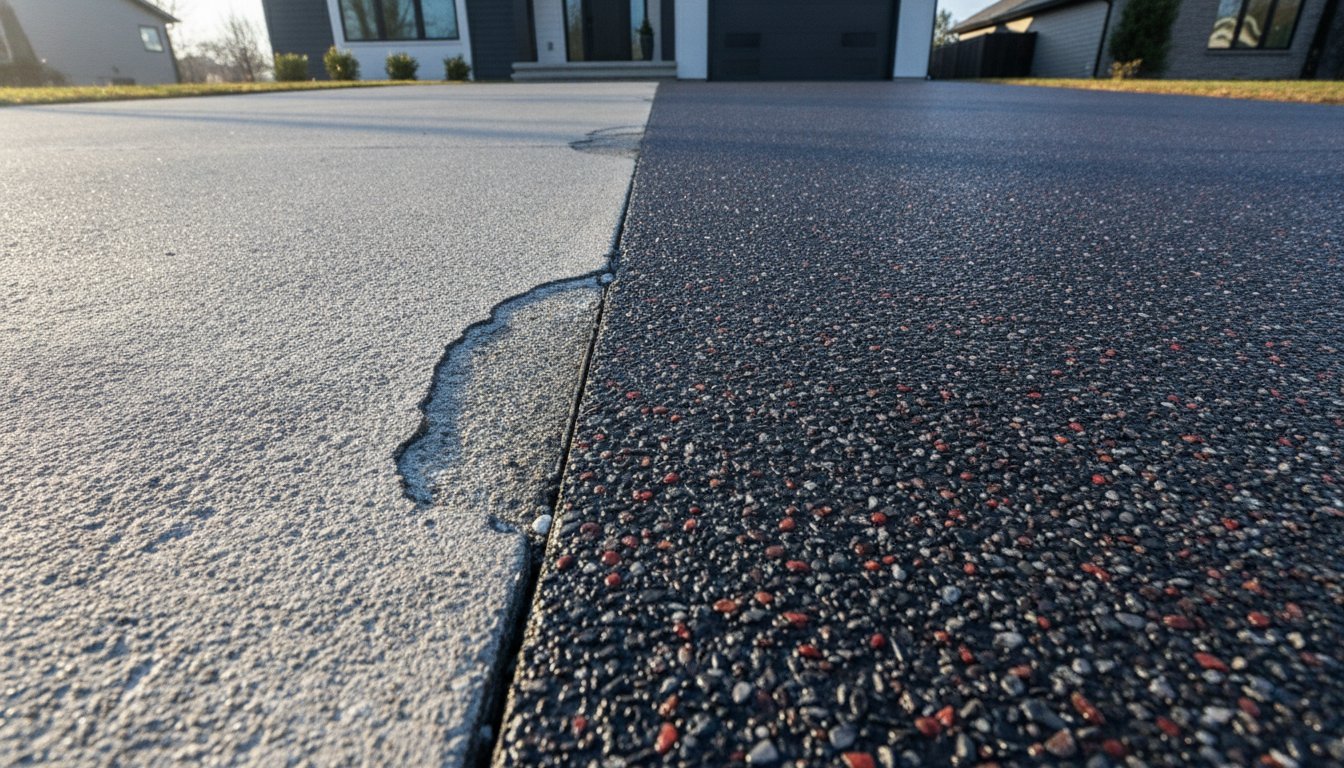
Cracks are more than just an eyesore. While small hairline shrinkage cracks are common in many slabs, deep structural fissures are a red flag. A failing coating allows water, road salts, and automotive fluids to seep into these openings. In many regions, this leads to a destructive freeze-thaw cycle that eats the concrete from the inside out. This eventually causes spalling, which manifests as craters or "pockmarks" where the concrete surface has physically crumbled away. If you ignore these signs you need to replace your garage floor coating, you aren't just looking at a cosmetic issue. You're looking at the slow destruction of your home's foundation. A high-performance coating system stops this rot by sealing the slab against the elements, turning a vulnerable surface into a fortress of industrial-grade durability.
The Hidden Culprits: Why Your Current Coating is Giving Up
If your floor is failing, it's rarely a surface-level coincidence. Often, the real damage happens where you can't see it. One major factor is "laitance," which is a weak, milky layer of cement and sand that rises to the top during the pouring process. If this layer isn't removed, your coating is simply bonding to a layer of dust that will eventually pull away. This creates the classic signs of coating failure that homeowners find so frustrating. Additionally, cheap retail sealers are defenseless against road salts and automotive fluids that chemically degrade low-grade resins over time. Even the "24-hour cure" marketing myth works against you; rushing the chemical cross-linking process often results in a brittle finish that delaminates before the year is out.
Moisture Vapor Transmission: The Silent Killer of Epoxy
Your concrete slab acts like a giant sponge. Through a process called capillary action, moisture from the soil travels upward through the concrete. If you've noticed bubbles or peeling, it's time to check for these signs you need to replace your garage floor coating. You can perform a simple "plastic sheet test" by taping a 2-foot square of clear plastic to the slab for 24 hours. If moisture beads appear under the plastic, your slab is breathing too much for a standard sealer. Hydrostatic pressure is the force of water vapor lifting a non-porous coating. Without a specialized moisture-mitigating primer, no amount of topcoat will stay stuck to that floor.
The DIY Trap: Poor Surface Preparation and Low-Grade Materials
Most homeowners are lured in by the ease of acid etching, but this chemical shortcut is no substitute for mechanical diamond grinding. Acid only cleans the surface. Grinding actually "opens" the concrete pores to create a mechanical profile for the resin to bite into. The difference in "solids content" is also staggering. Retail kits are often loaded with water or cheap solvents that evaporate as the floor dries, leaving behind a thin, porous film. Professional-grade systems utilize 100% solids that stay on the floor, providing the industrial-strength thickness required for a true transformation. If you're tired of watching your hard work peel away, investing in a professional garage floor epoxy system is the only way to ensure a permanent bond.
Repair vs. Replace: Evaluating the Extent of the Damage
Deciding whether to patch a few spots or strip the entire slab is the difference between a temporary bandage and a permanent cure. If your floor shows isolated wear in a single corner, then a surgical repair might be an option. However, most homeowners find that once the first few flakes appear, the rest of the floor isn't far behind. Evaluating the "bond health" of your current system is critical. If you can slide a putty knife under the edges of a bare spot and easily peel back more material, the entire installation has reached its expiration date. This brittle state is one of the clearest signs you need to replace your garage floor coating rather than attempting a localized fix.
You must also consider the cost-benefit of a seamless new system. Patching often results in a "checkerboard" aesthetic that ruins the visual flow of your workspace. More importantly, if the original failure was caused by poor preparation or moisture, a new patch will fail just as quickly as the original layer. True transformation requires a fresh start. This usually involves industrial-grade concrete grinding to remove the old, compromised resin and reveal a clean, porous surface that is ready to accept a high-performance bond.
When a Touch-Up is Enough (Minor Scuffs and Stains)
Localized repairs are generally viable only if the damage is confined to less than 5% of the total surface area. If you've simply scuffed the topcoat with heavy equipment or have a stubborn oil stain in one spot, you can often scuff the surrounding area with 100-grit sandpaper and apply a matching resin. However, you must ensure the surrounding coating is still firmly attached to the slab. Even with a perfect color match, these repairs are often visible in certain lighting. In a high-visibility garage intended for more than just storage, these patches can feel like an eyesore that detracts from your home's value.
Signs Total Replacement is Non-Negotiable
If you are facing widespread delamination covering more than 15% to 20% of the floor, the system is fundamentally broken. At this stage, the labor required to prep dozens of small patches exceeds the effort of a full replacement. Other non-negotiable signs you need to replace your garage floor coating include:
- Systemic Moisture Issues: Evidence of water vapor pushing up through the slab across the entire floor.
- Deep Spalling: Craters and "pitting" in the concrete that require a full-slab grind and professional skim coating to level.
- Widespread Brittle Resin: A coating that cracks like glass when struck, indicating the chemical polymers have completely broken down.
When these factors are present, a total replacement isn't just a cosmetic choice; it's a necessary investment in the survival of your concrete slab. Grinding the floor back to its raw state allows us to address structural issues and apply a moisture-mitigating primer that ensures your next floor is a masterpiece of durability.
Modern Solutions: Beyond Traditional Epoxy for Your Garage
Identifying the signs you need to replace your garage floor coating is only the first step toward reclaiming your workspace. Once the old, delaminated layer is ground away, you have access to coating technologies that were previously reserved for heavy industrial facilities. The industry has moved far beyond the basic, water-based resins found in hardware stores. Today, we focus on systems that chemically fuse with the concrete to create a permanent, impenetrable barrier. Whether you need a floor that cures in hours or a porous system that handles moisture, the "blue-collar artisan" approach ensures your garage becomes a gallery-quality highlight of your home.
High-Performance Polyaspartic and Industrial-Grade Epoxy
Polyaspartic coatings have revolutionized the timeline of garage transformations. Unlike traditional epoxy, which may require several days to cure, polyaspartic systems allow for a same-day return to service. These coatings are exceptionally UV-stable, meaning they won't yellow or become brittle when exposed to sunlight through an open garage door. To maximize durability, we often utilize a multi-layer "chip" or "flake" system. This adds a layer of texture that provides essential slip resistance and hides minor concrete imperfections. These industrial-grade resins are specifically engineered to resist modern automotive fluids, including caustic brake fluid and corrosive road salts, which easily eat through lower-quality alternatives.
Resin-Bound Stone (Vuba Stone) for Specialized Garage Needs
For garages with unique drainage concerns or slabs that experience minor seasonal movement, Vuba Stone offers a sophisticated alternative. This resin-bound stone system is naturally porous, allowing moisture to migrate through the surface rather than becoming trapped and causing the "osmotic blistering" discussed earlier. Because it's a flexible matrix of natural stone and high-strength resin, it handles the expansion and contraction of concrete better than rigid, film-forming coatings. It provides a stunning, high-end aesthetic that feels more like a professional showroom than a utility room. This system is particularly effective for homeowners who want the durability of stone with the seamless finish of a modern coating.
If you prefer a more industrial-chic look, concrete polishing is another low-maintenance alternative. By mechanically grinding the slab to a high-gloss finish and applying a chemical densifier, we turn the concrete itself into a wear-resistant surface. This eliminates the risk of peeling entirely because there is no topical film to fail. If you are tired of chasing patches and want a floor that stands as a testament to quality craftsmanship, it is time to invest in a professional concrete coating that is built to survive the demands of 2026 and beyond.
The Illuminated Coatings Transformation: Investing in Permanent Durability
Transformation isn't just about a new color; it's about erasing the failure of the past and building a future that lasts. Once you've identified the signs you need to replace your garage floor coating, the next step is choosing a partner who treats your slab with the respect it deserves. At Illuminated Coatings, we don't just apply a product. We practice a form of craftsmanship that bridges the gap between manual labor and architectural art. Our commitment to "blue-collar artisan" quality means we treat every project as if our professional survival depends on it. We don't settle for "good enough" when we can deliver a gallery-quality finish that turns a dull workspace into a point of pride for your family.
We believe that a coating is only as good as the preparation beneath it. This is why we prioritize mechanical grinding over chemical etching every single time. While acid etching barely scratches the surface, our heavy-duty diamond grinders aggressively open the concrete pores to ensure a deep, mechanical bond. We utilize advanced dust-containment systems with HEPA filtration to keep your residential environment clean and safe during the installation. Before any resin touches the floor, we meticulously treat every crack and control joint with industrial fillers. This creates a perfectly level, seamless foundation that prevents the return of the very signs you need to replace your garage floor coating that caused your frustration in the first place.
Our Precision Grinding and Surface Preparation Protocol
Our process is rooted in technical expertise and an unwavering focus on durability. If the slab isn't prepared correctly, then the highest quality resin in the world will eventually fail. We use specialized equipment to remove the weak "laitance" layer and expose the strong aggregate beneath. This ensures that our garage floor epoxy or resin-bound stone systems aren't just sitting on top of the concrete; they are part of it. By addressing structural fissures and spalling early in the process, we eliminate the hidden culprits that lead to premature delamination. This level of dedication is what separates a temporary patch from a permanent architectural highlight.
Crafting Your Aesthetic Masterpiece
Your garage should be an extension of your home's beauty, not a hidden eyesore. Whether you choose a high-gloss polished finish or a textured resin-bound stone system, we customize the solution to your specific lifestyle. A gallery-quality garage floor does more than just look good; it significantly boosts your property value and provides a safe, slip-resistant environment for your hobbies. We take immense pride in transforming dull, dusty concrete into architectural highlights that reflect your standards of excellence. We bridge the gap between industrial strength and artistic beauty to ensure your floor is as stunning as it is tough. If you are ready to stop worrying about peeling paint and start enjoying a workspace built for permanent durability, then it is time for a change. Get a professional quote from Illuminated Coatings today and let us bring brilliance back to your garage.
Reclaiming Your Workspace with Permanent Durability
Your garage floor is the foundation of your home's utility; it shouldn't be a source of constant frustration. Recognizing the early signs you need to replace your garage floor coating is the first step toward a permanent solution that protects your concrete and elevates your property. Whether you are dealing with delamination from poor preparation or moisture vapor transmission, the answer lies in professional-grade materials and meticulous mechanical grinding. A quick patch might hide a problem for a month, but a gallery-quality transformation secures your workspace for a lifetime.
We bring over five years of specialized coating expertise to every project. As a family-owned and operated business, our integrity is baked into every layer we install. We are high-performance Vuba stone and industrial epoxy specialists dedicated to turning dull slabs into architectural masterpieces. If you are ready to stop patching and start transforming, then we are ready to help. Our team takes pride in the craftsmanship required to bridge the gap between industrial strength and artistic beauty.
Request Your Professional Garage Floor Transformation Estimate
Let's work together to build a workspace that reflects your standards of excellence and stands the test of time. You deserve a floor that is as durable as it is brilliant.
Frequently Asked Questions
How long should a professional garage floor coating last?
A professional polyaspartic coating system typically lasts between 20 and 25 years in a residential setting. Traditional industrial-grade epoxy usually provides a reliable lifespan of 5 to 10 years depending on the level of daily traffic and chemical exposure. If you notice significant wear or delamination much earlier than these benchmarks, it is one of the primary signs you need to replace your garage floor coating with a higher-quality system.
Can I put a new epoxy coating over an old, peeling one?
No, you should never apply a fresh coating over a surface that is already failing. The new layer will only be as strong as the old bond beneath it; if the original coating peels, your new floor will lift right along with it. A true transformation requires stripping the slab back to its raw state through mechanical diamond grinding to ensure the new resin can fuse directly into the concrete pores.
Why is my garage floor coating bubbling or blistering?
Bubbling is usually the result of hydrostatic pressure or moisture vapor transmission traveling upward through the concrete slab. When this vapor hits a non-porous coating that lacks a moisture-mitigating primer, it creates enough pressure to lift the resin and form blisters. This is a common failure point in DIY installations where the slab wasn't properly tested or prepared to handle the natural movement of ground moisture.
What is the difference between DIY epoxy kits and professional coatings?
The main differences are the solids content of the material and the method of surface preparation. DIY kits are often water-based with low solids, leaving behind a thin, fragile film that is prone to "hot tire pickup." Professional systems utilize 100% solids resins and heavy-duty diamond grinders to create a mechanical bond that is significantly thicker and more durable than any retail alternative.
How much does it cost to replace a garage floor coating in 2026?
The total investment for a replacement depends on the square footage of your garage and the complexity of the existing coating removal. Factors such as the condition of the underlying concrete and the choice between industrial epoxy, polyaspartic, or resin-bound stone will determine the final cost. While the initial price is higher than a DIY kit, the 20-plus year lifespan of a professional installation offers a far better long-term value.
Can cold weather cause my garage floor coating to fail?
Yes, if the coating wasn't engineered for temperature fluctuations, the natural expansion and contraction of your concrete slab can cause rigid resins to crack. Standard epoxies often struggle to cure properly in cold weather, leading to a weak bond. Advanced polyaspartic systems are designed to be applied in temperatures as low as -30°F, ensuring they remain flexible and durable through even the harshest winters.
How long do I have to wait to drive on my new garage floor?
You can typically return your vehicle to the garage within 24 hours if you choose a fast-curing polyaspartic system. Traditional water-based epoxy coatings often require a much longer wait time, sometimes taking three to seven days before the resin is hard enough to withstand tire traffic. We prioritize efficient, high-performance materials so you don't have to park in the driveway for a week.
Is polyaspartic better than epoxy for a garage floor?
Polyaspartic is generally considered superior for residential garages because it is more UV-stable, flexible, and impact-resistant than traditional epoxy. It won't yellow when exposed to sunlight and is less likely to crack when heavy tools are dropped. While industrial epoxy is still a fantastic choice for certain base layers, polyaspartic is the gold standard for homeowners who want a fast, durable, and gallery-quality finish.