Your automotive shop floor isn't failing because of the heavy traffic; it's failing because the molecular bond at the surface wasn't built to survive the chemistry of a modern engine. If you're tired of watching concrete dusting ruin a fresh paint job or seeing oil stains become a permanent part of your workspace, then it's time to rethink your automotive shop floor coating options. Most standard solutions peel the moment a set of hot tires hits the bay, leaving you with a patchy, unprofessional mess that's impossible to keep clean.
We understand that your floor is the foundation of your professional reputation. You need a surface that handles heavy equipment and chemical spills without flinching. This guide highlights the high-performance coating systems that deliver a showroom-quality finish while remaining completely mechanic-proof. We will show you how advanced polyaspartic and industrial epoxy systems provide the durability your business demands in 2026. You'll learn how to achieve a gallery-quality environment that resists all automotive fluids and significantly increases your property value.
Key Takeaways
- Stop treating your floor like a sponge and discover why raw concrete's porosity leads to chronic dusting and permanent oil saturation.
- Compare the most effective automotive shop floor coating options, including high-solids epoxy for impact resistance and rapid-cure polyaspartic systems for 24-hour turnarounds.
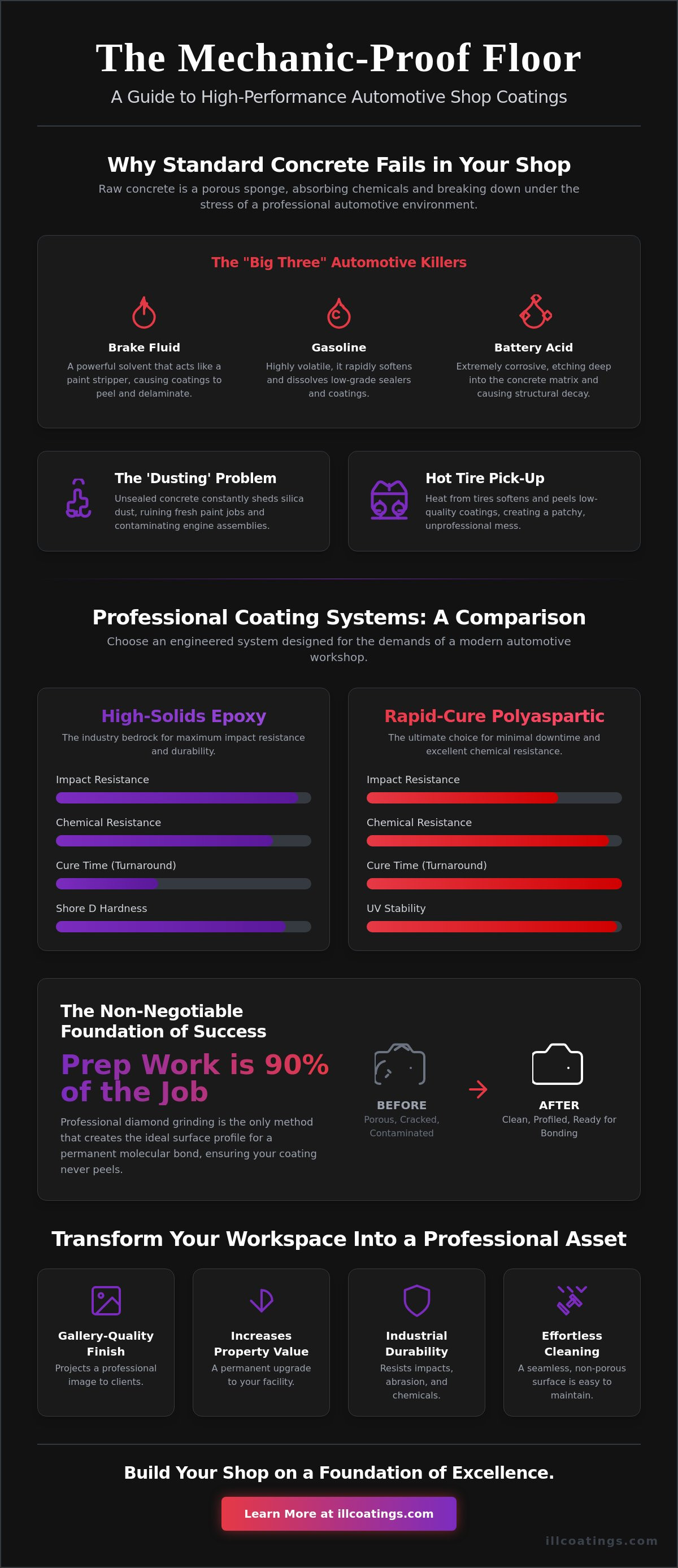
- Learn how Shore D Hardness ratings and chemical resistance profiles protect your slab from the "big three" automotive killers: brake fluid, gasoline, and battery acid.
- Understand why professional diamond grinding is the non-negotiable standard for surface preparation, ensuring your coating never peels under hot tires.
- Transform your workspace into a gallery-quality environment that combines industrial-strength durability with a professional aesthetic that increases property value.
The High-Stakes Environment: Why Standard Concrete Fails in Automotive Shops
Your shop floor is the foundation of your craftsmanship, but raw concrete is a liability waiting to happen. To the naked eye, a concrete slab looks impenetrable. In reality, it's a porous mineral sponge that drinks every fluid it touches. If you leave it raw, you're inviting every drop of oil and coolant to become a permanent part of your workspace. If you spill brake fluid or battery acid on bare concrete, you aren't just looking at a stain; you're witnessing a chemical assault that weakens the slab from the inside out. Once these fluids penetrate the surface, they create a bond-breaking layer that makes future repairs or coatings nearly impossible to apply.
Beyond chemistry, there's the relentless mechanical stress of a working bay. Automotive work involves concentrated point-loads that would shatter residential-grade surfaces. Every time you drop a heavy jack or set a vehicle on jack stands, you're testing the compressive strength of your floor. Standard concrete often fails this test, leading to spalling and cracks that trap dirt and harbor moisture. Simply "sealing" the surface with a thin hardware store product isn't enough for a high-traffic restoration or repair space. These environments demand specialized automotive shop floor coating options that bond at a molecular level to create a truly impenetrable barrier.
Standard concrete is defenseless against the primary shop killers:
- Brake Fluid: A powerful solvent that acts like a paint stripper on many surfaces.
- Gasoline: Highly volatile and capable of softening many low-grade sealers almost instantly.
- Battery Acid: Corrosive enough to etch deep into the concrete matrix, causing structural decay.
The 'Dusting' Problem and Your Paint Booth
Unsealed concrete is a constant source of fine silica dust. As you walk or roll toolboxes across the floor, the surface slowly disintegrates into microscopic particles. This dust is the enemy of precision. It settles into fresh engine assemblies and ruins expensive paint work by creating "fisheyes" and texture issues. Professional-grade encapsulation transforms your shop into a "clean room" environment, locking down those particles and ensuring your work remains flawless. When exploring automotive shop floor coating options, you have to look for systems that offer complete dust mitigation.
Thermal Shock and Hot Tire Pick-up
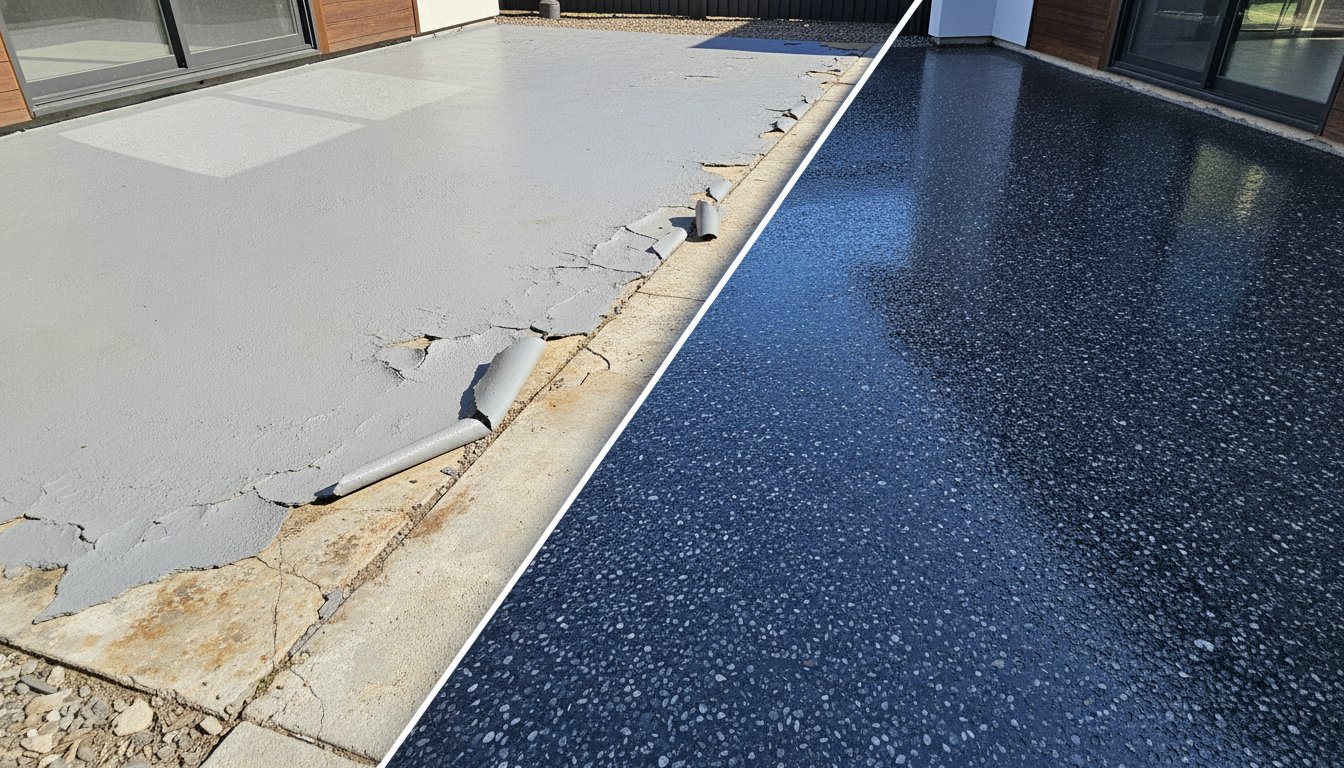
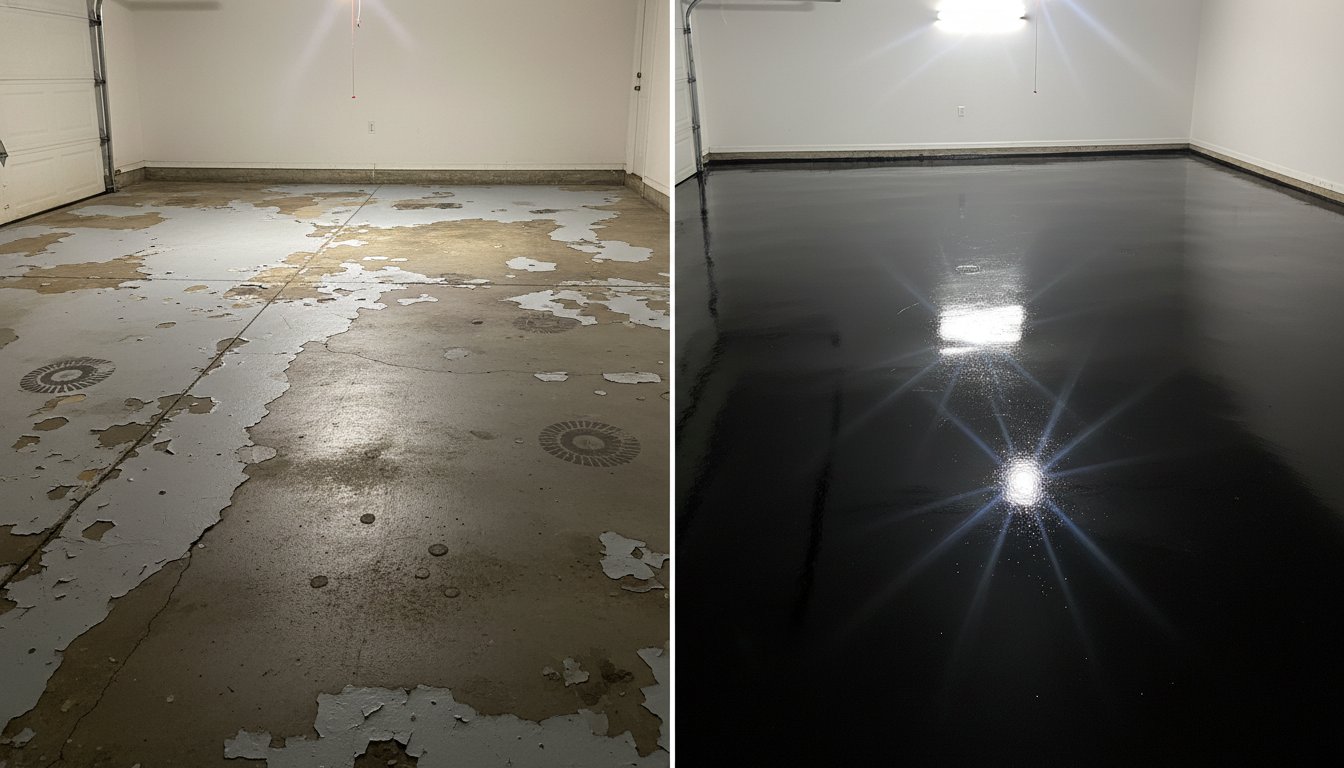
If you've ever seen a floor coating peel away in the exact shape of a tire, you've seen hot tire pick-up. This happens when heat from a vehicle's tires softens low-quality resins. As the tire cools, it shrinks and grips the coating. When you pull the car out of the bay, the bond between the tire and the resin is stronger than the bond between the resin and the concrete. We prevent this by utilizing industrial coatings with high cross-linking densities. These advanced formulas withstand thermal expansion and contraction, ensuring your floor stays on the ground where it belongs.
Professional Automotive Shop Floor Coating Options: Comparing the Top Contenders
Selecting the right automotive shop floor coating options is a decision that impacts your bottom line for years. It's not just about a fresh coat of paint; it's about choosing an engineered system that can survive the daily grind of a professional bay. For most owners, the choice comes down to how much downtime they can afford and the specific chemistry they handle daily. You need a surface that meets OSHA general requirements for shop floors by staying clean, dry, and slip-resistant under the most demanding conditions.
High-solids epoxy remains the industry bedrock for sheer impact resistance. It creates a thick, resilient build that acts as a sacrificial shield for your concrete. If you're constantly moving heavy toolboxes or dropping heavy engine components, the high-build nature of epoxy provides the "cushion" your slab needs. For spaces where aesthetics must match performance, like customer-facing showrooms or high-end restoration bays, resin-bound stone, specifically Vuba Stone, offers an elite finish. It combines the natural beauty of stone with the industrial strength of modern resins, creating a slip-resistant surface that stands out from the competition.
High-Solids Epoxy vs. Polyaspartic Systems
The debate between epoxy and polyaspartic usually starts with the clock. Standard high-solids epoxy systems often require a full seven-day cure before you can return to heavy vehicle traffic. If your shop is booked out weeks in advance, that downtime is a profit killer. Polyaspartic coatings solve this with a 24-hour return to service. Beyond speed, polyaspartic systems offer superior UV stability. If your shop has large glass bay doors or you work with the doors open, standard epoxy will eventually yellow and chalk. Polyaspartic resins stay crystal clear and maintain their gallery-quality finish regardless of sun exposure. They also offer a higher degree of flexibility, which helps the coating move with the concrete during temperature shifts rather than cracking.
Polished Concrete for Commercial Fleet Maintenance
For high-volume fleet facilities where topical coatings might be overkill, polished concrete is a formidable contender. This isn't just a simple grind; it's a multi-stage mechanical and chemical transformation. We use heavy-duty diamond grinders to open the concrete pores before applying liquid densifiers. These chemicals react with the free lime in your concrete to create a surface that is significantly harder and more dense than the original slab. This process eliminates "dusting" and creates a floor that is incredibly easy to maintain with a simple autoscrubber. It's the ultimate choice for shops that prioritize long-term cost-efficiency and raw industrial durability. To see how these systems transform a workspace, explore our specialized commercial floor coatings designed for the modern mechanic.
Chemical Resistance and Durability: The Science of 'Shop-Proof' Floors
Your workspace is a battlefield of chemistry and physics. Choosing between different automotive shop floor coating options isn't just about picking a color; it's about understanding the technical specifications that keep your slab intact. One of the most critical metrics we track is Shore D Hardness. This measures the resin's resistance to indentation. When you're positioning a four-ton vehicle on jack stands, you need a Shore D rating that prevents those stands from "sinking" into the finish. A high-performance system doesn't just sit on top of the concrete; it becomes a rigid, protective shell that distributes weight effectively across the entire surface.
Chemical resistance is the second pillar of a shop-proof floor. We focus on the "Big Three" killers: brake fluid, Skydrol, and gasoline. While many DIY kits claim to be "chemical resistant," they often fail within minutes of exposure to brake fluid, which acts as a powerful solvent. True industrial-grade resins are engineered to maintain their molecular integrity even when fluids sit on the surface for extended periods. This level of protection only works if the bond is perfect. That's why we strictly follow industry standards for concrete surface preparation to ensure the resin anchors deep into the concrete matrix, preventing the fluid from ever reaching the porous slab below.
Finally, we consider the Coefficient of Thermal Expansion. Buildings move and breathe as temperatures fluctuate. If your floor coating is too brittle, it will crack as the concrete expands and contracts. Our professional systems are designed to move in harmony with your building. This flexibility prevents the delamination and spider-web cracking that plagues inferior products when the seasons change.
Welding, Sparks, and Heat Resistance
Heavy fabrication creates a constant rain of molten metal and grinding sparks. While no resin is truly fireproof, professional automotive shop floor coating options offer high heat tolerance. Cheap epoxy will char and bubble under grinding sparks, but high-solids systems are dense enough to resist immediate damage. If your shop specializes in welding or custom exhaust work, you need a topcoat that can handle the thermal shock without losing its aesthetic appeal or structural bond.
Slip Resistance vs. Cleanability
Safety is a priority, but a floor that's too rough is impossible to mop. We aim for a balanced Coefficient of Friction. By using a controlled "Orange Peel" texture or specialized slip-resistant additives, we create a surface that grips a technician's boots even when the floor is wet. This doesn't sacrifice the high-gloss look that makes your shop look like a professional gallery. Maintenance becomes a breeze; a simple squeegee and a mild cleaner are all you need to keep that showroom shine for years without the risk of slips and falls.
The Professional Installation Advantage: Why Prep Work is 90% of the Success
If you think a gallon of acid from a big-box store is enough to prep your slab, you're setting yourself up for an expensive failure. DIY kits often peel within six months because they rely on a weak chemical reaction that barely scratches the surface. True success with automotive shop floor coating options requires a mechanical bond that no liquid cleaner can provide. We don't just wash the surface; we physically transform it. By removing the top layer of weak concrete, laitance, and old contaminants, we ensure the resin has a pristine surface to anchor into. If the foundation isn't right, the most expensive topcoat in the world won't stay on the ground.
Professional installation also addresses the structural integrity of your workspace. We don't just coat over problems. We use industrial-grade fillers to treat every crack and control joint, creating a seamless, monolithic surface that prevents fluids from seeping into the sub-base. This level of detail is what separates a "painted floor" from a high-performance workspace. You need a floor that acts as a single, impenetrable shield against the daily abuse of a busy shop.
Diamond Grinding: The Gold Standard for Adhesion
Planetary diamond grinders are the backbone of a professional install. These heavy machines use rotating diamond-impregnated discs to grind away the surface, opening the concrete pores for a deep mechanical bond. This process removes deep-seated oil, grease, and old paint that would otherwise act as bond-breakers. CSP (Concrete Surface Profile) is the industry standard for bond strength, ranging from a smooth CSP 1 to a heavy CSP 9. For most automotive shops, achieving a CSP 2 or 3 is the sweet spot for ensuring the coating never delaminates under the weight of heavy equipment or the heat of high-performance tires.
Moisture Remediation and Priming
Moisture is the invisible killer of epoxy floors. Even if your floor looks bone-dry, hydrostatic pressure can push moisture vapor through the slab from the earth below. This leads to osmotic blistering, where the coating bubbles and eventually pops. We perform rigorous Moisture Vapor Transmission (MVT) testing before a single drop of resin touches your floor. If we find high moisture levels, we use specialized moisture-mitigating primers. These primers are chemically superior to retail-grade products, as they are engineered to withstand significant pressure from underneath. This ensures your investment stays bonded even in below-grade or slab-on-grade shops. Ready to stop guessing and start building? Explore our professional grinding concrete services to ensure your shop floor lasts a lifetime.
A professional shop floor should do more than just survive; it should inspire. We don't just install resin; we Illuminated dull, porous slabs into high-performance environments that command respect. This is where the blue-collar artisan mindset comes to life. We combine the raw strength of industrial materials with a refined eye for aesthetics. If you want your customers to trust the quality of your work the moment they step into your bay, then your floor must project excellence. Our automotive shop floor coating options are designed to elevate manual labor into a form of craftsmanship.
Customization is about more than just picking a color. It's about engineering a space that works for you. Multi-colored flake blends provide a decorative finish while adding a critical layer of slip resistance and hiding minor slab imperfections. Integrated safety striping and designated work zones help organize your workflow and protect your team. We take a full-service journey with you, starting from the heavy mechanical grinding of the substrate to the application of a high-gloss, chemical-resistant topcoat that stays brilliant for years. This isn't just a construction project; it's a transformation of your professional home.
Showroom-Quality Finishes for Restoration Professionals
For high-end automotive galleries and client waiting areas, we offer resin-bound stone, specifically Vuba stone. This system provides a sophisticated, textured look that is as durable as it is beautiful. If you're looking to highlight the sleek lines of a classic restoration, metallic epoxy is the gold standard. It creates a "liquid metal" effect with deep, three-dimensional movement that turns a standard floor into a work of art. We can even provide custom color matching to align with your brand identity or your favorite automotive manufacturer's palette, ensuring every square foot reflects your professional standards.
Start Your Shop Transformation Today
We understand the high stakes of your business because our own professional survival is tied to the quality of our output. We don't just offer a service; we offer a commitment to excellence that ensures your floor stands the test of time. A professional consultation can save you thousands in long-term maintenance by identifying the exact resin chemistry your specific shop needs. Don't settle for a floor that peels, stains, or dusts. Choose a partner that understands the grit and the glory of the automotive world. Ready for a shop floor that works as hard as you do? Contact Illuminated Coatings today.
Build Your Shop on a Foundation of Excellence
Your workspace is more than just a bay; it's where your reputation is forged every day. We've seen how raw concrete acts as a sponge for contaminants and why standard hardware store kits fail under the heat of professional use. By choosing the right automotive shop floor coating options, you're investing in a system that resists the "big three" chemical killers while providing a safe, slip-resistant environment for your team. Success in 2026 requires moving beyond temporary fixes and embracing the industrial-grade chemical resistance that only high-performance resins can provide.
At Illuminated Coatings, we bring family-owned artisan craftsmanship to every project. We don't skip the hard work. Our process relies on expert diamond grinding prep to ensure a mechanical bond that stays on the ground. If you're ready to transform your dull, dusting slab into a gallery-quality workspace that reflects your dedication to the craft, we're here to help. Take the first step toward a mechanic-proof environment that increases your property value and inspires your clients.
Get a Professional Quote for Your Automotive Shop Floor and let's build a workspace that stands the test of time.
Frequently Asked Questions
Is epoxy or polyaspartic better for a working automotive shop?
Polyaspartic systems are generally superior for active shops because they offer a 24-hour return to service and complete UV stability. If your shop has large bay doors or you can't afford a week of downtime, polyaspartic is the clear winner. High-solids epoxy remains a rugged, cost-effective bedrock for impact resistance, but it lacks the rapid cure times and sunlight protection of modern polyaspartic resins.
Can I apply a professional shop floor coating over an old, oil-stained floor?
Yes, you can achieve a permanent bond on old concrete if you use mechanical diamond grinding to remove the oil-saturated top layer. If the oil has penetrated deep into the slab, we apply specialized oil-tolerant primers that chemically lock onto the surface. This professional preparation ensures your new finish won't delaminate or bubble due to previous contaminants hiding beneath the surface.
How long does it take before I can park my car on a new shop floor coating?
You can typically return a vehicle to service within 24 hours if you choose a polyaspartic system. If you opt for a traditional high-solids epoxy, you'll need to wait at least 72 hours for light foot traffic and a full 7 days before parking vehicles. Rushing this process can lead to permanent indentations or coating failure, as the resin needs time to reach its full Shore D hardness.
Will welding sparks or grinding embers damage my epoxy floor?
Most industrial-grade resins withstand incidental sparks, but prolonged exposure to molten metal will cause surface charring. While these high-performance automotive shop floor coating options are dense enough to resist melting under a quick rain of grinding embers, we recommend using welding blankets during heavy fabrication. This simple precaution protects your gallery-quality finish from the localized thermal shock of intense heat.
What is 'hot tire pick-up' and how do I prevent it?
Hot tire pick-up is a failure where heat from tires softens a low-quality coating, causing it to peel away when the vehicle moves. You prevent this by avoiding thin, retail-grade DIY kits and choosing professional systems with high cross-linking densities. These engineered resins don't soften under thermal stress, ensuring the bond between the coating and the concrete is always stronger than the grip of a cooling tire.
How do I clean an automotive shop floor without damaging the high-gloss finish?
A simple solution of mild, pH-neutral soap and water is the most effective way to maintain your floor's brilliance. Use a soft-bristle brush or a squeegee to remove fluids, and avoid harsh acidic cleaners that can etch the topcoat over time. For high-volume shops, an automatic scrubber with a non-aggressive pad keeps the surface pristine and slip-resistant without requiring hours of manual labor.
Do I really need to grind the concrete before coating my shop floor?
Yes, mechanical diamond grinding is a non-negotiable requirement for a shop-proof floor. Acid etching is a weak chemical alternative that fails to open the concrete pores deeply enough for the demands of a working bay. Grinding removes the weak surface laitance and creates a specific profile that allows your automotive shop floor coating options to anchor deep into the slab for life.
What is the life expectancy of a professionally installed automotive floor coating?
A professionally installed system typically lasts 15 to 20 years even in high-traffic commercial environments. The longevity of your floor depends on the quality of the initial surface preparation and the thickness of the topcoat. With routine cleaning and basic care, these industrial-grade surfaces will maintain their chemical resistance and professional image long after DIY paint jobs have turned into a patchy mess.