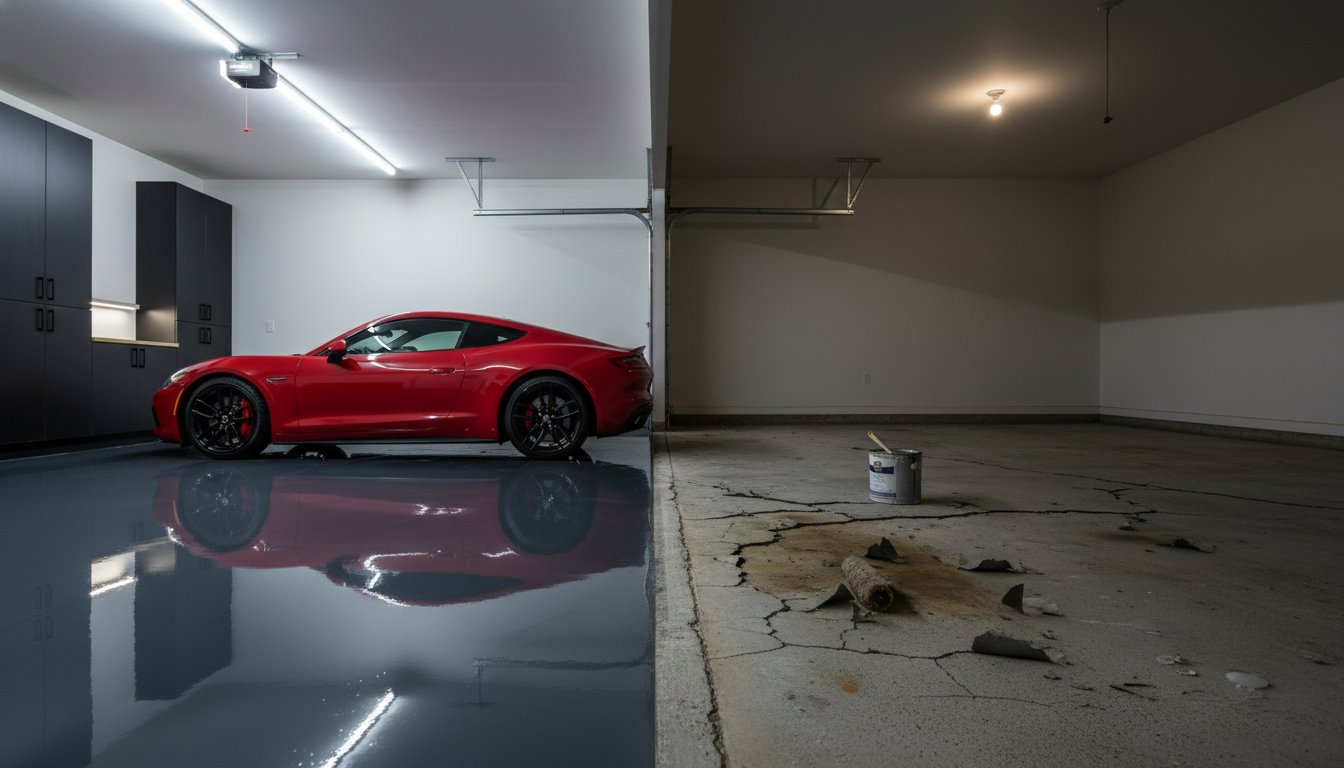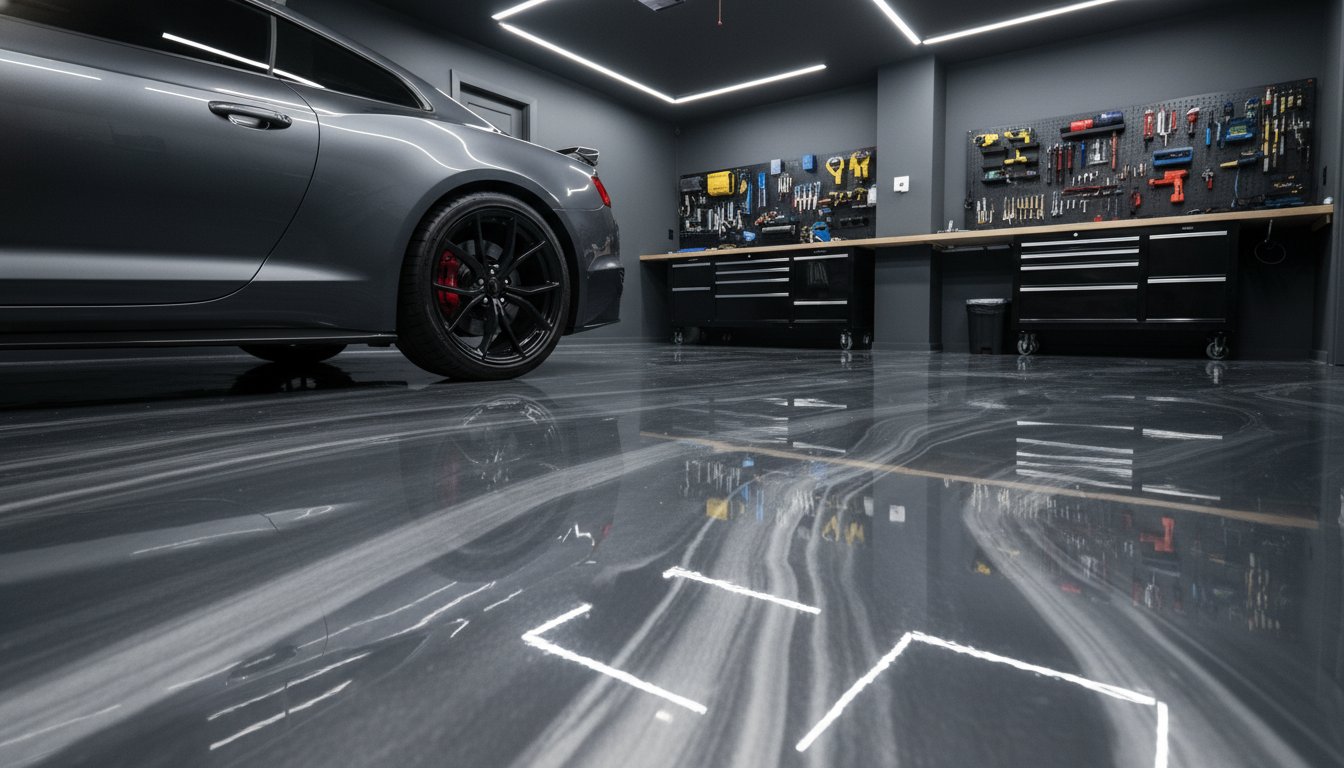
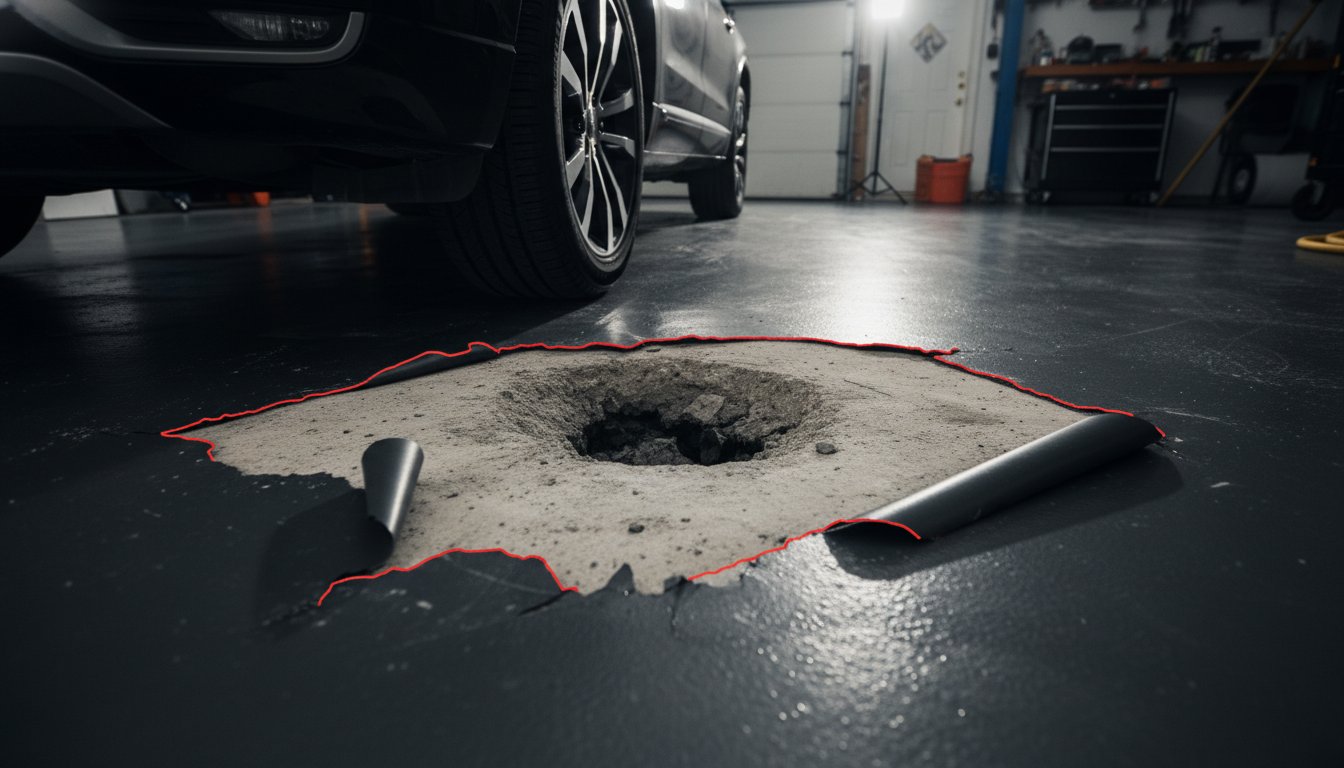
Did you know that 90% of a floor's lifespan is decided before the coating even leaves the bucket? If you are staring at a "premium" finish peeling off under your tires or sliding across a surface that's dangerously slick when wet, you aren't alone. It is incredibly frustrating to deal with the embarrassment of a flaking floor, especially when you realize the high cost of grinding off a failed DIY attempt. You wanted a showroom transformation, but you ended up with a maintenance nightmare.
This guide dives deep into the technical reasons behind common garage floor coating problems to show you exactly why typical applications fail. You'll discover how professional-grade mechanical bonding and diamond grinding transform ordinary concrete into a lifelong masterpiece. We will break down the science of hot tire pickup, the critical thickness of industrial resins, and the precise steps required to create a floor that withstands chemicals and heavy traffic with ease. By understanding the difference between a thin DIY kit and a professional-grade system, you can finally achieve the aesthetic, low-maintenance environment your home deserves.
Key Takeaways
- Identify the "Big Three" warning signs of surface failure and learn how to distinguish between cosmetic wear and deep-seated adhesion loss.
- Discover why 90% of common garage floor coating problems originate during the preparation phase and how diamond grinding creates the mechanical bond required for longevity.
- Evaluate the critical trade-offs between epoxy, polyurea, and polyaspartic resins to find the perfect balance of industrial strength and aesthetic brilliance.
- Learn how to navigate environmental sensitivities like humidity and temperature to prevent application errors that sabotage your investment.
- See how a commitment to craftsmanship and high-solids systems transforms a standard garage into a durable, low-maintenance masterpiece.
Why Garage Floor Coatings Fail: The Frustrating Reality of Surface Failure
A garage floor is a high-stakes environment where chemistry meets heavy machinery. True coating failure occurs when the mechanical bond between the resin and the concrete slab is severed. It isn't just a surface scratch or a stubborn stain; it is a fundamental divorce of materials. While many homeowners treat their garage like any other indoor room, the reality is that fluctuating temperatures, road salts, and chemical spills make it the most demanding space in a residential property. If the coating cannot grip the concrete with industrial strength, it will inevitably fail.
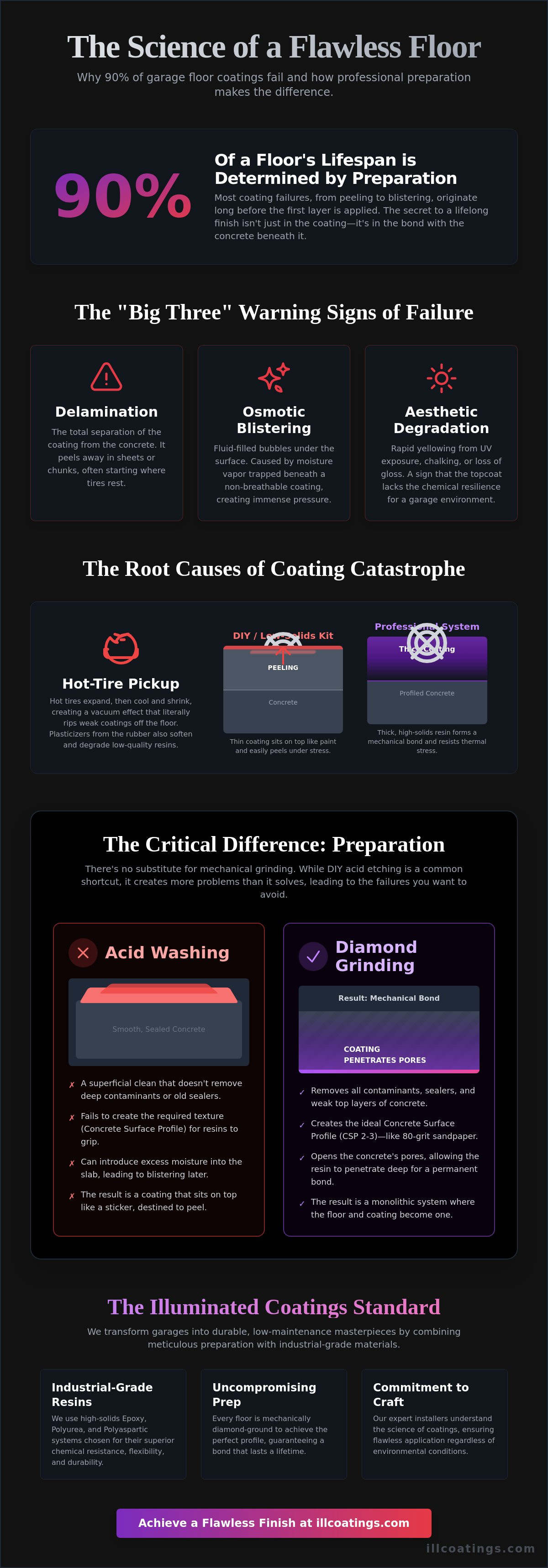
Most common garage floor coating problems manifest as the "Big Three" symptoms. Identifying these early can save you from the high cost of grinding off a total failure later. We differentiate between "topical failure," which is common with hardware store floor paints that sit like a thin skin, and "systemic failure," where a professional resin loses its grip due to environmental or preparation issues.
- Delamination: The total separation of the resin layers from the concrete substrate.
- Osmotic Blistering: Fluid-filled bubbles that pop and peel, often caused by trapped moisture.
- Aesthetic Degradation: Rapid yellowing, chalking, or loss of gloss that turns a gallery-quality finish into a dull eyesore.
Delamination and Hot-Tire Pickup
Your car tires are essentially chemical sponges. After a long drive, they are hot and expanded. When you park, the cooling rubber creates a vacuum effect that tries to suck the coating off the floor. This is hot-tire pickup. Low-solids DIY kits are especially vulnerable because they lack the structural integrity to resist this physical pull. Additionally, plasticizers from the tire rubber can migrate into the coating surface, softening the resin until it peels away in unsightly chunks. If your floor wasn't prepared to handle these thermal stresses, it doesn't stand a chance.
Osmotic Blistering: The Invisible Pressure
Sometimes the threat comes from below the surface. Concrete is naturally porous, and moisture vapor is constantly moving through the slab. If a non-breathable membrane is applied over a slab with high moisture content, that vapor gets trapped. This builds hydrostatic pressure that can reach incredible levels, eventually causing moisture-related coating failures like osmotic blistering. These bubbles are a clear sign that your concrete has a vapor problem rather than a product defect. Addressing these common garage floor coating problems requires a specialist mindset and professional-grade moisture mitigation before the first drop of resin hits the floor.
The Critical Role of Concrete Preparation in Coating Longevity
Preparation is the invisible foundation of every successful floor. In the industry, we often say that 90% of all common garage floor coating problems are born during the prep phase, long before the first gallon of resin is mixed. If the concrete substrate isn't properly opened, the coating simply sits on top like a sticker rather than becoming part of the slab. Professional-grade resins require a "thirsty" surface to achieve a deep mechanical bond. Without this, even the most expensive materials will eventually peel away under the stress of daily use.
A primary challenge involves identifying hidden contaminants that act as bond-breakers. Old sealers, deep-set oil stains, and battery acid residue can hide within the pores of the concrete. If these aren't removed, they create a barrier that prevents the resin from penetrating. This is why we adhere to strict industry standards for concrete preparation to ensure every contaminant is eradicated. Relying on a simple "mop-on" acid etch kit from a big-box store is a recipe for disaster. These kits rarely provide the profile needed for a permanent bond and often lead to systemic failure within the first year.
Mechanical Grinding vs. Acid Washing
There is no substitute for diamond grinding. While acid washing is a popular DIY shortcut, it often leaves the surface too smooth or introduces excess moisture into the slab. We use heavy industrial grinders to achieve a Concrete Surface Profile (CSP) of 2 or 3. This texture feels like 80-grit sandpaper and provides the "bite" necessary for the resin to anchor itself. Our specialized equipment is also "dustless," using high-velocity vacuums to keep your garage clean, a major advantage over the messy, wet slurry created by acid etching.
Repairing the Foundation: Cracks and Spalling
If you coat over a crack without addressing it, that crack will eventually mirror through your new floor. We practice "crack chasing," which involves grinding out the crack to create a clean channel for high-modulus epoxy fillers. This process restores the structural integrity of the slab. We also look for spalling, which is the crumbling or flaking of the concrete surface. If the foundation is weak, the coating will fail along with it. To ensure your project starts on a solid foundation, consider grinding concrete with professional equipment before any resin is applied. By treating the concrete like a canvas that must be perfectly primed, we eliminate the root causes of surface failure.
Common Material Drawbacks: Epoxy, Polyurea, and Polyaspartic
Choosing the right resin is a balancing act of chemistry and craftsmanship. No single material is a magic bullet for every garage environment. If you prioritize price over performance, you might end up with a brittle surface that cracks under pressure. Conversely, if you rush the process to follow the "1-day floor" trend, you risk sacrificing the critical bond strength established during preparation. Effectively addressing common garage floor coating problems requires a deep understanding of how different resins react to heat, light, and impact. We look at solids content as the primary indicator of quality. While DIY kits often sit at a meager 30% to 40% solids, professional-grade systems utilize high-solids formulas that result in a finished thickness of 15-20 mils. This creates a dense, durable barrier that outlasts thinner alternatives by decades.
The trade-off between hardness and flexibility is a central theme in resin selection. Traditional epoxy is renowned for its incredible bond strength and rigidity, making it an ideal primer. However, that same rigidity can lead to brittleness. If the material is too hard, it cannot expand and contract with the concrete slab during seasonal temperature shifts. This is where modern polyurea and polyaspartic systems shine. They offer superior elongation properties, allowing the floor to "breathe" without snapping the bond. Adhering to professional application standards ensures that these materials are layered correctly to maximize their individual strengths while mitigating their inherent drawbacks.
The UV Problem: Why Epoxy Yellows
Aromatic epoxies have a specific chemical vulnerability: they react poorly to ultraviolet light. When exposed to sunlight through open garage doors or windows, these coatings undergo a process called "ambering." This isn't just a cosmetic issue. While the yellowing is the first sign, total coating breakdown can follow as the polymer chains weaken. For any garage with natural light exposure, a UV-stable polyaspartic topcoat is non-negotiable. It acts as a shield, preserving the gallery-quality finish of your floor against the relentless energy of the sun.
Brittleness and Impact Resistance
High-build epoxy can sometimes suffer from the "glass effect." Because it is so stiff, dropping a heavy wrench or floor jack can cause the coating to shatter or chip. Polyurea and polyaspartic resins are approximately four times stronger than traditional epoxy and offer much higher impact absorption. They turn a potential crack into a non-event. We believe the ultimate solution for common garage floor coating problems is a hybrid approach. By using a high-solids epoxy primer for maximum adhesion and a polyaspartic topcoat for flexibility and UV protection, we deliver a floor that is both unshakeable and stunningly beautiful.
Application Errors That Sabotage Your Investment
High-performance resins are chemically temperamental. They demand absolute respect for the clock and the thermometer. Many common garage floor coating problems stem from a simple lack of environmental awareness during the application window. If the air is too heavy with moisture or the slab is heating up under a midday sun, the resin cannot cure as intended. This isn't just about aesthetics; it's about the survival of the bond we worked so hard to create during the grinding phase. When we Illuminated Coatings a facility, we monitor these variables with surgical precision to ensure the transformation is permanent.
The "Pot Life" trap is a frequent pitfall for inexperienced installers. Once the Part A resin and Part B hardener are combined, an exothermic reaction begins. You have a limited window to move that material from the bucket to the floor before it begins to tack up. Rushing this process often leads to "holidays," which are tiny, overlooked gaps in the coating, or uneven thickness that compromises the floor's integrity. If the installer fights the clock, the result is a finish that looks rushed and performs poorly under the weight of a vehicle.
Temperature management is equally critical to avoid "outgassing." As a concrete slab warms up, the air trapped in its pores expands and pushes outward. If you apply a coating during this rising temperature cycle, that escaping air creates pinholes and bubbles in the wet resin. We follow the "Rising Temperature" rule by applying our systems as the slab is cooling down, which pulls the resin into the pores rather than pushing it out. For high-traffic areas that require uncompromising durability, our Commercial Floor Coatings are applied with these strict environmental protocols to guarantee a gallery-quality result.
Mixing and Ratio Imbalance
The chemistry of a two-part resin is unforgiving; "close enough" isn't good enough. If the mixing ratio is off by even a small percentage, the chemical chain won't link properly. This results in sticky spots that never fully harden or localized peeling where the resin remains soft. We also watch the mixing RPM carefully. If you mix too fast, you introduce air entrainment, which leaves the floor riddled with tiny bubbles. A perfect cure requires a steady hand and a deep understanding of induction times.
Environmental Interference
High humidity is a silent killer of high-end finishes. When moisture levels are too high, it can cause "blushing," which is a white, waxy film that appears on the surface during the cure. This film ruins the clarity of the floor and prevents topcoats from adhering. The dew point is the temperature at which moisture condenses on the concrete. We never begin an application unless the slab temperature is at least five degrees above the dew point. This technical discipline is the difference between a floor that flakes and one that stands as a point of pride for decades.
The Illuminated Coatings Standard: Beyond the Basic Epoxy
We approach every garage floor with a "blue-collar artisan" mindset. This means we don't just offer a construction service; we deliver a form of craftsmanship that elevates your property. While others might see a simple concrete slab, we see a foundation that requires a specific chemical and mechanical strategy to thrive. The survival of your floor depends entirely on the integrity of the bond. To ensure this, we prioritize heavy-duty mechanical grinding and industrial-grade, high-solids systems for every project we touch. By matching the right resin chemistry to the unique profile of your concrete, we eliminate the root causes of common garage floor coating problems before they ever have a chance to start.
Every garage environment is different. A slab in a high-moisture area requires a different strategy than one in a climate-controlled workshop. We don't believe in one-size-fits-all solutions. Instead, we provide a custom-tailored system based on a technical assessment of your specific slab condition. Our commitment to excellence is driven by the fact that our professional reputation is tied to every square foot we coat. We treat your home as a gallery, ensuring the final visual impact is a point of pride for you and a testament to our dedication.
Resin-Bound Stone: The Solution for Problem Slabs
If your concrete slab suffers from chronic moisture issues or extensive cracking, a traditional non-breathable coating might not be the best fit. This is where Vuba Stone provides a revolutionary alternative. As a resin-bound stone system, it is naturally porous and breathable. This allows moisture vapor to pass through the surface rather than becoming trapped underneath, effectively eliminating the risk of osmotic blistering. Because it is a thick, textured system, it also completely bypasses the threat of hot-tire pickup. You get a slip-resistant, natural stone finish that is as durable as it is beautiful, making it the perfect solution for slabs that have failed traditional coatings in the past.
The Professional Difference: Accountability and Craftsmanship
Choosing a family-owned specialist over a national franchise means you are choosing accountability. We aren't just following a corporate script; we are invested in the long-term survival of your floor. Our team focuses on the fine details that generalists often overlook, from the precision of the mix to the exact timing of the application. The "Illuminated" promise is about more than just a new look. It is about transforming a dull, dusty space into a high-performance environment that adds genuine value to your life. Don't settle for a floor that might fail in a few years. Get a professional assessment of your garage floor today and see how we can solve your common garage floor coating problems with a permanent, artisan finish.
Secure Your Property with a Masterpiece of Durability
Your garage floor should be a point of pride, not a source of constant repair. We have shown how common garage floor coating problems like peeling and blistering are almost always the result of cutting corners during the prep phase or using inferior materials. True transformation requires a specialist mindset that prioritizes industrial-grade diamond grinding on every job to ensure a permanent mechanical bond. Whether your slab needs the high-performance breathability of Vuba Stone systems or a heavy-duty commercial resin, the quality of the installation determines the floor's survival.
As a family-owned and operated business, we view every project as a work of craftsmanship. We don't just apply a coating; we Illuminated Coatings your space to bring life and brilliance to dull concrete. If you are ready to move past the frustration of failed floors and invest in a gallery-quality finish, it's time to take the next step. Our team is dedicated to providing the technical expertise and aesthetic excellence your property deserves.
Request Your Professional Garage Floor Transformation Quote
Your property is an investment, and we are here to ensure your floor remains beautiful and functional for decades to come.
Frequently Asked Questions
Why is my garage floor coating peeling off in chunks?
Peeling in chunks is almost always caused by a total failure of mechanical adhesion between the resin and the concrete substrate. If the slab was not diamond ground to a specific profile, the coating simply floats on the surface like a sticker. Over time, physical stress or trapped moisture pulls it away in unsightly pieces. This is one of the most frustrating common garage floor coating problems, typically resulting from DIY acid etching kits that fail to open the concrete's pores.
Can I apply a new epoxy coating over an old one?
You should never apply a new resin system directly over an existing coating if you want a permanent result. The new layer is only as strong as the bond of the old layer; if the original floor fails, the new one goes with it. We always recommend grinding the concrete back to its raw state. This ensures the new material can anchor itself directly into the slab for maximum longevity and a gallery quality finish.
How do I know if my concrete has too much moisture for a coating?
You can perform a simple field test by taping a heavy plastic square to your garage floor for 48 hours. If you see condensation under the plastic or the concrete looks darker, you have a moisture vapor issue. For a precise reading, we use electronic moisture meters to assess the slab. If levels are high, a breathable system like resin bound stone is often a better choice than traditional non-porous coatings.
Is it possible to fix a slippery epoxy floor without starting over?
You can fix a slippery surface by applying a new, high traction topcoat without grinding the entire floor. If the base layer is still well bonded, we can lightly sand the surface and apply a polyaspartic layer infused with anti-slip aggregates like aluminum oxide. This adds the necessary bite to the floor. It is an efficient way to transform a dangerous, slick garage into a safe, functional space for your family.
What is hot-tire pickup and how do I prevent it?
Hot tire pickup occurs when tires heated from driving cool down on your floor, creating a vacuum that pulls weak coatings off the slab. You prevent this by using high solids, industrial grade resins rather than thin hardware store paints. Professional diamond grinding is also essential. It creates a mechanical lock that is strong enough to resist the thermal and physical pull of cooling rubber tires, ensuring the floor's survival.
How long does a professional garage floor coating actually last?
A professionally installed system typically lasts 15 to 25 years depending on the specific materials used. While traditional epoxy might show wear after a decade, premium polyurea and polyaspartic systems are designed for much longer survival in harsh environments. The key to this lifespan is the initial preparation. If the bond is established correctly through diamond grinding, your floor will withstand chemicals and heavy traffic for a generation.
Why does my epoxy floor look yellow after only a year?
Yellowing is caused by UV exposure reacting with the chemical structure of aromatic epoxy resins. This ambering is common in garages with windows or those left open frequently. To prevent this, we use UV stable polyaspartic topcoats. These premium resins act as a shield, ensuring your floor maintains its brilliant appearance without the aesthetic degradation that plagues lower quality installations. This is a standard part of how we Illuminated Coatings for our clients.
Is a 1-day garage floor coating really better than a 3-day process?
A 1-day process is often a marketing tactic that prioritizes speed over the long term survival of the floor. While fast curing resins exist, rushing the preparation and moisture testing phases often leads to common garage floor coating problems later. We focus on a purposeful rhythm that ensures every layer has the time to bond correctly. Quality craftsmanship cannot be rushed if you want a result that stands as a point of pride.