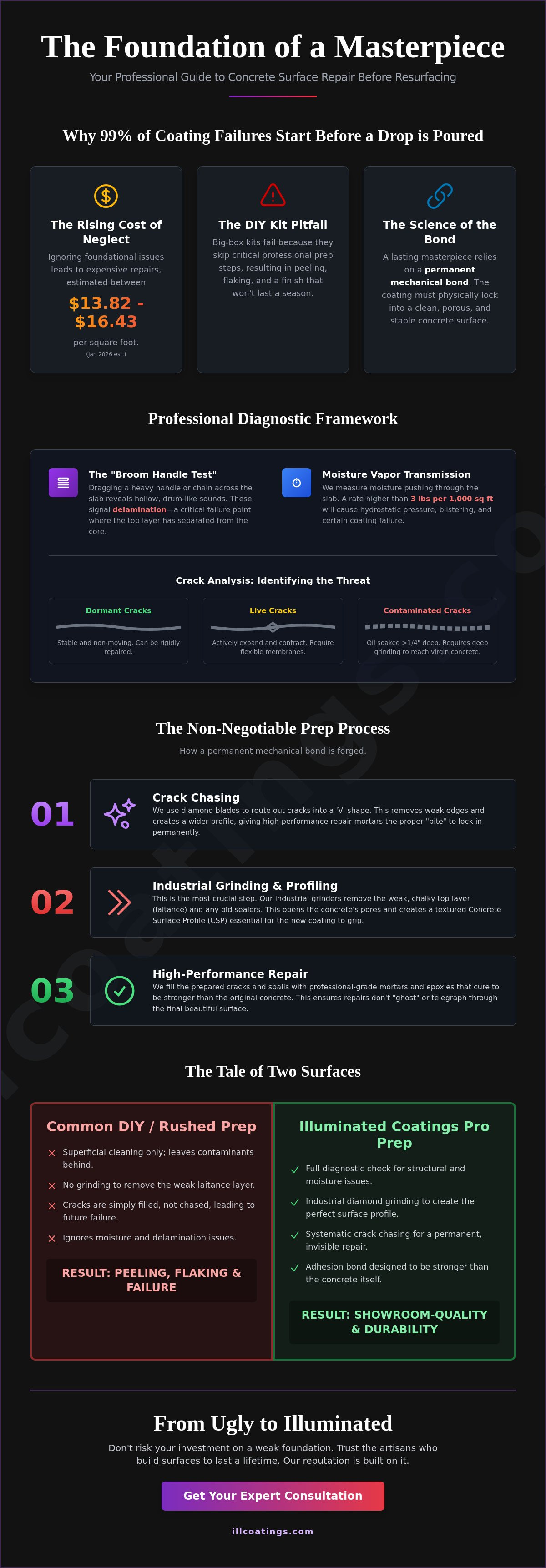
Did you know that the estimated cost to repair concrete has reached between $13.82 and $16.43 per square foot as of January 2026? If you ignore the structural foundation of your slab, then you are simply waiting for your expensive new coating to peel and flake. We know it is frustrating to stare at ugly, cracked surfaces and feel confused about which materials will actually stick. You want a transformation that lasts; because this craft is our livelihood, we refuse to let a project fail due to poor prep.
Mastering concrete surface repair before resurfacing is the secret to turning a standard job into a durable, showroom-quality masterpiece. You can achieve a permanent, slip-resistant finish that turns heads if you follow the right professional steps. This guide provides the technical roadmap you need, from understanding the January 30, 2026, update to ASTM C1583 bond strength standards to selecting high-performance mortars. We will show you exactly how to prepare your surface so your resin-bound stone or epoxy floor stands the test of time and becomes a point of pride for your home.
Key Takeaways
- Learn how to create a permanent mechanical bond so your new surface becomes a long-lasting, showroom-quality masterpiece.
- Discover professional diagnostic methods, like the "Broom Handle Test," to identify essential concrete surface repair before resurfacing.
- Understand the "crack chasing" technique using diamond blades to ensure your repair materials have the proper "bite" to stay put.
- See why industrial grinding to remove the laitance layer is a non-negotiable step for any high-performance resin or stone system.
- Learn the critical difference between professional preparation and the common pitfalls that cause big-box DIY kits to fail.
Why Surface Repair is the Foundation of a Concrete Masterpiece
At Illuminated Coatings, we don't view an old, cracked driveway as a chore. We see it as a future showroom floor. If you want a transformation that turns heads, then you must start with a perfect foundation. Many homeowners ignore small pits or hairline fractures, but those flaws are often symptoms of the primary causes of concrete degradation that eventually destroy a new coating. We treat every project like our livelihood depends on it, because it does. A masterpiece is only as good as the slab beneath it.
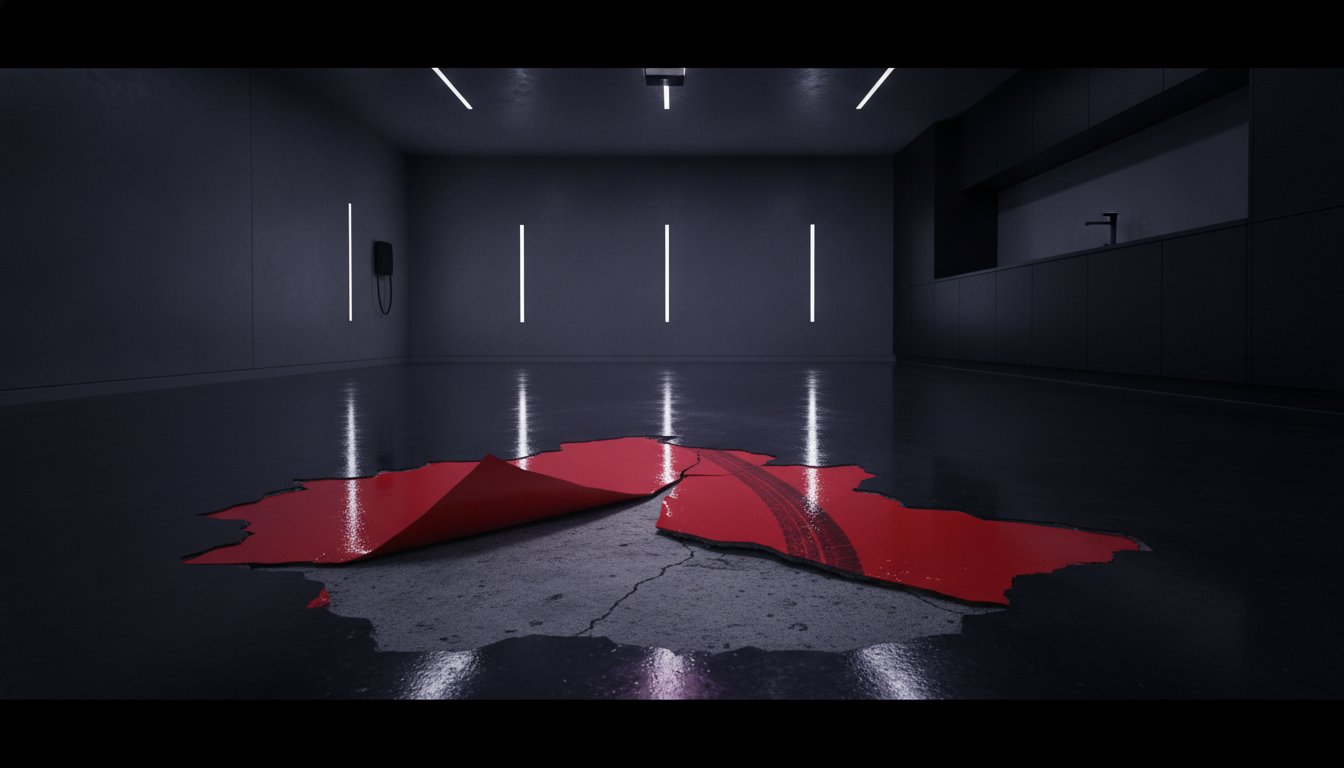
Mastering concrete surface repair before resurfacing is not just about aesthetics; it's about the physics of adhesion. A "sound" concrete surface follows three strict pillars. First, it must be structurally stable with no hollow spots. Second, it must be chemically clean, meaning no oils or old sealers remain. Third, it must be porous. If you ignore these pillars, then you are simply waiting for your new surface to delaminate. Rushing the prep phase is the fastest way to turn a prestige investment into a peeling mess.
The Science of the Bond
The secret to a permanent finish lies in the mechanical bond. If the concrete pores are clogged with dirt or "laitance," then the resin cannot bite into the slab. Professional-grade repairs ensure that the patch material bonds deeply rather than just sitting on top. This prevents "ghosting," which occurs when the outline of an old crack reappears through your beautiful new epoxy or resin-bound stone. Tensile strength is the measurement of the force required to pull the repair material away from the concrete substrate; we aim for a bond that is stronger than the concrete itself.
Transforming Ugly into Enduring
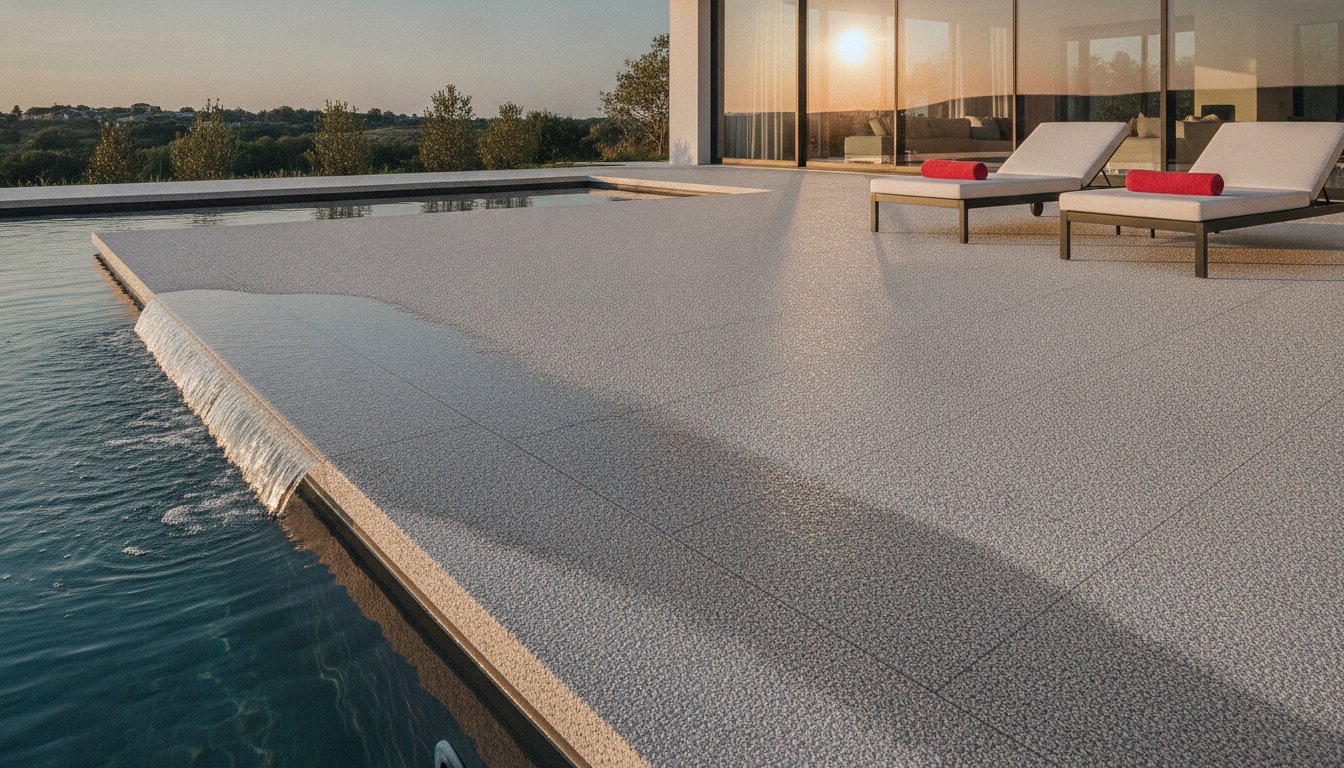
The difference between a cheap patch job and a masterpiece is the level of detail in the prep. High-stakes environments like pool decks or heavily trafficked driveways face constant UV exposure and heavy use. These areas require deep initial repairs to prevent the new surface from lifting under pressure. Choosing a family-owned team means you get the peace of mind that we care about the details. We want your home to look incredible for decades. We don't do "good enough" because our reputation is built on surfaces that stay beautiful and slip-resistant long after the job is done.
Assessing Damage: When to Repair and When to Replace
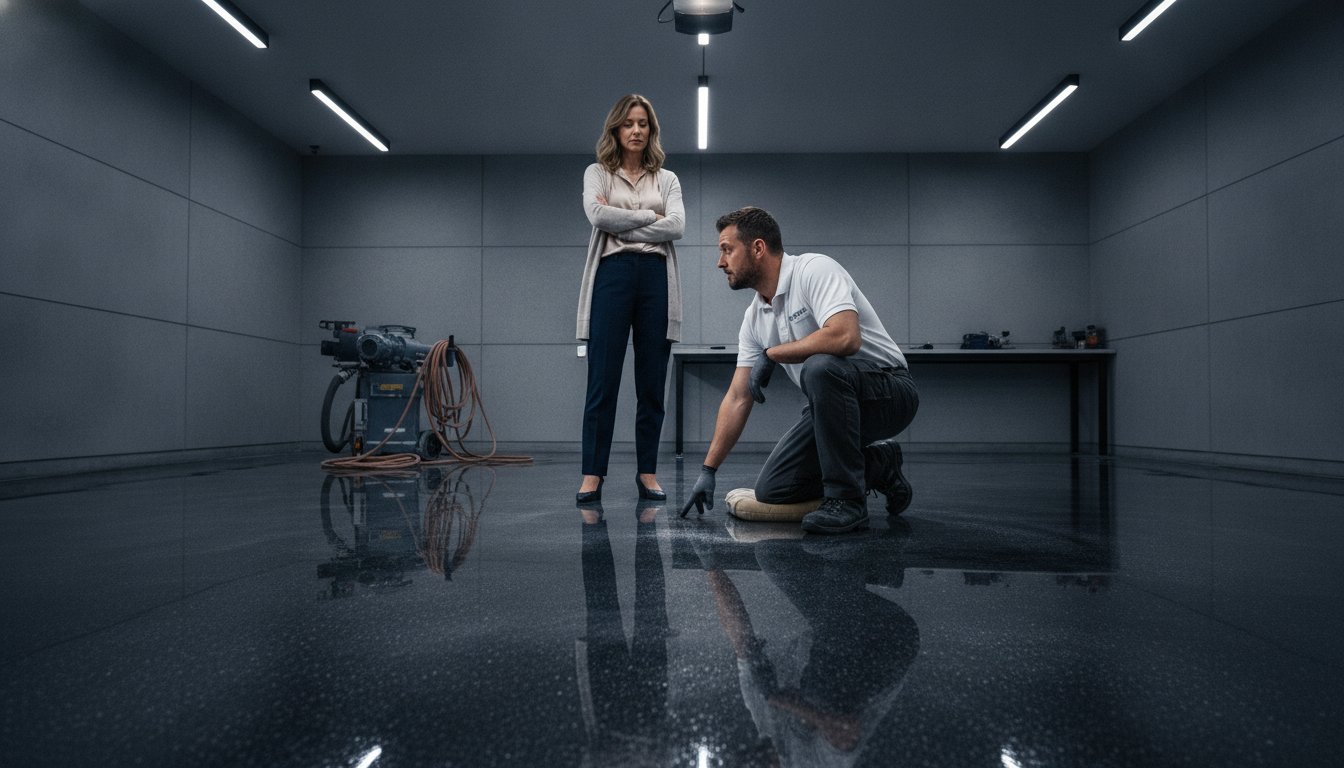
Before we apply a single drop of resin, we perform a deep diagnostic check. You can't build a masterpiece on a crumbling foundation. One of our primary tools is the "Broom Handle Test." By dragging a heavy broom handle or a chain across your slab, we listen for hollow, drum-like sounds. These echoes signal delamination, where the top layer has separated from the core. If you ignore these hollow spots during your concrete surface repair before resurfacing, then your new floor will eventually crack and lift. We also check for moisture vapor transmission. If moisture is pushing up through the slab at a rate higher than 3 pounds per 1,000 square feet, your coating will fail. We don't guess; we measure.
Professional assessment relies on industry standards like the ACI field guide to concrete repair. This ensures every decision we make is backed by engineering logic rather than a quick visual scan. Our livelihood depends on the longevity of our work, so we look for structural red flags that most general contractors miss. If the slab has settled unevenly or shows signs of deep reinforcement corrosion, a simple coating won't save it. You need an artisan who knows when to fix and when to start over.
The Crack Diagnostic Framework
Identifying the nature of a crack is vital. Dormant cracks are stable and haven't moved in years. Live cracks are active; they expand and contract with temperature or weight. If we find a live crack, we must stabilize it or use a flexible membrane to prevent it from reflecting through your new Vuba stone. We also look for chemical contamination. If oil has soaked more than a quarter-inch into the pores, standard cleaning won't work. We might need to grind the concrete deeper to reach virgin material that can actually bond with a high-performance coating.
The Point of No Return
Sometimes, the most honest advice is to replace the slab. If more than 25% of your surface is spalled or if the sub-base has washed away, a coating is a waste of money. You don't want a "patch job" that fails in six months. We look for specific signs that indicate replacement is necessary:
- Major vertical displacement where one side of a crack is significantly higher than the other.
- Widespread deep-pitting that indicates a "soft" mix from the original pour.
- Severe drainage issues that trap water under the concrete.
Critical Repair Techniques for High-Performance Coatings
Once we've diagnosed the hollow spots and active cracks, we move into the surgical phase of the project. If you want your driveway or patio to turn heads, then the repair work must be invisible yet industrial-strength. We don't just fill cracks; we perform "crack chasing." This involves using high-speed diamond blades to widen and deepen every fracture. This process creates a clean, vertical edge that gives the repair material the "bite" it needs to stay put forever. Without this step, your concrete surface repair before resurfacing is just a temporary bandage on a deep wound. We then choose between epoxy injections for structural stability or cementitious fillers for aesthetic blending, matching the chemistry to your final floor system.
Our artisans treat every spalled area with extreme focus. We grind away the soft, ugly layers until we reach the sound, aggregate-rich substrate. If we leave behind any weak material, then your high-performance coating is only as strong as that dust. This technical precision ensures your concrete surface repair before resurfacing provides a stable platform for the final aesthetic layer. We also utilize shimming and leveling compounds to correct "birdbaths" or low spots. This guarantees a perfectly flat transition that is especially critical for systems like resin-bound stone, where water must flow through the surface rather than pooling on top.
Preparing for Vuba Stone and Resin Systems
Porous stone systems like Vuba stone require a specific approach to perimeter edges. We create a recessed "shoulder" at the edges of your patio or pool deck. This prevents the stone from thinning out at the transition points, which is where most DIY jobs fail. Because these systems are breathable, we also ensure the repair mortars won't trap moisture that could cause pressure buildup. It's the Illuminated touch that blends these repair heights so perfectly you'll never know a crack existed once the stone is laid.
High-Durability Epoxy Prep
Garage floors in high-traffic areas like Tampa or St. Petersburg face unique stresses from heavy vehicles. To prevent future shifting, we often "stitch" large cracks using carbon fiber staples. This reinforces the slab's tensile strength across the break. We also focus on filling every tiny pinhole in the concrete. If these aren't sealed, air trapped in the slab will expand as the temperature rises, creating "outgassing" bubbles in your fresh epoxy. We use specialized moisture barriers in the repair stage to ensure your masterpiece stays bonded for a lifetime.
The Professional Preparation Checklist: Grinding and Profiling
Your structural repairs are complete, but the surface isn't ready for a masterpiece yet. To ensure your concrete surface repair before resurfacing holds for decades, we must open the pores of the slab. Raw concrete often has a weak, dusty top layer called "laitance" that prevents resins from sticking. If you skip the profiling phase, then your high-end coating will simply sit on top of the dust rather than becoming part of the floor. We follow a rigorous five-step checklist to guarantee a showroom-quality bond.
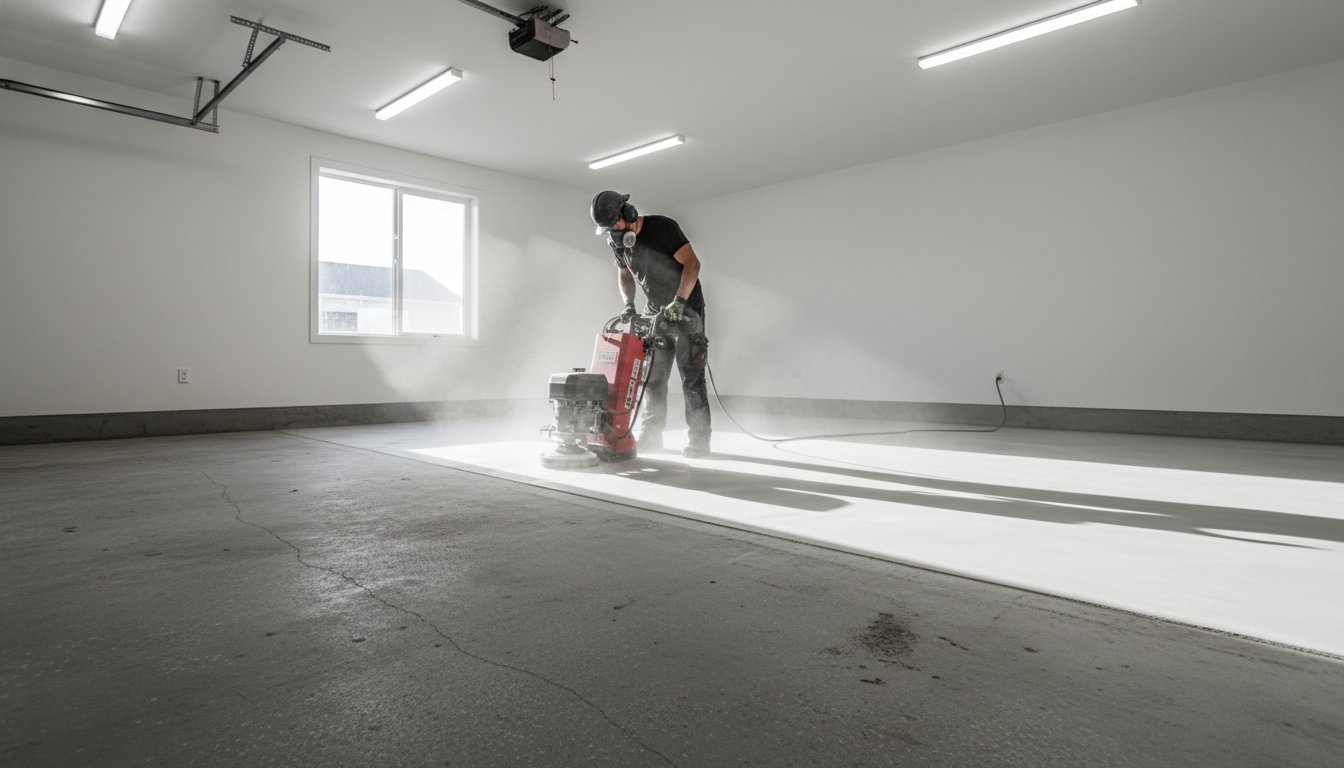
- Step 1: Industrial Grinding. We use planetary grinders with diamond-segmented heads to shave away the laitance and old sealers.
- Step 2: Deep Chemical Cleaning. We apply pH-neutral degreasers to lift any deeply embedded contaminants that survived the grind.
- Step 3: Mechanical Profiling. We aim for a specific "sandpaper" texture, technically known as a Concrete Surface Profile (CSP) of 2 or 3.
- Step 4: Debris Removal. We utilize industrial HEPA vacuums followed by tack-ragging to create a 100% dust-free environment.
- Step 5: Moisture Verification. We use electronic meters to confirm the slab contains less than 4% moisture by weight.
The Grinding Advantage
We never use acid etching. While big-box DIY kits suggest acid, it often leaves behind salts and fails to remove old paints or stubborn sealers. Mechanical grinding is the only way to achieve a superior mechanical bond. By physically removing the top 1/16th of an inch of the slab, we expose the thirsty pores of the concrete. This prepares the surface for high-gloss finishes and ensures that your pool deck or garage floor can withstand the heavy traffic common in St. Petersburg and Tampa. If you want a result that lasts, schedule a professional concrete grinding consultation to see the difference artisan prep makes.
Environmental Control
Managing the work environment is just as important as the tools we use. In Florida's heat, temperature control is vital because high humidity and 90-degree days can shorten the "open time" of our repair materials. Flash drying occurs when extreme heat evaporates the moisture in repair mortars too quickly, leading to shrinkage cracks and a compromised bond before the resurfacing material is even applied. To protect your home's interior, we use OSHA-compliant dust collection systems that capture 99.9% of silica particles at the source. This focus on detail is why our work is our livelihood; we don't just coat floors, we protect your property.
From Ugly to Illuminated: Why Expert Installation Matters
Choosing the right team is just as vital as the diamond blades we use. At Illuminated Coatings, we don't see ourselves as simple laborers; we are artisans who care about one thing: the perfect finish. Our livelihood depends on the quality of every slab we touch in Spring Hill, Tampa, and St. Petersburg. If we don't deliver a durable masterpiece, then we haven't protected our reputation. While the technical steps of concrete surface repair before resurfacing are essential, the human element of craftsmanship is what ensures your home stands out in the neighborhood. We take pride in the grit and precision required to turn a failing driveway into a point of pride.
Many homeowners are tempted by big-box DIY kits, but these products often lack the industrial strength required for Florida's climate. DIY resins are typically 50% solids by volume, whereas our professional systems are 100% solids. This massive difference in chemistry means a DIY kit will often peel within twelve months, especially if the concrete surface repair before resurfacing wasn't executed with industrial-grade grinders. We bridge the gap between "good enough" and a showroom-quality transformation that turns heads every time you pull into your garage or walk onto your patio.
The Value of a Specialist Mindset
We are specialists, not generalists. Because we focus exclusively on high-performance coatings and resin-bound stone, we understand the nuance of every substrate. We know how the intense sun in St. Petersburg affects cure times and how the humidity in Tampa impacts the final bond. Our precision grinding transforms industrial-grade concrete into an architectural masterpiece that feels as good as it looks. We treat your pool deck or patio with the same focus we would give a high-end commercial gallery. This dedication to the craft is the Illuminated difference that ensures your surface is both slip-resistant and stunning.
Start Your Transformation Today
If your concrete is currently ugly, worn, or cracked, then it's time for an Illuminated upgrade. You don't have to settle for a functional but boring patch job. You can have a durable, high-prestige surface that adds genuine value to your property. We are ready to help you navigate the transition from a damaged slab to a beautiful asset for your family. Your next step is simple: Schedule your professional concrete assessment with Illuminated Coatings. Don't just cover your concrete; transform it into a masterpiece that lasts a lifetime.
Secure Your Concrete Masterpiece Today
Your concrete is the canvas for your home's curb appeal. If you ignore the structural health of your slab, then you risk wasting your investment on a surface that won't last. We've shown you that the secret to a permanent bond lies in the mechanical bite created by industrial grinding rather than weak acid washes. You now understand that assessing live cracks and managing moisture levels is the only way to avoid delamination. Mastering concrete surface repair before resurfacing is the difference between a temporary patch and a lifelong architectural feature.
We are a family-owned business that treats your property like our own livelihood. Our team specializes in high-performance epoxy and resin-bound Vuba stone systems designed to turn heads and endure the harsh Florida elements. We don't just provide a construction service; we deliver a transformation rooted in integrity and artisan skill. Don't settle for "ugly" when you can have a showroom-quality masterpiece that stays slip-resistant for years. Ready to transform your 'ugly' concrete into a masterpiece? Get your quote from Illuminated Coatings today! We look forward to bringing brilliance back to your outdoor space.
Concrete Surface Repair FAQs
Can I resurface concrete that has large cracks?
Yes, you can resurface concrete with large cracks as long as they are dormant and not part of a shifting structural failure. We use diamond blades to widen these fractures so that high-performance fillers can create a permanent mechanical bond. If the slab is rocking or has vertical displacement, then we must stabilize the sub-base before any aesthetic transformation begins.
How long does concrete repair take before I can apply epoxy?
Most professional repairs using rapid-hardening cementitious materials, which meet ASTM C928 standards, allow for coating within 2 to 24 hours. If we use traditional concrete patches, then the wait time can extend to 28 days to allow for full moisture release. We always use electronic moisture meters to confirm the slab is below 4% moisture before applying any resin-bound or epoxy systems.
Is it better to grind concrete or use acid etching for prep?
Industrial grinding is always superior to acid etching because it physically removes the weak laitance layer and opens the pores for a deeper bond. Acid etching often fails to remove old sealers or oils and can leave behind salts that cause future delamination. Grinding creates a consistent Concrete Surface Profile (CSP) of 2 or 3, which is the industry standard for a long-lasting, showroom-quality finish.
Do I need to remove old paint before resurfacing concrete?
You must remove 100% of old paint, sealers, and coatings before starting your concrete surface repair before resurfacing. If you leave old material behind, then your new high-performance coating will only be as strong as the failing paint beneath it. We use planetary grinders to shave away these contaminants, ensuring the new resin can bite directly into the virgin concrete substrate.
What happens if I don't fix the cracks before resurfacing?
If you skip crack repair, then you will experience "reflective cracking" where the old fractures telegraph through your new surface within months. Unrepaired cracks also allow moisture to seep under the coating, which leads to bubbling and widespread peeling. Properly executing concrete surface repair before resurfacing ensures that your investment remains a durable masterpiece rather than a temporary cover-up.
Can Vuba stone be applied over damaged pool decks?
Vuba stone is an ideal solution for ugly, cracked pool decks because it is a breathable, resin-bound system that handles Florida's heat. We must first repair the spalled areas and stabilize any active cracks to ensure a flat, slip-resistant finish. By creating recessed shoulders at the edges, we provide a seamless transition that protects the perimeter from lifting or thinning over time.
How much does professional concrete prep cost compared to DIY?
Professional concrete repair averages between $13.82 and $16.43 per square foot as of early 2026. While DIY crack sealers cost between $5 and $15 per kit, they lack the industrial strength to prevent reflective cracking. Spending more on professional prep protects your property and ensures you don't waste thousands on a high-end coating that peels due to poor adhesion.