Most homeowners think they have to pick a single winner in the battle of epoxy vs polyurethane, but choosing just one is often the fastest way to end up with a peeling, yellowed mess. You want a floor that looks like a showroom masterpiece, not one that flakes off under hot tires or scratches the moment you move a heavy toolbox. It's frustrating to invest your hard-earned money only to see UV rays turn your clear coat into a muddy yellow tint within a few seasons. At Illuminated Coatings, we treat every garage and patio as our livelihood. We know that a "good enough" coating isn't an option when your home's value and aesthetic are on the line.
This article will show you how to combine epoxy’s incredible adhesion strength, measured by the ASTM D4541 standard, with the superior scratch resistance and UV stability of polyurethane. You'll learn why the global epoxy market is hitting $30.5 billion in 2026 as more homeowners ditch failing DIY kits for professional systems that last 20 years. We will compare costs, chemical resistance, and the specific hybrid strategies we use across Tampa and St. Petersburg to ensure your floor remains a durable masterpiece that turns heads for decades.
Key Takeaways
- Learn how the unique "thermosetting" bond of professional coatings creates a permanent transformation that won't melt or peel under extreme heat.
- Understand the structural differences between epoxy vs polyurethane to see why a high-impact foundation is essential for heavy vehicle traffic and machinery.
- Discover the secret to protecting outdoor pool decks and patios from yellowing and sun damage using specialized, UV-stable protective finishes.
- Find out why the professional "hybrid system" is the industry standard for preventing hot tire pick-up and achieving a maintenance-free, showroom-quality shine.
- Explore how expert concrete grinding and premium resin-bound materials can turn any "ugly" slab into a durable masterpiece that turns heads for decades.
Epoxy vs. Polyurethane: Decoding the Chemistry of Concrete Transformation
At Illuminated Coatings, we don't just "do floors." We create transformations. This work is our livelihood, and we've learned that the foundation of every masterpiece is a deep respect for chemistry. Homeowners often get lost in the epoxy vs polyurethane debate because the industry uses the terms interchangeably. However, these materials serve very different purposes on your concrete. Both are thermosetting polymers. Unlike standard paint, they undergo a chemical reaction that creates a permanent, heat-resistant bond. They won't soften or lift when you pull a hot vehicle into your garage on a July afternoon in Tampa.
What is Epoxy Coating?
Epoxy is the structural backbone of our professional flooring systems. It's a two-part system consisting of a resin and a hardener that, when mixed, creates a dense and rigid plastic. We rely on industrial-grade epoxy resins because of their legendary adhesion. In fact, professional epoxy systems often achieve a bond strength that exceeds the internal strength of the concrete itself. This material has a "high-build" capability. It flows into cracks and levels out "ugly" pits in your slab. It's the gold standard for primers because it anchors itself into the pores of the concrete, ensuring the finish never peels.
What is Polyurethane Coating?
If epoxy provides the strength, polyurethane provides the shield. This is a thinner, more flexible high-performance topcoat designed to take a beating. While epoxy can be brittle, polyurethane is resilient. It absorbs the impact of heavy equipment or dropped tools without cracking. Its most vital feature for St. Petersburg homeowners is UV stability. Florida's intense sun causes lower-quality coatings to turn yellow and chalky. Polyurethane acts as a high-gloss sunscreen for your floor. It prevents discoloration and provides the scratch resistance needed to keep your surface looking like a showroom for years to come.
When comparing epoxy vs polyurethane, the confusion usually stems from DIY kits that claim to do everything in one bucket. Those products rarely succeed because they try to be a jack-of-all-trades. As specialists, we understand that choosing the right material is about matching the product to the problem. We use epoxy to bond and polyurethane to protect. This combination is the only way to ensure a maintenance-free result that truly turns heads.
The Strengths of Epoxy: Building a High-Impact Foundation
If you want a floor that stands up to a 5,000-pound truck without flinching, epoxy is your answer. While we discussed the chemistry of epoxy vs polyurethane earlier, the real-world application is where epoxy truly shines as a structural foundation. It boasts a compressive strength that often reaches 10,000 psi. That's significantly higher than the standard concrete it protects. This means it won't compress or crack under the weight of heavy equipment or constant vehicle traffic. It also acts as an impenetrable barrier against oil, gasoline, and harsh solvents that would otherwise stain and degrade raw concrete.
Understanding the differences between each one helps you see why epoxy is the preferred choice for the initial build-up in the epoxy vs polyurethane comparison. It fills in the "ugly" imperfections of a worn-out slab, creating a perfectly level surface that looks like it belongs in a professional showroom. This transformation is the first step in creating a durable masterpiece that lasts for decades.
Adhesion and Substrate Bonding
Success starts with a grinder, not a bucket. We don't just pour resin over old slabs; we mechanically grind the surface to open the concrete's pores. This creates a mechanical bond where the epoxy roots itself deep into the substrate. Professional-grade epoxies are even surface-tolerant enough to handle minor moisture vapor issues that would cause cheap paints to bubble and lift. Tensile strength is the measurement of the force required to pull the coating away from the concrete, and a high rating here is what prevents delamination during the heat of a Florida summer.
Aesthetic Versatility in Residential Spaces
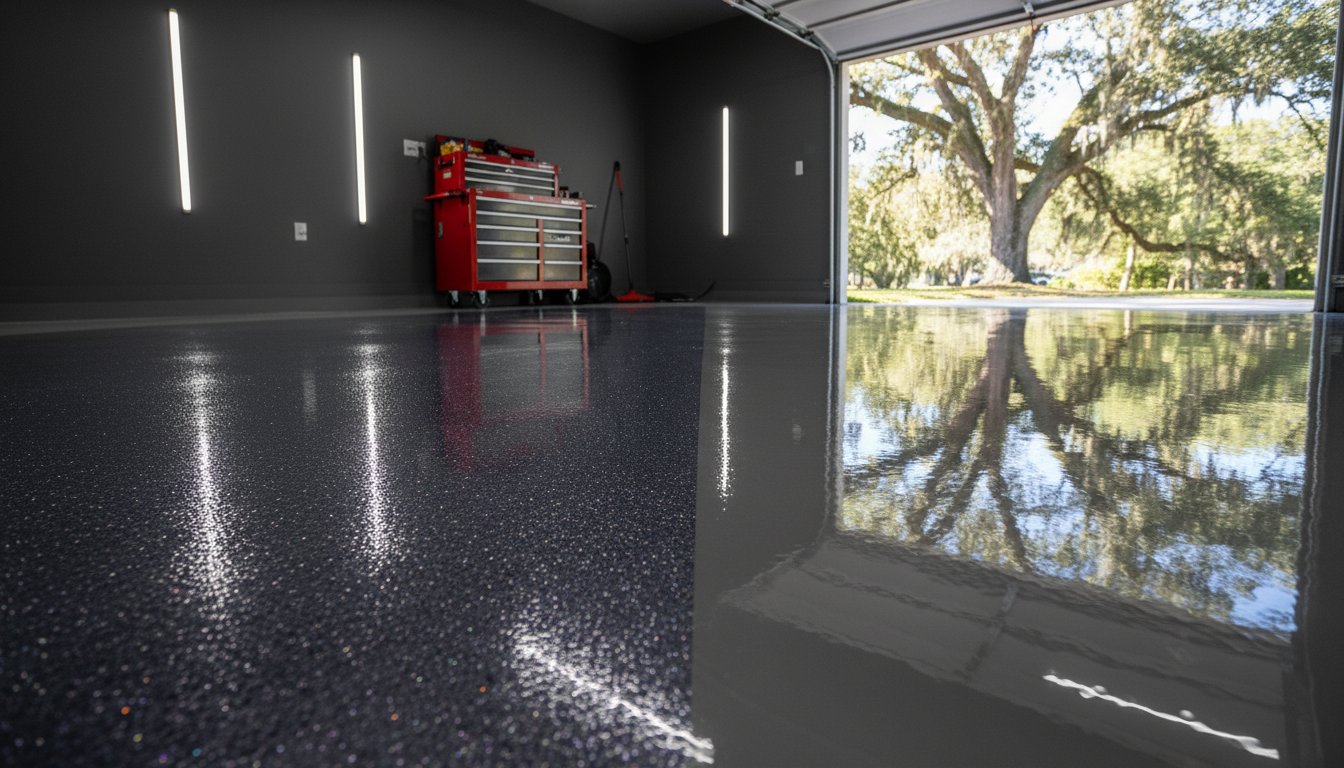
Epoxy isn't just industrial. It's the canvas for your masterpiece. By incorporating various decorative elements, we transform a dark, dusty garage into a high-gloss focal point. These seamless finishes eliminate the cracks where dust and debris hide. This makes cleanup as simple as a quick sweep. It's a total transformation that is designed to turn heads every time the garage door opens in Spring Hill or Tampa. Our team specializes in garage floor epoxy that combines this industrial strength with artistic beauty. Common customization options include:
- Decorative Flakes: Provides a granite-like look and adds essential slip resistance to the surface.
- Metallic Pigments: Creates a marbled, three-dimensional effect for a high-end showroom feel.
- Quartz Sand: Offers extreme durability and a textured finish ideal for heavy-duty commercial spaces.
We take pride in this work because it's our livelihood. We know your home deserves nothing less than perfection. By choosing a high-build epoxy foundation, you're ensuring that the "after" state of your project remains a point of pride for years to come.
The Power of Polyurethane: The Shield Against UV and Wear
If epoxy is the muscle that bonds to your concrete, polyurethane is the armor that protects it from the world. In the epoxy vs polyurethane debate, homeowners often overlook that polyurethane is nearly four times more flexible than epoxy. This "soft" strength is vital. It allows the coating to absorb the shock of a dropped hammer or the vibration of heavy machinery without chipping. Epoxy is a dense, brittle material; it can crack under sharp impacts. Polyurethane bends. This resilience is why we never settle for just a base coat when creating a durable masterpiece.
Florida sun is brutal. In Tampa and St. Petersburg, UV exposure is the number one killer of floor coatings. If you use a standard epoxy outdoors, it will begin to "chalk" and turn an ugly yellow within months. Polyurethane is chemically engineered to be UV-stable. It acts as a high-gloss sunscreen, preserving the vibrant colors of your flakes or metallic pigments for years longer than a standalone system. We treat every project as our livelihood, and we know that a floor that yellows in a year is a failure.
The Solution for Outdoor Surfaces
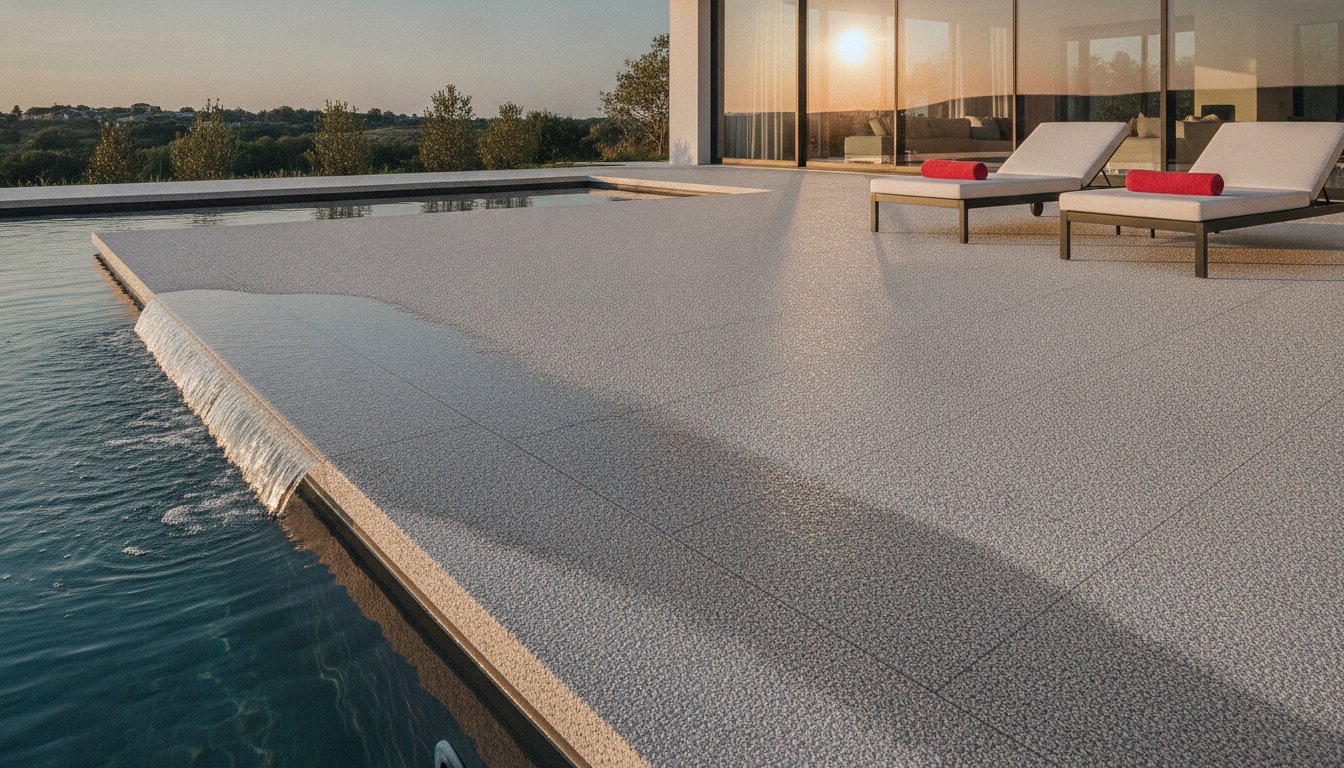
For pool deck resurfacing and patio resurfacing, we utilize premium resin-bound stone, such as Vuba stone. This system relies on high-quality aliphatic polyurethane resins. Unlike aromatic resins found in some cheaper coatings, aliphatic versions do not break down when hit by direct sunlight. This maintains the aesthetic integrity of your driveway or pool area. It ensures your outdoor space continues to turn heads rather than becoming a faded, peeling eyesore that requires constant repair.
Scratch and Abrasion Resistance
Think of polyurethane as a sacrificial yet incredibly durable layer. It handles the micro-scratches from foot traffic and heavy equipment that would quickly dull an epoxy surface. According to the Association for Materials Protection and Performance (AMPP), the industry standard for long-term asset protection involves hybrid coating systems for durability. These systems pair the barrier protection of epoxy with the abrasion resistance of a polyurethane finish. This combination is what allows us to offer a high-gloss finish that stays shiny even in high-traffic commercial facilities.
Maintenance becomes a non-issue with a proper topcoat. While a single-layer epoxy might require aggressive scrubbing to remove tire marks, a polyurethane-shielded floor usually only needs a damp mop. Whether you prefer a mirror-like high-gloss or a modern matte finish, this final layer is the secret to a maintenance-free floor. It turns a standard concrete slab into a professional showroom that stays beautiful for decades.
The Professional Choice: Why the Hybrid System is the Real Masterpiece
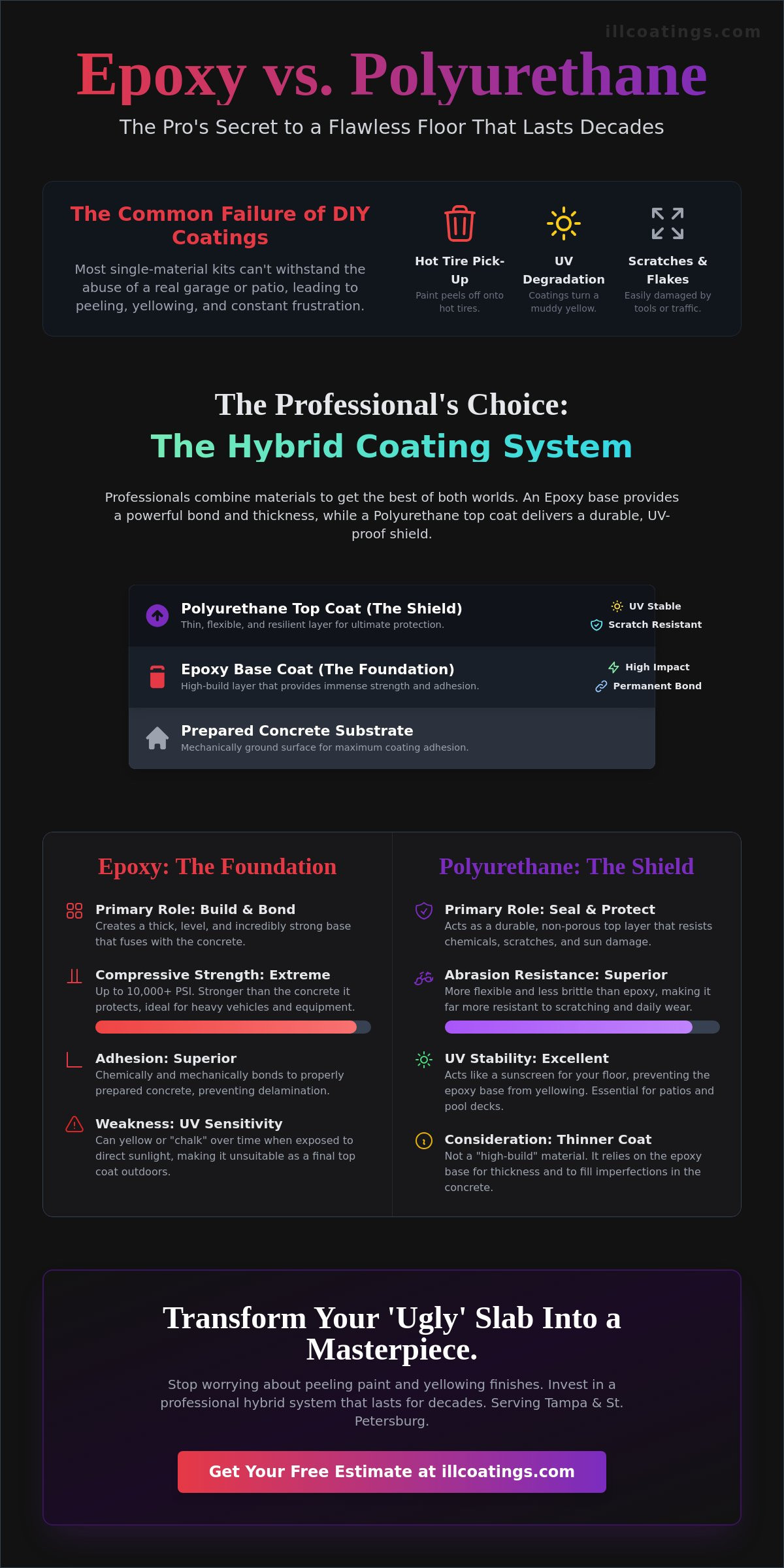
Most homeowners approach the epoxy vs polyurethane debate as an "either/or" choice. As artisans who treat every floor as our livelihood, we know that the best results come from a strategic partnership. Epoxy provides the structural muscle and unbeatable adhesion to the concrete. Polyurethane provides the high-gloss shield and UV protection. When you combine them, you aren't just painting a floor; you're engineering a durable masterpiece that turns heads for decades. This hybrid approach is the professional standard in 2026 because it addresses the specific failure points that plague single-layer systems.
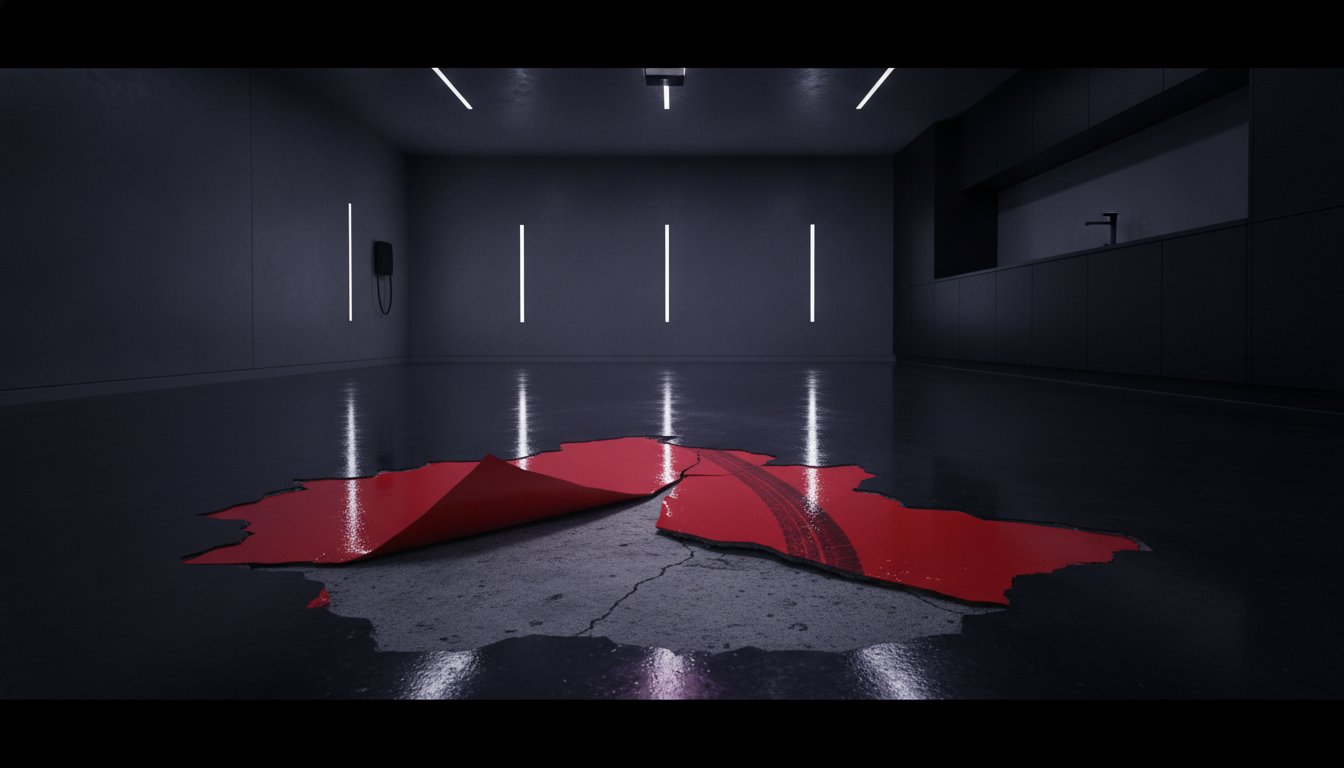
The most common failure we see in Spring Hill and Tampa is "hot tire pick-up." This happens when the heat from your tires softens a low-quality coating, causing it to peel away from the concrete as you pull out of the garage. DIY kits often fail here because they provide only a thin, water-based layer. A professional hybrid system uses 100% solids epoxy that remains rigid under pressure. By adding a polyurethane topcoat, we create a surface that resists the chemical bond between the tire rubber and the floor. This ensures your investment doesn't literally drive away with your car.
Anatomy of a Professional Floor
A true showroom floor is built in layers, each serving a dedicated purpose. If you skip a step, the system fails. We start with the Primer Layer, using high-bond epoxy that anchors into the pores of the concrete. Next is the Build Layer, where we add thickness and incorporate decorative flakes or quartz. This layer hides imperfections in "ugly" slabs. Finally, we apply the Topcoat. This is the "Illuminated" touch. It provides the final gloss and ensures the entire system is scratch-resistant and maintenance-free.
Comparison: Epoxy vs. Polyurethane vs. Hybrid
To understand the value of a professional system, look at how the materials perform individually versus as a team. In 2026, the industry has moved toward high-performance polyaspartics as the preferred topcoat for its rapid cure time and extreme durability.
| Feature | Standalone Epoxy | Standalone Polyurethane | Professional Hybrid |
|---|---|---|---|
| Durability | High (Brittle) | Moderate (Flexible) | Maximum |
| UV Stability | Poor (Yellows) | Excellent | Excellent |
| Lifespan | 5-10 Years | 3-5 Years (as sealer) | 20+ Years |
| Best Use Case | Indoor Priming | Light Sealing | Garages & Patios |
While DIY materials might cost between $2 and $5 per square foot, they often only last 2 or 3 years before showing signs of wear. A professional system, which typically ranges from $4 to $12 per square foot for epoxy and $6 to $10 for polyaspartic finishes, is a far better long-term investment. You pay for the preparation, including professional grinding, which ensures the bond never breaks. If you're ready to stop settling for "good enough" and want a floor that stays beautiful, it's time to explore our professional concrete coatings for your home or business.
Transforming Your Concrete with Illuminated Coatings
Choosing between epoxy vs polyurethane is a technical decision, but the result is deeply personal. At Illuminated Coatings, we treat every project as our livelihood. We aren't just a crew applying chemicals to a floor; we are blue-collar artisans dedicated to one thing: your floor's perfection. We understand that your garage, patio, or pool deck is an extension of your home. It deserves a finish that doesn't just "look okay" but truly turns heads. Our family-owned business operates with a level of accountability you won't find with large, faceless franchises. If we're working in your home in Spring Hill, Tampa, or St. Petersburg, our reputation is on the line with every gallon we pour.
The transformation from "ugly" concrete to a showroom masterpiece requires more than just high-quality materials. It demands a rigorous process. We start by grinding concrete to ensure the pores are open and ready for a permanent bond. We don't cut corners on preparation because we know that a coating is only as good as its anchor. By matching the specific properties of epoxy vs polyurethane to your environment, we create a durable masterpiece that stands up to Florida's heat and humidity without flinching.
Our Specialized Coating Systems
We provide industrial-strength solutions tailored for the residential market. Whether you need a high-gloss garage or a slip-resistant outdoor space, our systems are engineered for longevity. Our core offerings include:
- Garage Floor Epoxy: A high-build system designed to handle heavy vehicle traffic, chemical spills, and the daily wear of a busy household.
- Vuba Stone: The ultimate resin-bound stone solution for pool deck resurfacing and patios. It provides a natural, elegant look with the UV stability required for direct Florida sunlight.
- Commercial-Grade Durability: We bring the same high-performance standards used in industrial warehouses to your private residence.
Get Your Professional Quote
Every home has a different lifestyle. A retired couple in St. Petersburg has different flooring needs than a large family with three SUVs in Tampa. That's why expert consultation is vital. We don't believe in a one-size-fits-all approach. We take the time to analyze your substrate and understand how you use your space. This allows us to recommend the perfect hybrid system that balances the bond of epoxy with the beauty and resilience of a polyurethane topcoat.
Our commitment to quality means we never rush the curing process or use "budget" resins that fail within two years. We care about the "after" state of your floor as much as you do. If you're ready to stop looking at stained, cracked concrete and start enjoying a maintenance-free surface, we're ready to help. You can turn heads with a transformed floor from Illuminated Coatings and secure a finish that lasts for decades.
Ready to Turn Your Concrete Into a Showroom Masterpiece?
You now understand that the winner of epoxy vs polyurethane isn't one or the other, but a professional partnership of both. By anchoring a high-build epoxy primer to a ground concrete surface and shielding it with a UV-stable topcoat, you ensure your floor lasts for 20 years or more. This hybrid approach prevents the common failures of DIY kits, such as peeling from hot tires or yellowing under the Florida sun. At Illuminated Coatings, we treat every garage and pool deck as our livelihood. As a family-owned business, we focus on delivering a turn-head masterpiece that stands the test of time.
Whether you're looking for the sleek look of metallic epoxy or the natural elegance of Vuba stone, we have the expertise to transform your "ugly" slab into a point of pride. Don't settle for a coating that flinches under pressure. Request Your Free Transformation Quote Today and see how our specialists can elevate your property with a durable, maintenance-free finish. We look forward to bringing your vision to life.
Frequently Asked Questions
Can I use epoxy for my outdoor pool deck?
Standard epoxy resins will chalk and turn yellow within 6 to 12 months when exposed to direct Florida sunlight. For pool deck resurfacing, we recommend resin-bound stone or Vuba stone systems that utilize UV-stable aliphatic polyurethanes. These materials are engineered to maintain their color and structural integrity under high UV exposure. Choosing the right outdoor system ensures your masterpiece doesn't become an "ugly" peeling mess after one summer.
Is polyurethane more expensive than epoxy?
Polyurethane materials typically cost between $6 and $10 per square foot for professional installation, while standard epoxy systems range from $4 to $12 per square foot. While the raw material cost for polyurethane is often higher, it is applied in thinner layers as a protective topcoat. In the epoxy vs polyurethane comparison, the value of polyurethane comes from its ability to prevent expensive repairs caused by UV damage and scratches.
What is 'hot tire pick-up' and how do I prevent it?
Hot tire pick-up occurs when heat from your vehicle's tires softens a low-quality coating, causing the material to bond to the rubber and peel off the concrete. You can prevent this failure by avoiding water-based DIY kits and choosing a professional system. We use 100% solids epoxy resins paired with a high-performance topcoat to create a surface that remains rigid and bonded even under extreme thermal stress.
How long do I have to wait to drive on my new floor coating?
You can typically walk on your new floor within 24 hours, but you should wait at least 72 hours before driving a vehicle onto the surface. Some high-performance polyaspartic systems cure faster, allowing for full use in as little as 48 hours. Following these specific timelines ensures the chemical bond reaches its full tensile strength. This patience protects your livelihood and ensures the finish remains flawless for decades.
Do I really need a topcoat if the epoxy looks good?
Yes, a topcoat is essential if you want your floor to remain a durable masterpiece. While epoxy provides the bond and thickness, it is susceptible to micro-scratches and UV degradation. A polyurethane or polyaspartic topcoat acts as a sacrificial shield that handles abrasion and prevents yellowing. Skipping this final step often leads to a dull, scratched surface within the first 24 months of heavy foot traffic.
Can polyurethane be applied directly to bare concrete?
Polyurethane can be used as a thin sealer for bare concrete, but it lacks the high-build properties of epoxy needed to level "ugly" slabs. For a professional showroom finish, we always recommend an epoxy primer first. Epoxy anchors itself into the concrete pores more effectively than polyurethane. This multi-layer approach is the only way we can guarantee the coating will never delaminate or peel under pressure.
What is the lifespan of a hybrid epoxy-polyurethane system?
A professionally installed hybrid system has an expected lifespan of 20 years or more when properly maintained. This longevity is driven by the mechanical bond created during the initial concrete grinding process and the protection of the UV-stable topcoat. By combining the strengths of epoxy vs polyurethane, we create a surface that resists chemicals, impacts, and weather. It's a long-term investment that adds significant value to your property.
How do I clean and maintain my resin-bound stone or epoxy floor?
Maintenance is simple and requires only a soft-bristle broom and a damp mop with a pH-neutral cleaner. You should avoid using harsh acidic cleaners or abrasive scrubbing pads that could dull the high-gloss finish. For resin-bound stone, a pressure wash at a low setting every 12 months helps keep the surface porous and bright. These easy steps ensure your floor remains a turn-head masterpiece without the need for constant repairs.