Your facility floor isn't just a surface for foot traffic; it's a strategic asset that's either draining your operational budget or building long-term equity. If you're constantly battling the high costs of specialized cleaning and the nightmare of facility downtime for repairs, you're looking at a liability rather than an investment. We know that as a business owner, your success depends on efficiency and a professional image that inspires confidence.
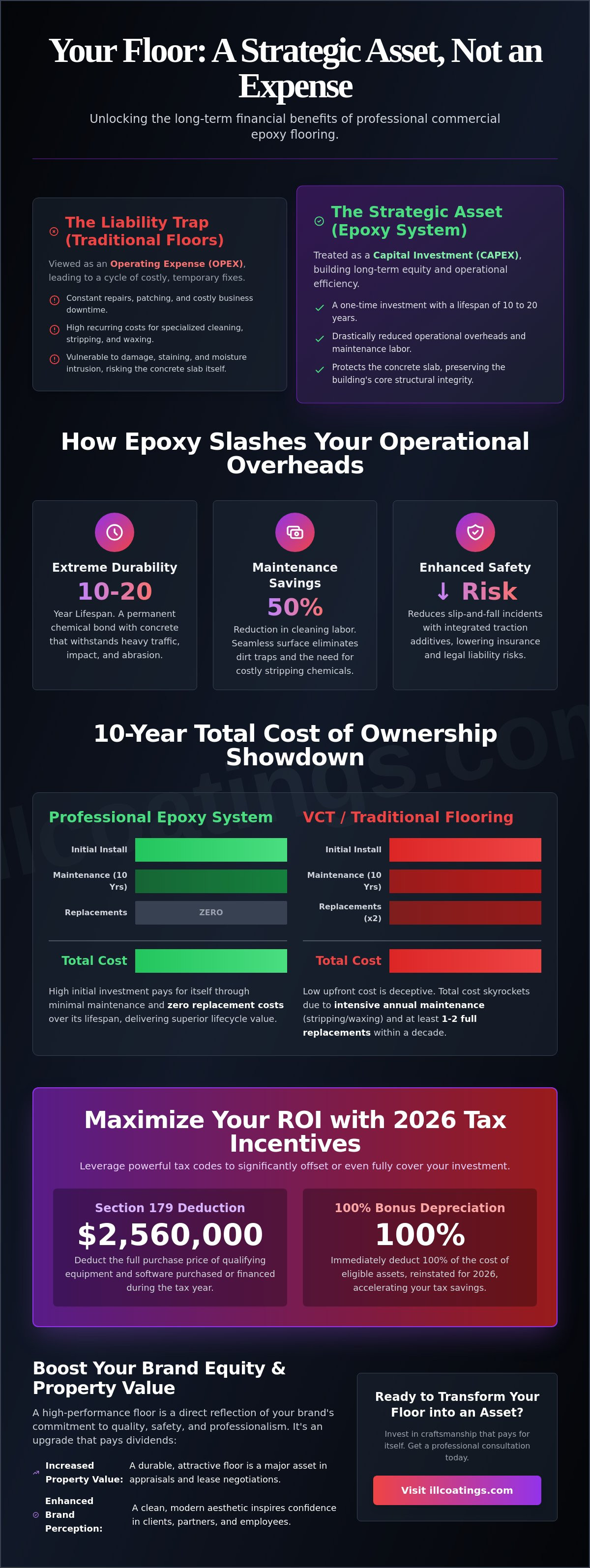
This guide breaks down the massive financial benefits of commercial epoxy flooring and why 2026 is the year to transition from temporary fixes to permanent craftsmanship. You'll learn how to leverage the reinstated 100% bonus depreciation and the $2,560,000 Section 179 deduction limit to offset your investment immediately. We'll show you how a professional commercial floor coating lasts 10 to 20 years, slashes your labor costs, and significantly boosts your property's resale value.
Key Takeaways
- Learn why treating your facility floor as a strategic capital asset rather than a recurring expense is the first step toward long-term profitability.
- Uncover the financial benefits of commercial epoxy flooring by slashing cleaning labor by up to 50% and removing the need for expensive floor strippers.
- Leverage 2026 tax incentives like Section 179 and bonus depreciation to potentially offset the entire cost of your facility transformation.
- Discover how industrial-strength aesthetics boost your brand perception and increase property appraisal values during lease negotiations.
- Analyze the 10-year cost breakdown to understand why professional resin systems consistently outperform VCT and other traditional surfaces.
Beyond the Surface: Why Commercial Epoxy is a Strategic Capital Investment
Commercial epoxy isn't just a thick layer of industrial paint. It's a high-performance resin system that creates a permanent chemical bond with your concrete substrate. When we discuss the financial benefits of commercial epoxy flooring, we're really talking about a fundamental shift in how you view your facility. Most business owners mistakenly categorize their floors as an operating expense (OPEX), something to be patched and cleaned out of the monthly maintenance budget. If you treat your floor as a capital asset (CAPEX) instead, you're investing in the building's long-term infrastructure. In the 2026 market, savvy facility managers are moving away from the lowest initial bid and prioritizing systems that offer decades of durability.
We approach every commercial floor coating project with the eye of a blue-collar artisan. We know that if the craftsmanship isn't perfect during the installation, the floor will inevitably fail by year five. To us, this isn't just another construction job; it's our professional survival. A floor that peels or bubbles is a financial disaster for your business and a blow to our reputation. We elevate manual labor into a specialized craft because that's the only way to ensure your investment pays for itself through sheer longevity and performance.
The True Cost of the 'Cheap' Floor Alternative
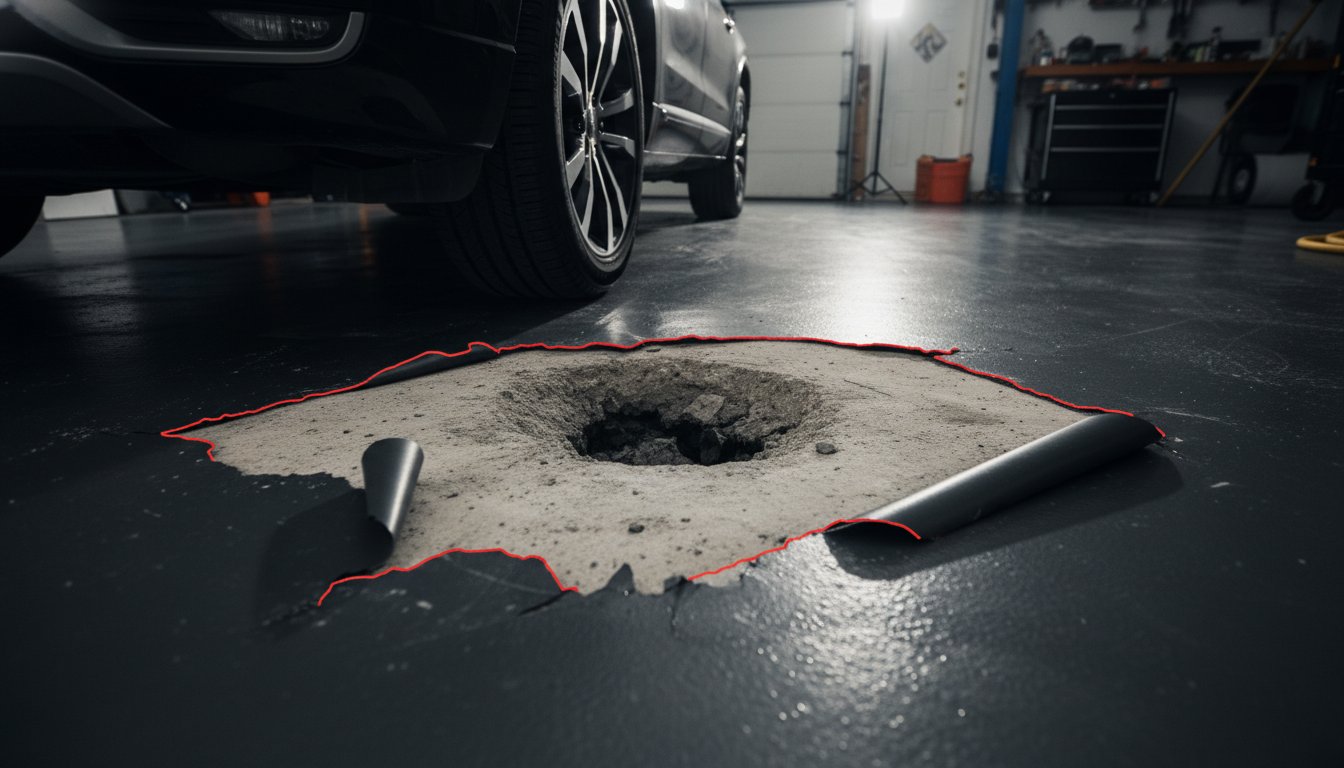
If you choose a DIY kit or a low-grade floor paint, you're essentially buying a recurring headache. These thin coatings lack the solids content required to withstand heavy pallet jacks or chemical spills. Within months, you'll see peeling and staining that requires immediate attention. The real price isn't just the materials; it's the massive cost of business downtime. Closing your facility for three days to re-apply a failing coating every few years destroys your potential ROI. This is why professional grinding is the foundation of your financial return. We use industrial diamond grinders to open the concrete's pores, ensuring the resin becomes an inseparable part of the slab.
Asset Preservation: Protecting the Concrete Slab
Think of your concrete as the bones of your building. It's the most expensive structural component to replace if it fails. High-performance commercial floor coatings act as armor, shielding those bones from impact, heavy loads, and moisture intrusion. Without this protection, moisture can lead to structural cracking and rebar corrosion, eventually triggering five-figure repair bills. To measure your success, you must look at the floor's lifecycle value. We define floor lifecycle value as the total cost of ownership divided by the years of service. When you spread the cost of a professional system over its 10 to 20 year lifespan, the financial benefits of commercial epoxy flooring become the smartest move on your balance sheet.
Slashing Operational Overheads: Maintenance, Safety, and Efficiency Savings
If your maintenance crew spends hours every week battling stains on porous concrete, you're essentially burning through your payroll. One of the most immediate financial benefits of commercial epoxy flooring is the drastic reduction in labor costs. Because these systems are completely seamless, there are no grout lines or cracks to trap dirt and bacteria. Industry data suggests that switching to a seamless resinous surface can reduce cleaning time by up to 50 percent. You don't need a massive team with specialized scrubbers; a simple mop and a neutral cleaner often do the job better than heavy machinery ever could.
Beyond labor, you'll stop overspending on harsh industrial chemicals. Traditional commercial floors like VCT require a constant cycle of stripping and waxing just to maintain a baseline level of hygiene and shine. Epoxy eliminates this entire budget line. These high-performance coatings resist chemical spills and oil leaks, meaning you won't need to purchase expensive, caustic strippers to keep the facility looking sharp. This durability ensures your overhead stays low while your floor remains a point of pride.
Safety is the silent protector of your bottom line. A single slip-and-fall incident can trigger a financial nightmare of insurance hikes and legal fees. We integrate specialized traction additives into our commercial floor coatings to ensure your facility meets strict safety standards without sacrificing aesthetics. It's about protecting your professional survival by removing the liability risks that keep business owners up at night.
Energy Efficiency and Reflectivity
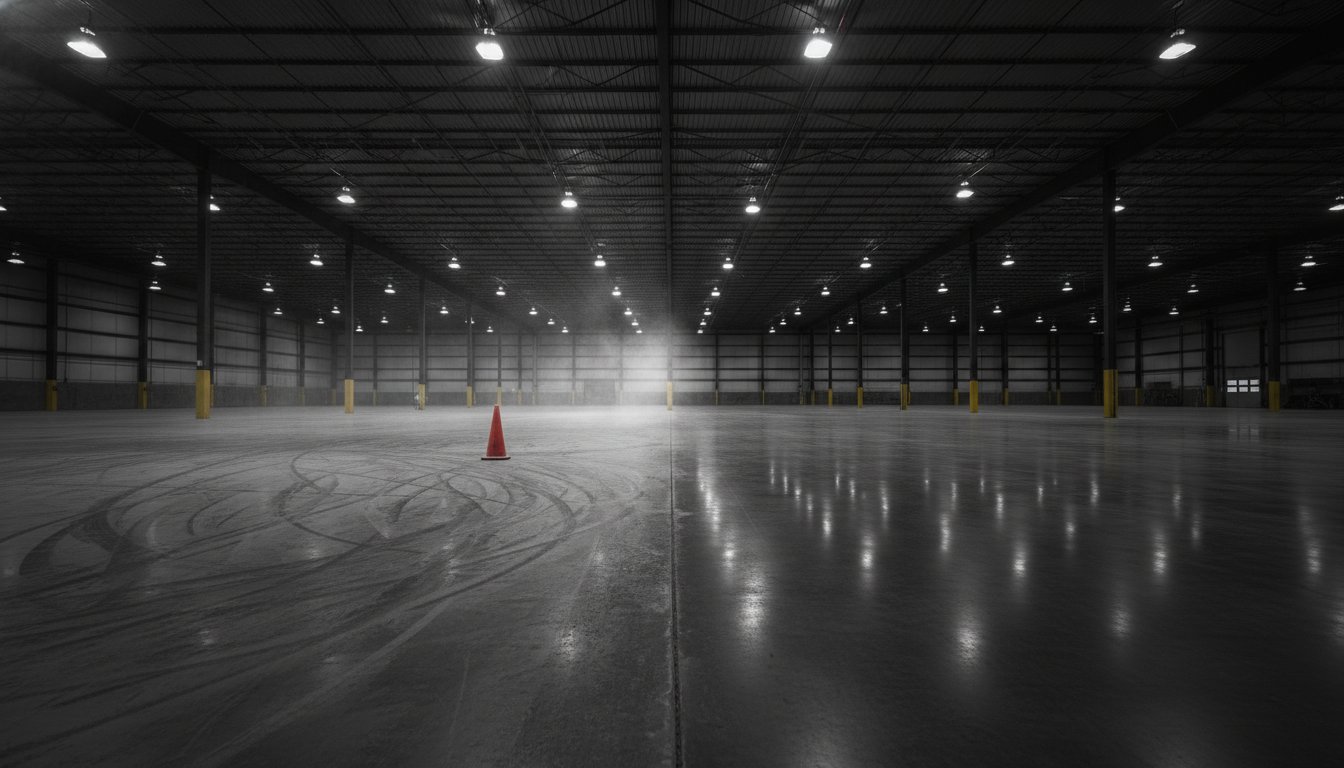
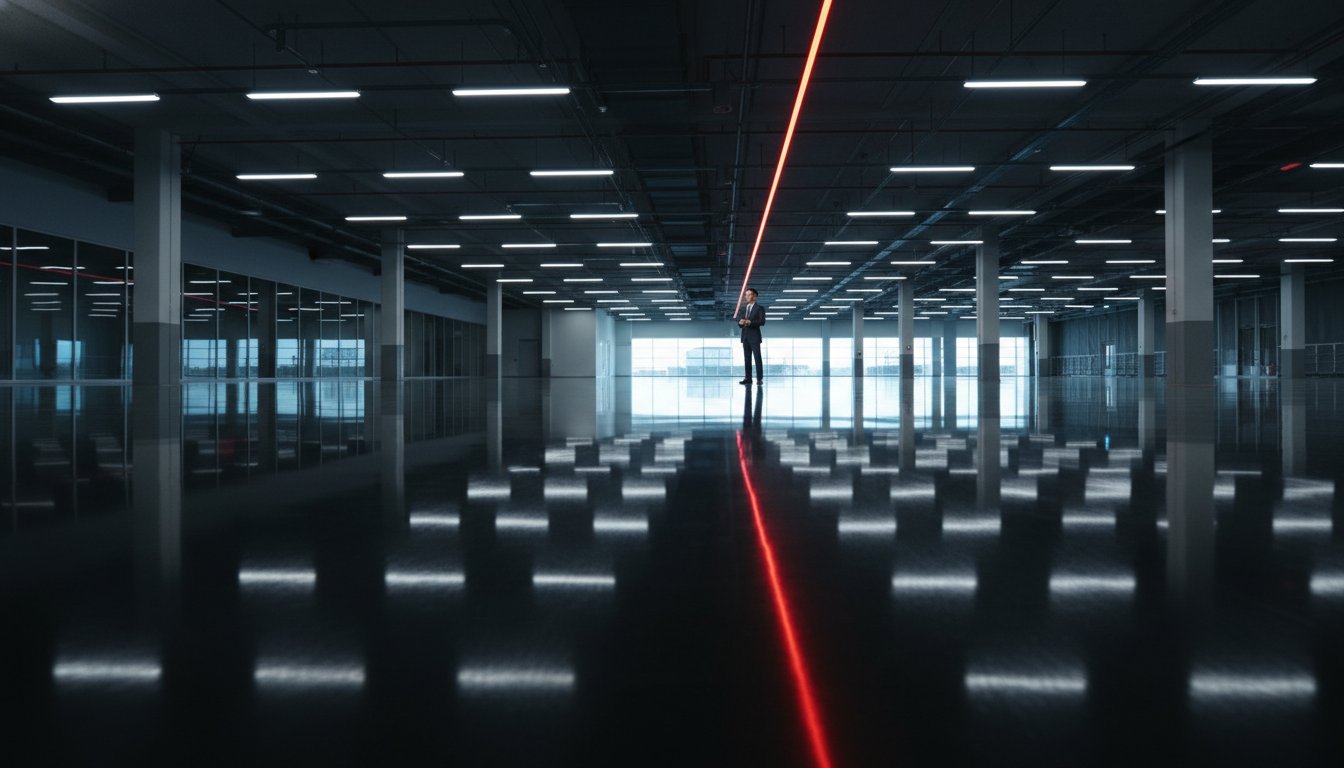
The "lighting hack" is a secret weapon for warehouses and showrooms. High-gloss epoxy finishes can increase light reflectivity by up to 200 percent. This massive boost in ambient light often allows facility managers to reduce the number of active light fixtures or lower the wattage of their bulbs. A brighter environment doesn't just lower the electric bill; it also reduces employee error rates and improves overall productivity. When your workspace is brilliant and clear, your team performs at a higher standard.
Reducing Machinery Wear and Tear
Seamless floors are a blessing for your internal logistics fleet. Every time a forklift or pallet jack hits a joint or a crack in the concrete, it causes a micro-impact that wears down tires and suspension systems. By creating a perfectly smooth surface, you significantly lower the maintenance budget for your machinery. Additionally, bare concrete naturally "chalks" or creates fine dust through friction. This abrasive dust is a silent killer for sensitive electronic equipment and HVAC filters. Epoxy seals the slab completely, preventing dust accumulation and extending the life of your most expensive hardware.
Boosting Brand Equity: How Flooring Impacts Revenue and Property Value
Your floor is your company's visual handshake. It's the first thing a potential client or high-value partner notices when they enter your facility. Dull, cracked concrete suggests a business that cuts corners; a brilliant, high-performance surface signals a brand that demands excellence. This isn't just about aesthetics. One of the most overlooked financial benefits of commercial epoxy flooring is its ability to build immediate trust and justify premium pricing for your own services. When you invest in a gallery-quality finish, you're telling the world that your professional survival is rooted in quality and attention to detail.
We see the power of transformation every day. Smart business owners use high-resolution "before and after" photos of their facility upgrades as powerful marketing tools to signal growth and stability to their stakeholders. Beyond the marketing buzz, customization through integrated line striping is a direct fiscal win. Instead of buying expensive, temporary plastic signage that peels or fades, we embed permanent safety and traffic flow markings directly into your concrete coatings. This creates a more organized, professional environment that reduces confusion and improves operational flow without recurring costs.
Customer Perception and Sales Conversion
In a showroom or retail environment, your floor is the stage for your product. A professional finish doesn't just look better; it changes the psychological landscape for your customers. If your environment looks high-end and meticulously maintained, customers are psychologically primed to accept higher price points for your products. You're moving your facility from a basic utility space to a destination. We take pride in this craftsmanship because we know that a floor that shines like a mirror reflects the integrity of the business operating on top of it.
Increasing Real Estate Appraisal Value
When it's time to sell or negotiate a lease, a professionally installed epoxy floor is a massive value-add that lenders recognize. Appraisers view these systems as a permanent improvement to the building's infrastructure, much like a high-end HVAC system or structural upgrade. For landlords, having a durable, high-performance floor reduces the need for "tenant improvement" (TI) allowances because the space is already in a "zero-maintenance" state for the next occupant. Prospective buyers prioritize facilities with these systems because they know they won't face flooring replacement costs for another 15 to 20 years. It's a calculated strategy that turns a simple floor into a hard asset on your balance sheet.
Calculating the Long-Term Cost: Epoxy vs. Traditional Commercial Flooring
If you only look at the initial quote for a flooring project, you're missing 90 percent of the financial picture. Smart business owners calculate the annualized cost of their assets rather than just the day-one price tag. While cheap vinyl composition tile (VCT) or basic carpet might seem attractive today, the recurring costs of stripping, waxing, and eventual replacement make them a massive drain on your cash flow. We believe in the financial benefits of commercial epoxy flooring because it transitions your floor from a high-maintenance liability to a set-and-forget asset that pays for itself through avoided repairs.
Over a 10-year outlook, traditional materials often require two or three full replacement cycles in high-traffic commercial zones. Polished concrete is a strong contender, but without the chemical bond of a resinous system, it remains susceptible to deep staining and moisture intrusion. Epoxy provides a monolithic, non-porous shield that doesn't require the annual thousands spent on professional waxing services. When you factor in the 100% bonus depreciation reinstated in 2025 and the $2,560,000 Section 179 deduction limit for 2026, the net cost of a high-performance system drops significantly in the first year alone. We recommend checking with your tax professional to see how these incentives apply to your specific facility improvements.
Epoxy vs. Vinyl and Tile
Grout lines are more than just an eyesore; they're a financial liability. Every seam in a tile floor is a collection point for bacteria and moisture, leading to potential hygiene failures and increased cleaning labor. If a tile cracks under a heavy load, you're looking at a specialized repair that often leaves a mismatched patch. While VCT requires a total overhaul every five to seven years in industrial settings, a single professional epoxy installation provides 15 years of uninterrupted service for a fraction of the total cumulative cost.
Vuba Stone: The Commercial Outdoor Financial Alternative
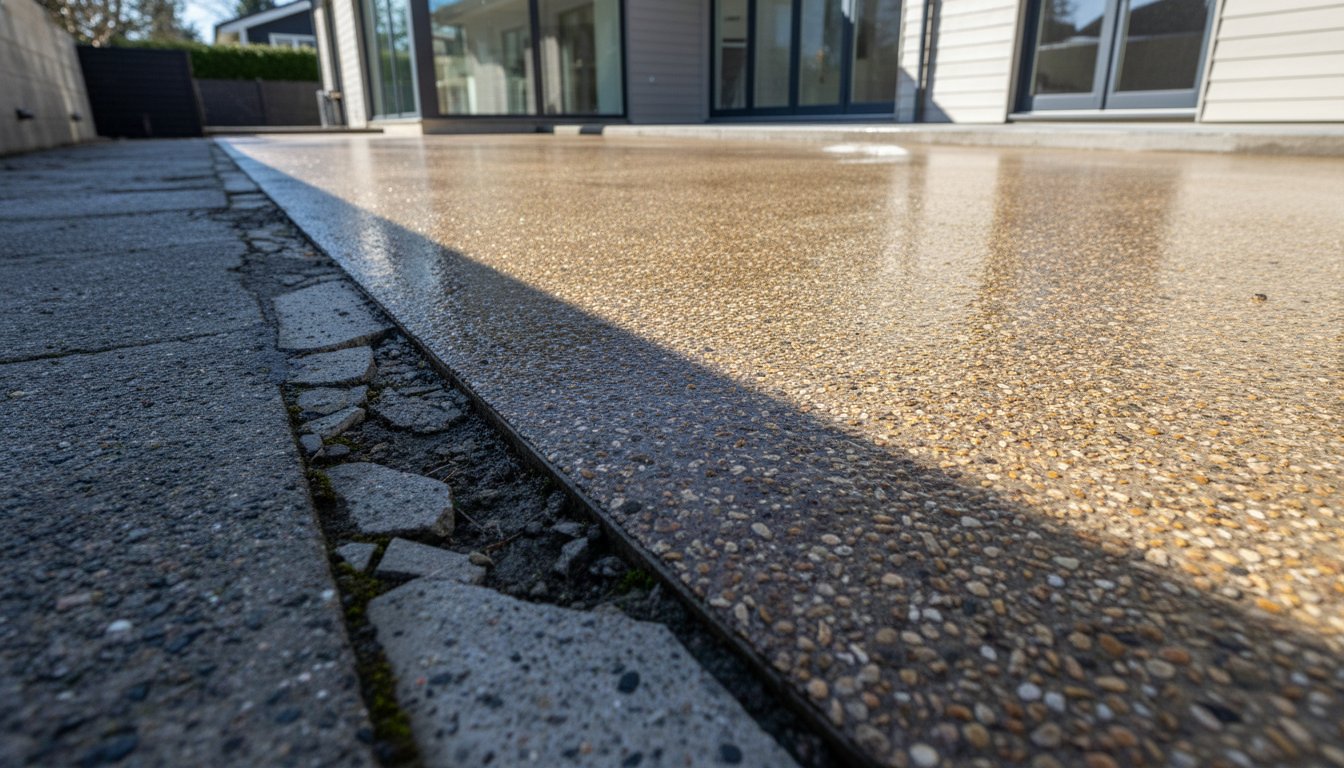
The financial benefits of commercial epoxy flooring shouldn't stop at your front door. For commercial patios and entryways, we utilize Vuba stone, a resin-bound system that pairs perfectly with our interior coatings. This porous surface allows water to drain directly through the material, which helps many businesses avoid expensive drainage infrastructure upgrades or runoff fines from local municipalities. Combining a brilliant epoxy interior with a Vuba stone exterior creates a unified brand image that signals quality before a customer even steps inside. If you're ready to stop the cycle of temporary floor repairs, contact us today for a professional consultation on your next facility upgrade.
Maximizing Your Investment with Illuminated Coatings’ Professional Systems
The financial benefits of commercial epoxy flooring are only fully realized when the installation is handled by specialists who treat their work as a form of high-stakes craftsmanship. If the surface preparation is rushed, then the chemical bond will fail, and your capital investment becomes a liability. We approach every project with a mindset of professional survival. This means we never cut corners on the grinding and polishing phase. Our industrial diamond grinders create the perfect profile for the resin to penetrate deep into the concrete, ensuring a bond that stands up to the most punishing commercial environments.
Our signature approach is where industrial strength meets artistic excellence. We believe a floor should be as beautiful as it is durable. Whether you need heavy-duty warehouse flakes to hide imperfections and provide traction or high-gloss showroom metallics to wow your clientele, we customize the system to your specific revenue goals. We don't just slap down a coating; we engineer a surface that reflects the high standards of your own business. This dedication to quality is why our finishes are often described as gallery-quality, turning a standard utility space into a point of professional pride.
Our Process: Minimizing Your Business Downtime
We understand that every hour your facility is closed represents a direct hit to your bottom line. That's why we utilize an efficient application rhythm designed to get your business back to work faster. We don't rush the process, but we do optimize it. We respect the 24-hour cure window because it's essential for the long-term integrity of the floor. During our initial consultation, we guide you through the decision-making process with transparency. We aren't here to just sell you a floor; we're here to provide a strategic solution that solves your maintenance pains and secures your facility's future.
National Standards, Local Integrity
While we provide top-tier commercial coatings across the United States, our family-owned roots keep us grounded in the values of local integrity and accountability. We hold ourselves to a standard of excellence that suggests we are the best in our specific field because we know our reputation is built one floor at a time. By choosing a partner that prioritizes precision over speed, you ensure that the financial benefits of commercial epoxy flooring remain on your balance sheet for the next two decades. It's time to stop settling for "good enough" and start investing in a floor that works as hard as you do.
Secure Your Facility’s Future with High-Performance Craftsmanship
Your facility is the foundation of your professional survival. Choosing a floor that fails in five years isn't just a maintenance mistake; it's a direct drain on your company's growth potential. By prioritizing professional grade concrete grinding and high-performance industrial resins, you transform a dull utility space into a permanent capital asset. We've explored how the financial benefits of commercial epoxy flooring extend from massive 2026 tax deductions to a 50 percent reduction in weekly cleaning labor.
We take immense pride in delivering artisan-level aesthetic finishes that bridge the gap between industrial strength and gallery-quality beauty. If you're ready to stop the cycle of frequent downtime and start building real property equity, it's time to make a strategic move. A brilliant, durable floor isn't just a surface; it's a testament to your brand's commitment to excellence. Secure your ROI and elevate your environment with a system designed to last decades.
Request a Commercial Flooring ROI Consultation
Frequently Asked Questions
How long does commercial epoxy flooring typically last before needing a recoat?
A professional-grade, 100% solids epoxy floor typically lasts between 10 and 20 years before a recoat is necessary. This longevity depends on the volume of heavy traffic and the quality of the initial surface prep. If you maintain a consistent cleaning schedule, then the resin retains its structural integrity for decades. We treat every project as a piece of craftsmanship to ensure your investment stands the test of time.
Is commercial epoxy flooring more expensive than polished concrete?
Professional epoxy systems generally have a higher upfront cost than basic polished concrete due to the specialized materials and multi-layer application. However, epoxy offers superior chemical resistance and a non-porous seal that concrete alone cannot match. If your facility handles oils, acids, or heavy spills, then the added protection prevents deep slab damage. It's about choosing the right armor for your building's bones.
Can epoxy flooring really reduce my building's energy bills?
High-gloss coatings significantly lower energy costs by increasing light reflectivity throughout your facility. This massive boost in ambient light allows you to achieve the same brightness with fewer active fixtures or lower wattage bulbs. A brilliant floor surface effectively maximizes the impact of your existing overhead lighting. You'll see the difference in your monthly utility statements and in the increased productivity of your team.
What is the average ROI time for a commercial epoxy floor installation?
Most business owners see a full return on investment within three to five years through reduced maintenance and labor savings. If you factor in the 2026 tax incentives like the Section 179 deduction and 100% bonus depreciation, the financial benefits of commercial epoxy flooring often begin in the first fiscal year. You're trading high recurring repair costs for a one-time capital improvement that builds long-term property equity.
How much downtime should my business expect during the installation process?
A standard commercial installation usually requires three to five days depending on the size and condition of your concrete. This timeframe includes the critical diamond grinding phase and the mandatory 24-hour cure window for the final topcoat. We coordinate our rhythm to minimize disruptions to your operations. Fast-curing polyaspartic options are also available if your facility requires a more rapid return to service.
Does commercial epoxy flooring meet OSHA and ADA safety standards?
Our commercial floor coatings are engineered to help you comply with OSHA Regulation 1910.22 by providing clean, orderly, and sanitary surfaces. We integrate specialized slip-resistant textures to meet ADA traction requirements even in wet conditions. If you prioritize safety, then a textured resin system is the best defense against the financial nightmare of workplace slip-and-fall incidents. It keeps your facility compliant and your staff secure.
Can epoxy be applied over existing damaged commercial tile or wood?
Professional epoxy must be applied directly to a concrete substrate to ensure a permanent chemical bond. We don't install resin over wood or commercial tile because those materials lack the structural stability required for industrial-strength coatings. Our process involves removing old flooring and grinding the underlying concrete to a specific profile. This foundational work is what separates a gallery-quality finish from a temporary patch job.
What is the difference between industrial epoxy and residential-grade kits?
Residential DIY kits are often water-based and contain low solids content, leading to a thin and brittle finish. Industrial systems utilize 100% solids resins that are significantly thicker and more flexible. If you want a floor that survives heavy machinery and chemical exposure, then a professional-grade system is your only option. We refuse to use low-grade materials because our professional survival depends on the excellence of your results.