What if the showroom-quality floor you just invested thousands in starts looking like a stained, nicotine-yellowed relic in less than twenty-four months? It's a heartbreaking reality for many who trust their property to inferior materials or failed DIY kits. If you're serious about preventing yellowing in epoxy floors, you have to look beyond the surface level. True craftsmanship isn't just about how the floor looks the day we pack up our tools; it's about how it stands up to the sun five years down the line.
We understand the frustration of technical jargon like "UV-stable" versus "UV-resistant" and the fear of a "dirty" looking finish. This guide will reveal the professional secrets to stopping epoxy ambering and ensuring your high-performance floor stays crystal clear for years. You'll learn the science behind color shifts, get a checklist of industrial-strength materials to demand from any contractor, and discover actionable maintenance steps to protect your investment. Let's ensure your floor remains a point of pride rather than a source of regret.
Key Takeaways
- Understand how chemical oxidation and UV light break down polymer bonds to cause that unsightly ambering effect.
- Learn why choosing the right resin from the start is the only way to ensure long-term clarity for your investment.
- Discover why a polyaspartic topcoat is the ultimate professional solution for preventing yellowing in epoxy floors.
- Identify simple environmental adjustments, like using UV-blocking window films, to extend the life and brilliance of your floor.
- Get a checklist of industrial-grade additives to look for so you can avoid the quick failure of standard DIY kits.
Why Epoxy Floors Yellow: The Science of Ambering
You spent good money on a floor that was supposed to look like glass. Now, it looks like a tea-stained antique. This shift in color is known as ambering. It isn't just a surface stain that you can scrub away; it's a sign of chemical oxidation within the resin itself. When you're focused on The Science of Ambering, you realize that the beautiful clear finish is actually undergoing a permanent molecular transformation. If you don't address the root cause, no amount of cleaning will bring back that original clarity.
Ultraviolet (UV) light is the main culprit. These high-energy rays penetrate the coating and relentlessly attack the carbon-to-carbon polymer bonds that hold the epoxy together. Once these bonds break, the material loses its structural integrity and begins to change color. While direct sunlight causes the fastest damage, even ambient light reflecting through garage windows can trigger this decay over time. Clear topcoats show this yellowing more aggressively than pigmented bases. In a colored floor, the pigments can hide some of the shift, but in a clear coat, there's nowhere for the chemical failure to hide.
UV Radiation and Chemical Degradation
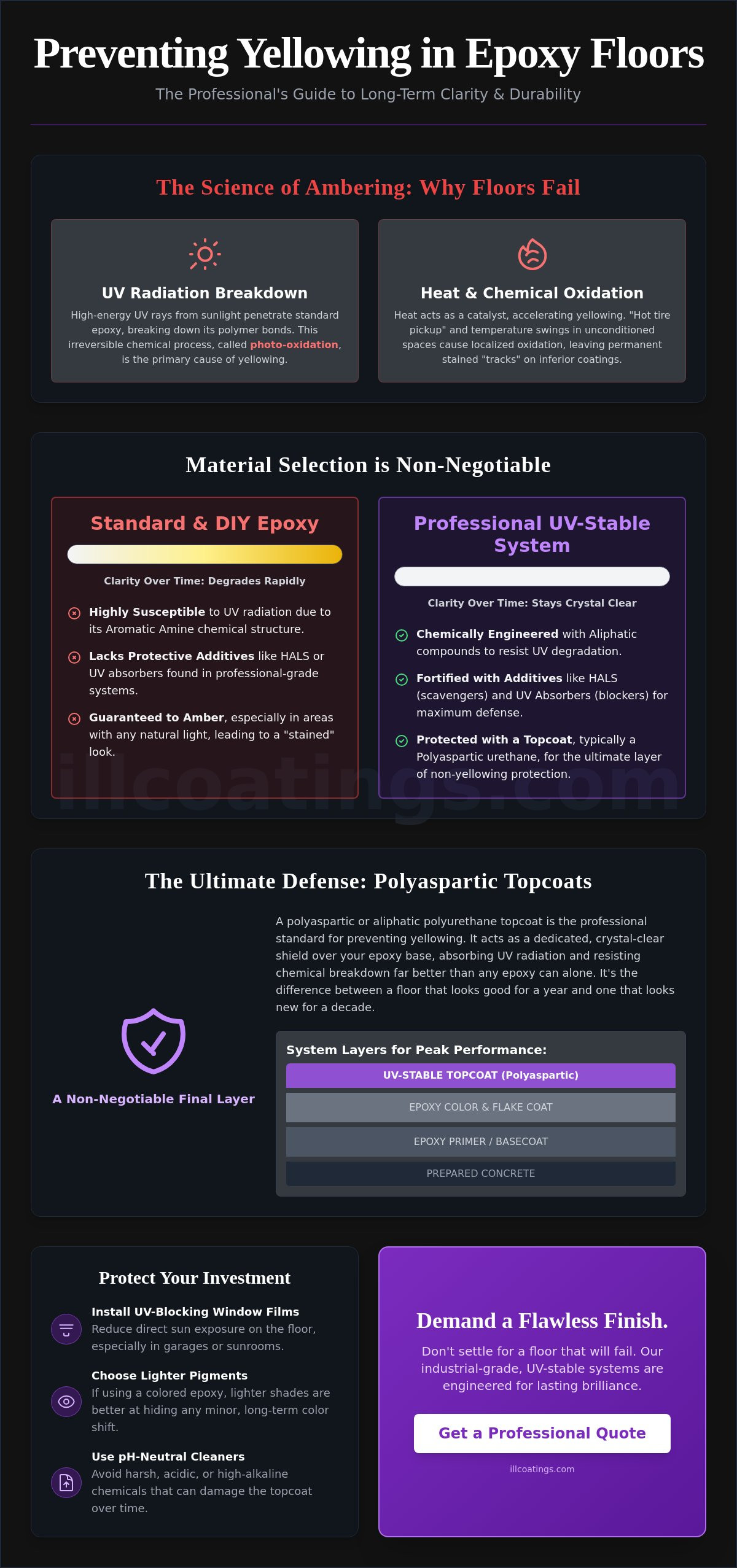
Most standard epoxy resins use aromatic amines as curing agents. These chemicals are incredibly strong for structural bonding, but they have one major weakness: they are highly sensitive to UV radiation. When light hits these molecules, a process called "photo-oxidation" begins. Think of it like the way a plastic toy left in the yard becomes brittle and faded. In your floor, this process happens at a microscopic level. Ambering is the visual symptom of polymer chain breakage. If you want to succeed in preventing yellowing in epoxy floors, you must understand that the very chemistry of standard resins is working against you from day one.
The Impact of Heat and Oxidation
Light isn't the only enemy. Heat acts as a catalyst, speeding up the chemical reactions that lead to yellowing. In a typical garage, "hot tire pickup" is a major concern. When you park a car after a long drive, the heat from the tires transfers directly into the resin, causing localized oxidation. This is why you'll often see yellow "tracks" where a car usually sits. In unconditioned spaces where temperatures swing wildly, the resin undergoes constant stress. Interior-grade epoxy is designed for climate-controlled rooms with minimal light. It simply isn't interchangeable with the heavy-duty, UV-stable coatings required for sun-drenched shop floors. Using the wrong material in these high-heat areas is a guaranteed recipe for a floor that looks old before its time.
Material Selection: UV-Stable Resins vs. Standard Epoxy
If you choose a bargain-bin resin at the start of your project, then no amount of maintenance or specialized cleaning can stop the eventual yellowing. The foundation of your floor determines its visual lifespan. Most standard epoxy systems rely on Bisphenol A, a reliable structural polymer that unfortunately acts like a magnet for UV damage. To achieve real success in preventing yellowing in epoxy floors, you must demand specialized UV-Stable Resins that are engineered to resist the chemical breakdown caused by light exposure. These professional-grade formulations are designed to maintain their clarity long after standard products have turned a muddy shade of amber.
Don't fall into the "UV-Resistant" marketing trap. In the industrial coating world, resistant does not mean immune. It simply means the material will yellow at a slightly slower rate than the cheapest alternatives on the market. True durability comes from the internal additive package, not just a label. High-quality pigments also play a vital role in this process. They act as a defensive barrier, concealing early-stage ambering that would be immediately obvious in a pure clear coat. If you want a floor that looks like a gallery piece for a decade, you have to look past the marketing and into the actual chemistry of the product.
Understanding UV Stabilizers and HALS
Think of Hindered Amine Light Stabilizers (HALS) as microscopic scavengers. They hunt down and neutralize the free radicals created when UV light hits your floor, stopping the chain reaction of degradation before it spreads. While HALS manage the damage after it starts, UV absorbers act as a high-SPF sunscreen for your concrete. They soak up the radiation before it can ever reach the polymer bonds. These sophisticated additives are expensive, which is why you rarely find them in big-box DIY kits. When we install garage floor epoxy, we prioritize these industrial-grade stabilizers because our professional reputation depends on your floor's long-term brilliance.
Clear vs. Pigmented Epoxy Performance
Your choice of finish significantly impacts how well the floor hides the effects of aging. Metallic and flake systems offer much better visual longevity than pure clear coats. The multi-dimensional textures and colors in these systems break up light and mask minor shifts in tone. We often utilize a "Sacrificial Layer" concept, where the pigmented base or flake layer protects the underlying primer from light penetration. If you are concerned about color shifts, avoid cool grays or stark whites. These colors show yellowing the fastest. Instead, opt for earth tones or heavy flake blends that naturally harmonize with the subtle ambering that occurs over many years of heavy use.
The Professional Fix: Polyaspartic and Polyurethane Topcoats
If you want a floor that stands the test of time, you have to stop viewing epoxy as the final surface. In a professional-grade installation, we treat epoxy as a structural primer. Its job is to bite into the concrete and create an unbreakable bond. However, as we explored in The Science of Ambering, epoxy alone cannot withstand the relentless assault of UV radiation. To achieve a gallery-quality finish that remains crystal clear, you must transition to a multi-layer system that utilizes UV-stable topcoats. This approach ensures the "muscle" of the floor is protected by a high-performance shield.
While standard epoxy clear coats are prone to scratching and chemical staining, modern topcoats offer vastly superior resistance. Polyurethane and polyaspartic resins provide a dense, non-porous surface that blocks oxygen and moisture from reaching the underlying layers. This is a critical step in preventing yellowing in epoxy floors. By layering these materials, we combine the flexible strength of an epoxy base with the rigid, light-fast properties of a specialized finish. It is the only way to transform a simple garage into a high-end showroom that doesn't degrade the moment the sun hits the driveway.
Polyaspartic: The Gold Standard for UV Stability
Polyaspartic coatings represent the pinnacle of floor protection technology. Unlike traditional epoxy, these resins don't contain the light-sensitive aromatic molecules that lead to discoloration. Polyaspartic is an aliphatic compound, making it naturally immune to UV ambering. This means that even in environments with heavy natural light, the resin won't shift toward that dreaded yellow hue. Beyond its visual stability, it offers the logistical benefit of incredibly fast cure times. We can often complete a full transformation in a single day, providing a floor that is ready for foot traffic in hours rather than days. This speed doesn't come at the cost of quality; it's a byproduct of superior material engineering.
Polyurethane Topcoats for Industrial Longevity
There are specific scenarios where a high-solids polyurethane topcoat is the preferred choice over polyaspartic. If your space requires a specific satin or matte gloss level to hide existing floor imperfections, polyurethane offers exceptional control. It creates a hard, scratch-resistant shield that is nearly impossible to penetrate. This topcoat acts as a sacrificial barrier, taking the brunt of the wear and tear while keeping the epoxy primer pristine. The synergy between a flexible epoxy base and a rigid polyurethane topcoat creates a floor that can handle both heavy impacts and chemical spills without losing its brilliance. It is a calculated, professional solution for those who refuse to settle for a floor that fails in two years.
Maintenance Strategies to Block UV Damage
Even the most advanced polyaspartic systems aren't completely indestructible. If you assume your new floor is a "set and forget" investment, then you're inviting premature wear. High-performance coatings are tough, but they still exist within a harsh environment of light, heat, and chemicals. While our previous sections focused on the heavy-duty engineering required for preventing yellowing in epoxy floors, long-term success also requires a proactive maintenance mindset. We treat every project as a transformation that deserves a lifetime of brilliance, and that defense starts with how you treat the surface every day.
Regular inspection protocols are your best defense against catastrophic failure. You should catch topcoat wear before it ever reaches the sensitive epoxy primer. If you notice dull patches in high-traffic areas or microscopic scratches from heavy equipment, it's a sign that your UV shield is thinning. Addressing these minor issues early allows for a simple professional recoat, which is a fraction of the cost of a full removal. Don't wait for the floor to turn amber before you decide to take action.
Environmental Controls for Sun-Drenched Spaces
Showrooms and residential garages with large windows or glass doors are particularly vulnerable to "hot spots." These are areas where concentrated UV rays and thermal energy work in tandem to relentlessly attack the resin bonds. To mitigate this, we recommend installing high-quality UV-blocking window films or heavy-duty industrial blinds. These simple adjustments can block a vast majority of harmful radiation, providing a massive safety margin for your floor. Consistent temperature control is also vital. Rapid thermal shifts can accelerate oxidation, so maintaining a stable environment in your garage isn't just about your comfort; it's a strategic move to preserve the chemical integrity of your coating. For south-facing garage doors, even keeping the door closed during peak sun hours can significantly extend the life of your finish.
Safe Cleaning Protocols for Resin Floors
The wrong chemicals will strip the UV inhibitors right off your floor. If you use harsh solvents like acetone or ammonia, you aren't just cleaning; you're actively degrading the protective topcoat. These aggressive substances can etch the surface, leaving the underlying epoxy exposed to the elements. We always advocate for pH-neutral cleaners that lift dirt and road salts without compromising the molecular shield. This preserves the gloss and keeps the UV blockers intact. For certain high-end finishes, a sacrificial wax layer can be applied and buffed out to take the brunt of the physical wear. If you're noticing early signs of wear on an existing surface, it's time to act before the damage becomes permanent. Contact us for professional concrete coatings to restore that gallery-quality finish and lock in long-term UV protection.
The Illuminated Coatings Standard: Engineering Fade-Resistant Floors
At Illuminated Coatings, we treat every project as a total transformation, not just another service call. We understand that your floor is a significant investment, and our commitment to preventing yellowing in epoxy floors is rooted in our identity as local artisans. If we don't deliver a finish that stays crystal clear for years, our professional reputation is on the line. This is why we never utilize the inferior, DIY-grade materials found in big-box retail stores. Those kits often lack the critical Hindered Amine Light Stabilizers (HALS) and UV absorbers required to survive the relentless sun. We don't just apply a coating; we engineer a multi-layer defense system designed to outlast the competition.
Our artisan mindset means we approach every garage or commercial space with extreme focus and accountability. We don't believe in a one-size-fits-all solution. If your property has south-facing entries or large glass windows, then your floor requires a specific chemical profile to resist ambering. Professional installation is the final, most critical step in UV prevention. It ensures that every layer is applied at the correct thickness and under the right environmental conditions to maximize its chemical performance. We take immense pride in elevating manual labor into a form of craftsmanship that brings life and brilliance to once-dull concrete.
Our Signature Multi-Layer Coating Process
Our process begins with industrial-grade epoxy primers that are specifically formulated to bite deep into the concrete substrate. This creates a structural foundation that won't peel or delaminate under stress. Once the primer is set, we follow up with specialized UV-stable topcoats like polyaspartic or high-solids polyurethane. We customize this system based on the specific UV exposure of your property. By tailoring the stabilizer package to your environment, we ensure your floor remains a point of pride for your family or business. As a family-owned company, we stake our survival on this level of quality and detail.
Why Professional Installation Beats DIY Every Time
The danger of "out-of-the-box" kits is that they are designed for ease of shipping and shelf-life, not for long-term UV stability. These products frequently skip expensive stabilization steps to keep costs low, leading to the rapid ambering we've discussed in previous sections. When you choose a professional path, you gain access to proprietary, high-solids resins that are simply not available to the general public. These materials offer superior thickness, better chemical resistance, and the gallery-quality finish your property deserves. Don't settle for a floor that looks dirty in two years. Get a professional quote from Illuminated Coatings today!
Secure Your Investment with Lasting Brilliance
If you want a floor that stands as a point of pride for your family, then you cannot ignore the science of UV stability. We've explored how chemical oxidation turns standard resins into yellowed relics and why a multi-layer system is the only way to ensure long-term clarity. True success in preventing yellowing in epoxy floors requires more than just a bucket of resin; it demands an artisan's eye and the highest industrial-grade materials available. Don't settle for a floor that loses its luster the moment the sun hits the driveway.
Our family-owned business stakes its professional survival on every square foot we coat. We utilize industrial-grade Polyaspartic topcoats to create a gallery-quality shield that shrugs off UV radiation and heavy traffic alike. Whether you are upgrading a high-traffic commercial warehouse or a residential garage, our expertise ensures a finish that outlasts the competition. We treat your property with the dedication it deserves, turning manual labor into a lasting form of craftsmanship.
Transform your floor with a UV-stable coating from Illuminated Coatings
Your property deserves a transformation that stays bright and clear for the long haul. Let's build a floor you'll be proud to show off for years to come.
Frequently Asked Questions
Does dyed or colored epoxy still turn yellow?
Yes, dyed or colored epoxy still undergoes the same chemical oxidation as clear resin. While pigments can mask the visual shift for a period, the underlying polymer bonds are still breaking down. If you don't use a UV-stable topcoat, the color you chose will eventually shift toward a muddy or "dirty" tone. This happens because the ambering resin naturally mixes with the pigment and alters the final visual impact.
Can I fix an epoxy floor that has already started to yellow?
You cannot reverse the chemical process of ambering once it has begun. The only professional solution is to mechanically sand or grind the surface and apply a new, UV-stable topcoat. If the yellowing has reached the base layer, a full removal and replacement may be necessary to restore the gallery-quality finish you expect. If you ignore the problem, the resin will continue to degrade and eventually become brittle.
How long does it take for epoxy to start ambering?
The timeline for ambering depends entirely on the intensity of UV exposure and the quality of the resin. In sun-drenched areas, standard epoxy can show visible yellowing in as little as six months. In spaces with only ambient light, it might take two to three years before the "dirty" look becomes undeniable. This is why we prioritize preventing yellowing in epoxy floors during the initial material selection phase.
Is polyaspartic better than epoxy for preventing yellowing?
Polyaspartic is significantly better than standard epoxy for maintaining color clarity because it is an aliphatic compound. This means its molecular structure is naturally immune to UV-induced color shifts. While epoxy provides an incredible structural bond to concrete, polyaspartic serves as the ultimate UV-stable shield for your investment. We often use a combination of both to maximize both the strength and the beauty of the floor.
Are there specific colors of epoxy that hide yellowing better than others?
Earth tones like tan, beige, and brown are the best choices for concealing the early stages of resin oxidation. These colors naturally harmonize with amber tones, unlike cool grays or stark whites which highlight yellowing immediately. Multi-colored flake systems also excel at breaking up light and masking minor shifts in the floor's clarity. If you choose a flake blend, the visual texture provides an extra layer of protection against noticeable aging.
Can UV-blocking window film really protect my garage floor?
High-quality UV-blocking window film is a highly effective secondary defense for your garage floor. It can block a vast majority of the specific radiation wavelengths that trigger photo-oxidation in resin. By reducing the UV load entering the room, you provide a massive safety margin for your topcoat and extend the life of the finish. It is a smart, low-cost way to protect a high-end flooring investment from environmental stress.
Do indoor epoxy floors yellow if they aren’t in direct sunlight?
Indoor epoxy floors will still yellow even without direct sunlight. Ambient light from windows and even certain types of artificial lighting contain enough UV energy to eventually break down polymer bonds. Additionally, thermal oxidation from interior heat can cause the resin to amber over time. The process is much slower than it is outdoors, but it is still a factor that requires the use of stabilizers in the resin formulation.
What is the difference between UV-resistant and UV-stable coatings?
UV-resistant coatings contain additives that merely slow down the yellowing process; they don't stop it entirely. UV-stable coatings, like polyaspartic, are chemically engineered to be immune to these changes from the start. If you want a floor that stays crystal clear for a decade, you must demand a UV-stable aliphatic finish rather than a simple resistant one. Choosing the wrong material at the beginning leads to a floor that looks aged within a few years.