The most dangerous part of your swimming pool isn't the deep end; it's the six inches of slick concrete surrounding it. You've spent years turning your backyard into a sanctuary, but that peace of mind vanishes the moment you see a guest wobble on a wet surface. You shouldn't have to choose between a beautiful aesthetic and the safety of your family. If you're tired of staring at ugly rubber mats or watching cheap DIY coatings peel away in the sun, it's time for a professional transformation.
We understand that a pool deck is more than just a floor; it's the stage for your summer memories. If you are researching what to do about a slippery pool deck, this guide will show you how to move beyond temporary fixes. You'll discover how artisan-quality resurfacing, such as resin-bound stone and high-performance coatings, can achieve a wet dynamic coefficient of friction that exceeds modern safety standards. We'll explore solutions that eliminate heat retention and boost curb appeal, turning a hazardous liability into a durable, low-maintenance masterpiece that reflects the pride you take in your home.
Key Takeaways
- Understand why standard concrete sealants often create a "glass" effect that turns your wet deck into a dangerous skating rink.
- Learn exactly what to do about a slippery pool deck by moving past high-maintenance DIY grit and hazardous rubber mats.
- Compare advanced professional surfaces like textured overlays and Resin-Bound Stone that integrate drainage directly into the design.
- Use our simple homeowner safety checklist to evaluate your current friction levels and identify hidden structural drainage issues.
- Discover how professional resurfacing combines industrial-strength durability with a gallery-quality finish to protect your family.
Understanding the "Slip Factor": Why Your Pool Deck is a Hazard
A pool deck is a high-stakes environment where physics and chemistry collide. Most homeowners assume concrete is naturally "grippy," but water changes the equation entirely. When water settles on a non-porous surface, it creates a friction-free zone that acts like a layer of ice. If you're struggling with what to do about a slippery pool deck, the answer starts with identifying the invisible forces at play. Safety isn't a suggestion; it's a requirement for any backyard sanctuary.
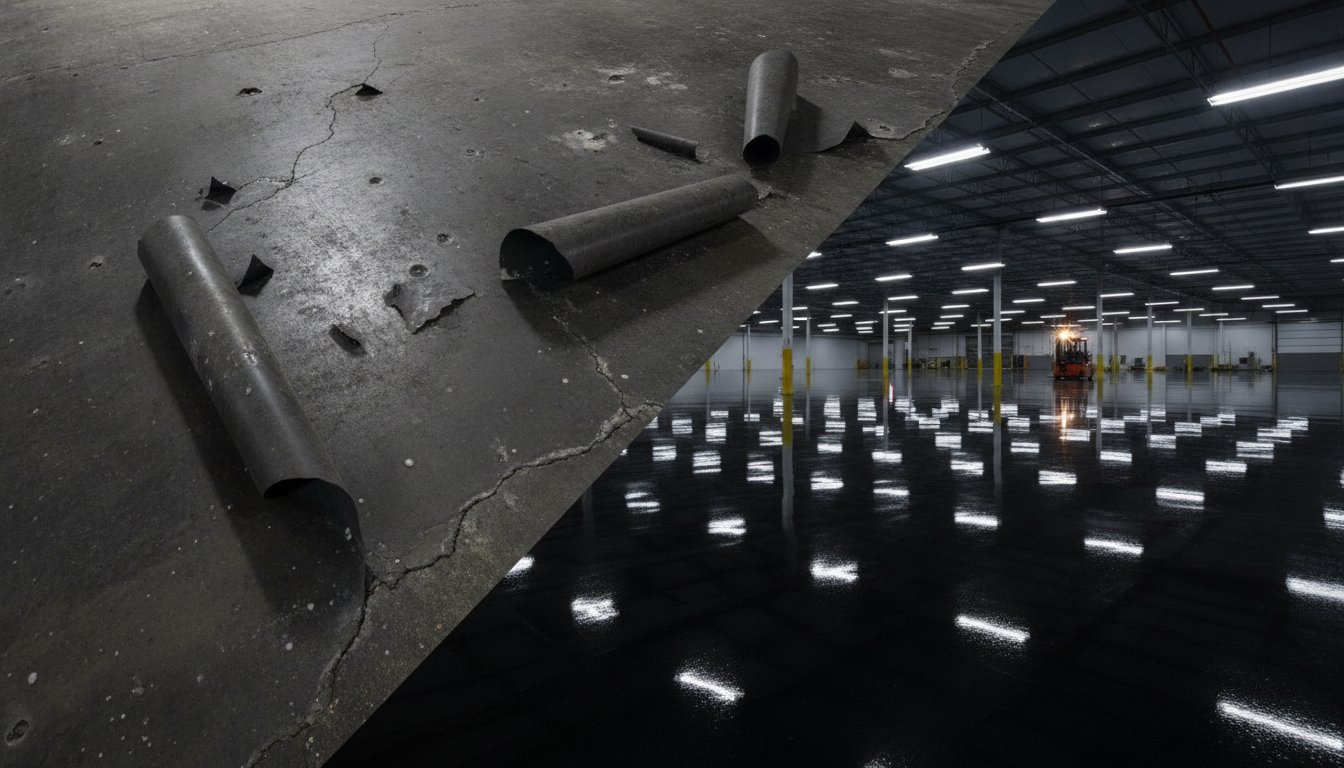
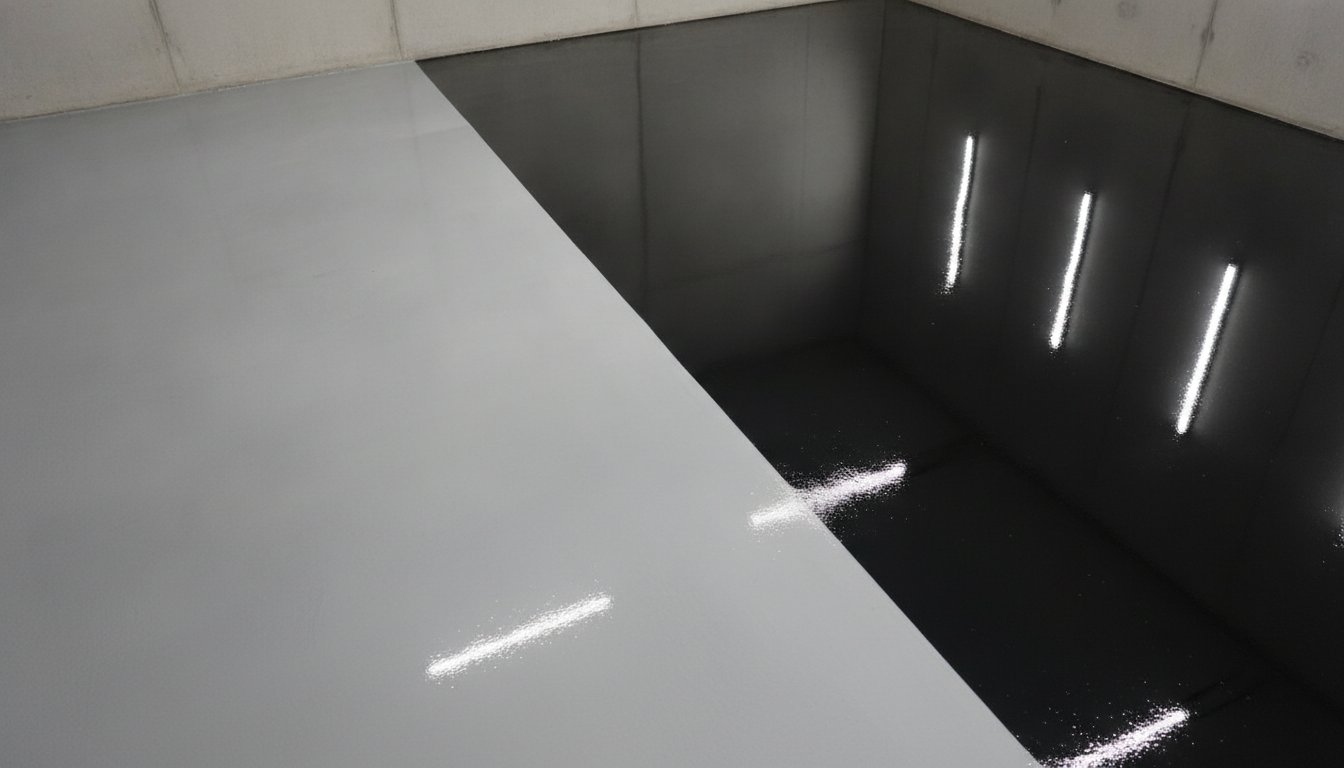
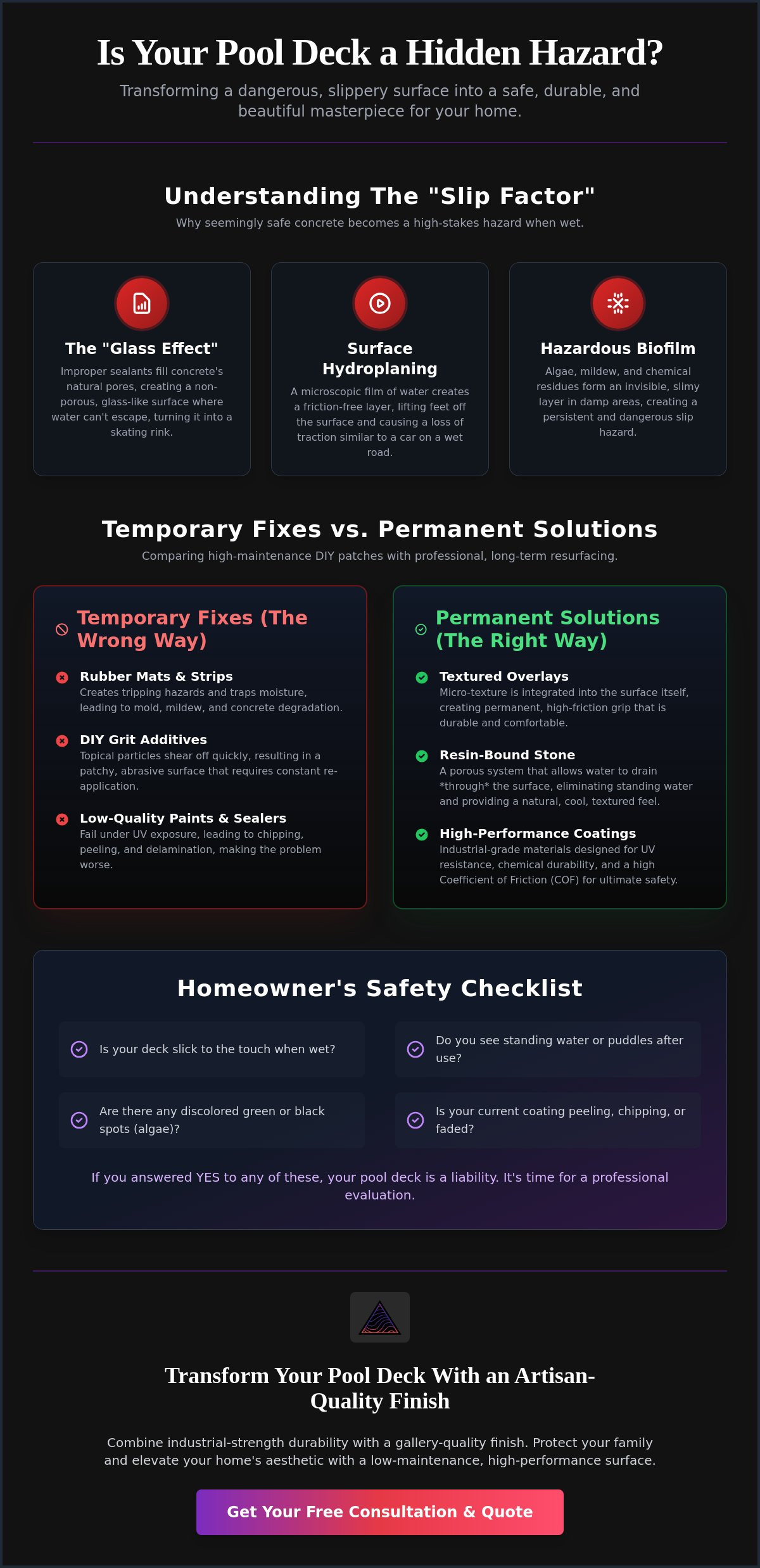
Many "protective" sealants actually create a "glass effect." These high-gloss topical coatings are designed to look beautiful and repel stains, but they inadvertently fill in the natural pores of the concrete. This creates a perfectly flat surface where water cannot escape. Instead of a safe walkway, you end up with a polished skating rink. Over time, intense UV rays bake these coatings. This degradation causes the surface to become brittle and lose whatever microscopic texture it once had, making it more hazardous with every passing season.
The Role of Surface Tension and Standing Water
Hydroplaning isn't just for car tires. On a smooth pool deck, a microscopic film of water can support the weight of a person, lifting the foot just enough to break contact with the ground. This lubrication layer is often exacerbated by the suction effect. Bare feet can trap water underneath them, creating a vacuum that slides effortlessly across the surface. To combat this, professionals look at the Coefficient of Friction (COF), which is the numerical measurement of the ratio of the force of friction between two bodies and the force pressing them together. Achieving a high level of Sustainable Slip Resistance ensures that this friction remains consistent even as the surface wears down over years of heavy use.
Environmental Factors: Algae, Chlorine, and Salt
Your pool's chemistry doesn't stay in the water. Chlorine and salt splashes eventually evaporate, leaving behind a chemical residue that can alter the texture of your deck coatings. Even worse is the "biofilm" created by algae and mildew. These biological hazards thrive in the damp, shaded areas of porous concrete that doesn't drain properly. This slime layer is often invisible until someone loses their footing. If the surface is constantly wet, traditional cleaning with a garden hose won't solve the root issue. You aren't just dealing with dirt; you're dealing with a living, breathing slip hazard that requires a professional resurfacing solution to eliminate the environmental pockets where these organisms hide.
Temporary Fixes vs. Long-Term Solutions for Slippery Concrete
When homeowners realize their backyard oasis has become a hazard, the first instinct is often a trip to the local hardware store for a quick fix. You might be wondering what to do about a slippery pool deck without embarking on a massive renovation, but cheap solutions usually cost more in the long run. Most DIY remedies are mere Band-Aids that fail to address the underlying lack of surface porosity. We believe in craftsmanship that lasts, not temporary patches that peel away after one season of sun and splashing.
Temporary fixes like rubber mats or adhesive strips are often the worst offenders. While they provide a small patch of traction, they create new dangers. Mats are notorious for trapping moisture against the concrete, which leads to rapid mold growth and creates a hidden tripping hazard for children. From an aesthetic standpoint, these "solutions" clutter your beautiful space and suggest a lack of maintenance. True safety should be invisible and integrated into the structure of your home.
The Failure of Topical Non-Slip Additives
Adding "shark grip" or sand to a bucket of sealer is a high-maintenance gamble. These particles sit on the very top layer of the coating rather than being part of the material itself. As your family runs across the deck, their weight acts like a grinder, slowly shearing those particles off the surface. Within months, you're back to a slick surface, but now it's patchy and abrasive on bare feet. This "sandpaper effect" makes the deck uncomfortable for swimmers and requires a constant, expensive cycle of re-application to remain even marginally effective.
The Problem with Aesthetic "Quick Fixes"
Painting over a slippery deck or using low-quality DIY epoxy kits outdoors is a recipe for disaster. These materials are rarely designed to handle the intense UV exposure and chemical saturation found at the water's edge. When these coatings fail, they don't just fade; they delaminate. This bubbling and flaking doesn't just look unprofessional; it significantly lowers your home's curb appeal and property value. Adhering to the safety standards outlined in the International Swimming Pool and Spa Code requires a more robust approach to durability.
Some contractors suggest acid etching to create texture, but this aggressive chemical process is often a mistake. It eats into the concrete in an unpredictable way, often leaving the surface blotchy and structurally weakened. A true blue-collar artisan avoids these shortcuts. We focus on permanent surface transformation through professional pool deck resurfacing. By choosing a system that integrates slip resistance into the very DNA of the material, you ensure your sanctuary remains a point of pride for years to come.
Comparing Professional Surfaces: From Textured Overlays to Resin-Bound Stone
If you are deciding what to do about a slippery pool deck, you must look beyond surface-level aesthetics. Professional resurfacing isn't just about adding a layer of texture; it is about fundamentally changing how the surface interacts with water. While textured concrete overlays provide a significant upgrade over traditional smooth "cool deck" finishes by creating physical ridges for traction, the real revolution in backyard safety is the shift toward integrated porosity.
Most traditional surfaces fail because they are designed to be water-repellent. This sounds logical until you realize that water has nowhere to go, forming the hazardous film we discussed earlier. High-performance professional systems solve this by becoming part of the drainage solution. By choosing a system that prioritizes 3D texture over 2D coatings, you ensure that every step is secure, even in the middle of a summer downpour. This is where craftsmanship meets technical innovation to protect your family.
Resin-Bound Stone (Vuba Stone) Deep Dive
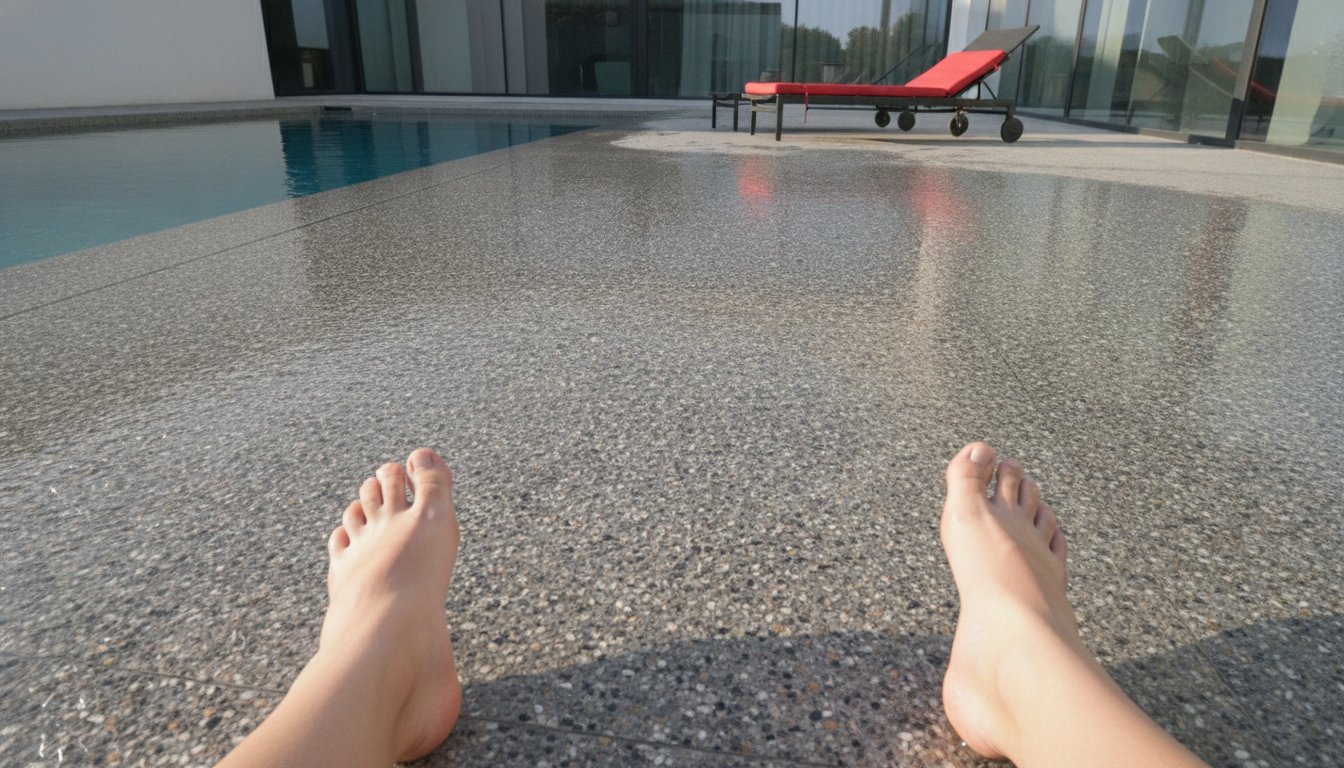
Resin-bound stone, specifically Vuba stone, represents the pinnacle of artisan-grade safety. This system utilizes individual natural stones, each meticulously coated in a high-performance, clear resin before being hand-troweled onto your existing deck. The result is a stunning, gallery-quality finish that functions like a sieve. Because the stones are bound together at their contact points, they leave "voids" or tiny channels between them. This allows water to drain directly through the surface and into the sub-base, effectively eliminating standing water and the risk of hydroplaning. Beyond safety, these systems offer incredible artistic flexibility, allowing you to choose from a spectrum of natural stone colors to create a custom look that complements your home's architecture.
Durability and Weather Resistance
A pool deck must endure more than just foot traffic; it faces constant UV bombardment and chemical saturation. Resin-bound stone is naturally resistant to the cracking and shifting common in traditional concrete pads because the resin remains slightly flexible, moving with the ground rather than fighting against it. We use only UV-stable resins to ensure your deck doesn't yellow or become brittle under the intense sun. Because these systems are breathable, they handle hydrostatic pressure with ease, allowing moisture from the ground to escape through the surface without causing the delamination or bubbling seen in solid, non-porous slabs. This durability ensures that your investment remains beautiful and safe for the long haul, reflecting our commitment to work that stands the test of time.
Temperature is the final piece of the safety puzzle. While dark concrete and rubber mats can become scorching to the touch, natural stone systems stay significantly cooler. The air gaps within the resin-bound matrix allow for better heat dissipation, ensuring that your sanctuary remains comfortable for bare feet even in the peak of July. When you choose a professional stone system, you aren't just fixing a slip hazard; you're upgrading the entire experience of your outdoor living space.
A Homeowner’s Checklist: Evaluating Your Pool Deck’s Safety
Before you decide what to do about a slippery pool deck, you need a clear-eyed assessment of your current surface. Many homeowners live with hazards for years because they don't know how to differentiate between a dirty deck and a failing one. You can perform a basic "Slippery When Wet" test by pouring a gallon of water on a high-traffic area and attempting to slide your foot across it while wearing a typical pool shoe. If there is no resistance, your surface is a liability that requires more than just a good scrubbing.
Look closely for coating delamination. If your current sealer is peeling, flaking, or turning white in certain patches, the bond between the coating and the concrete has failed. This usually happens because the original substrate wasn't prepared correctly or the material has reached the end of its lifespan. A professional artisan doesn't just paint over these problems. We use precision grinding to remove old, failed materials and reach the "white" concrete underneath, creating a perfect canvas for a new, slip-resistant system.
The 4-Point Safety Inspection
- Step 1: Puddling. Check for standing water that remains long after rain or pool use. If water "puddles" rather than draining or evaporating, you have a drainage failure that contributes to hydroplaning.
- Step 2: Biological Growth. Inspect the concrete pores for visible algae or mold. If you see green or black spots that return quickly after cleaning, your surface is trapping organic matter and moisture.
- Step 3: Texture Balance. Evaluate the "barefoot comfort" versus "slip resistance" balance. A safe deck should feel secure underfoot without being so abrasive that it causes discomfort for swimmers.
- Step 4: Substrate Integrity. Assess the existing concrete for deep cracks, spalling, or shifting. If the foundation is crumbling, a topical fix will fail within months.
When to Resurface vs. When to Repair
Choosing between a spot repair and a full resurfacing is a matter of long-term value. Spot repairs often leave "scars" on your deck, as it is nearly impossible to match the color and texture of aged concrete perfectly. If more than 20 percent of your deck shows signs of wear, delamination, or slickness, a full resurfacing is the only way to ensure a uniform, gallery-quality finish. This process starts with concrete grinding and preparation services to ensure the new system becomes a permanent part of your home's structure.
True safety is a precision craft. If your inspection reveals multiple red flags, don't wait for an accident to happen. You can schedule a professional surface evaluation to determine the most durable path forward for your property. We take pride in transforming hazardous spaces into secure masterpieces that stand the test of time and weather.
Transforming Your Pool Deck with Illuminated Coatings
At Illuminated Coatings, we don't believe in the path of least resistance. We believe in the path of highest quality. Our approach is rooted in a "blue-collar artisan" mindset, where industrial-strength labor meets a refined eye for aesthetics. We understand that your home is your greatest investment and your family's safety is your highest priority. This is why we don't just offer a service; we offer a transformation. When you are deciding what to do about a slippery pool deck, you deserve a partner who treats your property with the same level of accountability as their own professional survival.
We specialize in Resin-Bound Stone, specifically Vuba Stone, because it is the only solution that truly solves the drainage puzzle while delivering a gallery-quality finish. While other contractors might push thin, topical sealers that fail within a year, we focus on systems that integrate safety into the very structure of the surface. Our dedication to this craft means we've mastered the technical nuances of resin chemistry and stone porosity to ensure your pool area remains a point of pride for decades, not just seasons.
The Illuminated Coatings Installation Process
The foundation of every successful project is what you don't see. We begin every transformation with rigorous mechanical grinding. This isn't a simple power wash; it's a deep, structural preparation that removes old contaminants and opens the pores of the concrete. If the substrate isn't perfect, the final surface won't be either. Once the foundation is ready, we move into the customization phase. You'll select from a range of natural stone blends designed to complement your home's unique architecture, ensuring the final result looks like it was always meant to be there.
The final result is a seamless, porous surface that effectively "brings life to dull spaces." Because the resin-bound matrix allows water to flow through it rather than sit on top, you'll never have to worry about the "glass effect" again. You get a high-end stone masterpiece that is as durable as it is beautiful. It's a singular focus on excellence that turns a hazardous liability into a stunning backyard sanctuary.
Next Steps for Your Property
Taking the first step toward a safer home shouldn't be a source of stress. When you contact us, we'll start with a professional consultation and a thorough surface evaluation. We'll walk your property with you, identify the root causes of your slip hazards, and explain exactly how our systems will solve them. We don't use high-pressure sales tactics; we use technical expertise and a commitment to integrity to show you what's possible for your outdoor living space.
Your backyard transformation is an investment in peace of mind. From the initial grind to the final hand-troweled stone, we maintain a clean, efficient job site and keep you informed at every stage. Don't let another summer pass with the fear of a fall hanging over your pool parties. Transform your slippery pool deck into a safe, stunning oasis today and experience the difference that true artisan craftsmanship makes.
Secure Your Sanctuary with Artisan Craftsmanship
Your pool area should be a place of relaxation, not a source of anxiety. We've explored how smooth sealants and temporary DIY grit fail to address the core physics of a wet deck. If you are serious about what to do about a slippery pool deck, the solution lies in professional systems that prioritize integrated porosity and industrial-strength durability. By choosing a resin-bound stone system, you eliminate the hazardous water film while creating a surface that stays cool under the summer sun.
At Illuminated Coatings, we bring family-owned integrity and a blue-collar artisan focus to every project. We specialize in high-performance Vuba Stone systems that transform residential and commercial properties into safe, weather-resistant masterpieces. We don't just apply a coating; we reconstruct your environment with precision and pride. It's time to trade those peeling sealers and ugly mats for a gallery-quality finish that protects your loved ones and enhances your home's value.
Get a Professional Quote for Your Pool Deck Transformation and take back your backyard today. We look forward to helping you build a safer, more beautiful future for your property.
Frequently Asked Questions
How do I make my pool deck less slippery immediately?
Immediate fixes like rubber mats or temporary grip tapes provide a quick safety patch, but they aren't permanent solutions. For a long-term fix, you must address the surface porosity. If you're wondering what to do about a slippery pool deck right now, ensure it is free of algae and chemical buildup. Then, schedule a professional evaluation to discuss permanent resurfacing options that integrate slip resistance into the material itself.
Is resin-bound stone (Vuba Stone) actually non-slip?
Resin-bound stone is exceptionally slip-resistant due to its unique porous structure. Unlike solid concrete, it allows water to drain through the surface, preventing the formation of the slick film that causes hydroplaning. This system achieves a high dynamic coefficient of friction, exceeding modern safety standards. It maintains a gallery-quality finish that looks stunning in any backyard sanctuary while keeping your family secure underfoot.
Will a non-slip coating make the surface rough on bare feet?
Professional non-slip systems provide traction without the sandpaper feel of cheap DIY grit. Artisan-grade resin-bound stone uses smooth, natural pebbles that are comfortable for bare feet while still offering superior grip. We balance the texture to ensure your guests can run and play safely. You don't have to sacrifice comfort for safety when using high-performance materials designed for residential pools.
How long does a professional pool deck resurfacing last?
A high-quality professional resurfacing can last 10 to 15 years or more with proper maintenance. Because we use UV-stable resins and precision mechanical grinding during preparation, the bond is designed to withstand intense sun and chemical exposure. This durability makes it a far superior investment compared to cheap paints or topical sealers. Those low-end products often peel and flake within a single season.
Can you apply a non-slip coating over existing pavers or tile?
Professional resin-bound systems can be hand-troweled over most stable substrates, including concrete, pavers, and certain tiles. The process involves meticulous surface preparation to ensure a permanent, industrial-strength bond. If your current pavers are shifting or uneven, we address those structural concerns first. This creates a seamless, safe, and visually striking outdoor living space that boosts your home's overall curb appeal.
What is the best material for a non-slip pool deck?
Resin-bound stone is widely considered the gold standard for non-slip pool decks. It combines the natural beauty of stone with high-performance drainage capabilities. By eliminating standing water and providing a consistent 3D texture, it offers a level of safety and heat dissipation that traditional concrete or wood simply cannot match. It's the ultimate choice for homeowners who refuse to compromise on aesthetics or safety.
How does weather affect the slip-resistance of my pool deck?
Rain and humidity are the primary culprits for slick surfaces, but temperature also plays a role. Standard concrete sealers can become brittle under UV rays, losing their microscopic texture over time. If you're researching what to do about a slippery pool deck, remember that weather-resistant resin-bound systems stay flexible and porous. They maintain their safety features through heavy storms and intense summer heat without degrading.
Do I need to sand my pool deck to make it non-slip?
Sanding or grinding is a critical preparation step, but it is not the final solution for slip resistance. We use professional mechanical grinding to remove old coatings and open the concrete's pores so our systems can bond permanently. Simply sanding the surface won't provide lasting safety. You need a dedicated non-slip material like resin-bound stone to create a truly secure environment that lasts for years.